


Editor’s note: This story was originally published by The Revelator. Subscribe to their newsletter. This edition of their “Protect This Place” column is produced in collaboration with the Climate Listening Project, whose short film appears below.
The Place:
We’re on the Florida Panhandle, from the rare coastal dune lakes of Scenic 30a to the Forgotten Coast, where communities are coming together to stop the petrochemical buildout and preserve this biodiversity hotspot.
Why it matters:
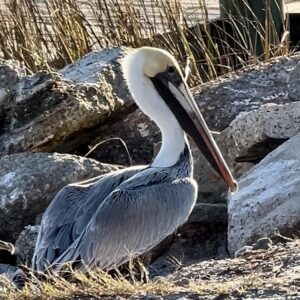
This part of Florida has the greatest diversity of carnivorous plants on Earth, wildlife that lives in both fresh and salt water, and many species that only exist here — endemics. There are more than 2,500 plant species, too, and the Panhandle is an important part of the route of migratory birds and monarch butterflies.
The dunes here are critical nesting sites for five endangered species of sea turtles: green, loggerhead, Kemp’s ridley, leatherback, and hawksbill. The endangered Choctawachee Beach mouse plays an important role in creating dunes on the beach by eating the fruits of sea oats and spreading their seeds.
Amidst these and other natural wonders, communities have come together over decades to say “no” to offshore oil drilling and gas exports and protect state parks from golf courses. The state has also created the Florida Wildlife Corridor down the peninsula, protecting Florida panthers, and the Northwest Florida Greenway Corridor, with longleaf pine forests going north protecting black bears.
The threat:
The Panhandle, in Seaside, was where Hands Across the Sand was founded in 2010, with thousands of people coming together along the entire Florida coastline to stop offshore oil drilling. Just down the street, in North Port St. Joe, another movement inspired communities to join in 2024 to stop liquid natural gas exports off the coast.
These communities are very different, but the Florida Panhandle inspires a love of place. A petrochemical buildout along the Panhandle threatens the health of our communities and environment.
My place in this place:
I studied environmental communications on the Florida Panhandle in Pensacola. My first job was at the Northwest Florida Zoo in Gulf Breeze, where I worked with endangered species like Bengal tigers, often taking animals on television to talk about problems like poaching. My first board position was with the Emerald Coast Wildlife Refuge, where I worked with local media from Fort Walton Beach to Port St. Joe to share stories about local species through my first blog, Wild Woman.
I’ve lived in Walton County and helped to protect the rare coastal dune lakes there — with people like E.O. Wilson, who popularized the term biophilia: the love of all living things. I was recently invited to listen in North Port St. Joe on the Forgotten Coast for my new film, “Apology to Earth.”
When I first moved to the Florida Panhandle 25 years ago and began working along Scenic Route 30a, local people were just beginning to research and understand the rare coastal dune lakes that exist here and in five other places on Earth. These lakes have outfalls through the dunes that open to the gulf and release brackish lake water in exchange for saltwater, resulting in a unique ecosystem. People came together to protect the lakes and stop development from closing more of the outfalls.
Who’s protecting it now:
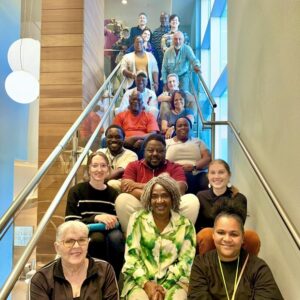
We need to continue to protect the Florida Panhandle. I’m inspired by the North Port St. Joe community taking care of St. Joseph’s Bay and the Forgotten Coast. Florida Panhandle Minority Communities Climate Change Coalition (FPM4C) is working with individuals and groups along this coast to create sustainable solutions.
What this place needs:
“Together we must stand with one voice against any organization or industrial entity that attempts to locate unhealthy and unsafe environmental and hazardous conditions in or near our community,” says Dannie Bolden of FPM4C.
See more:
This piece was originally published at https://therevelator.org/protect-florida-panhandle. Banner photo: Perdido Beach State Park in Escambia County near Pensacola (iStock image).
Sign up for The Invading Sea newsletter by visiting here. If you are interested in submitting an opinion piece to The Invading Sea, email Editor Nathan Crabbe.

SO HAPPY TO SEE THE FIGHT CONTINUE!!! I was Executive Director and the founder of Hands Across the Sand, Dave Rauschkolb. We’re are so proud of what we created and managed all those years! So thrilled to see the torch was passed by many out there that care for our planets survival! Keep up the fight! Dede Shelton