


By Tom Caffery, Third Act
A recent column by a Florida state lawmaker made the case for investing in numerous Small Modular Reactors (SMRs) as a path toward Florida’s “energy freedom.” As appealing as freedom might be, it is highly debatable as to whether SMRs can deliver on this promise, and whether the cost and the environmental consequences make this a desirable solution.
SMRs have all the negative aspects of large-scale utility nuclear fission plants, with none of the economies of scale that utilities can provide. The SMR technology is yet unproven, and will face the same permitting and siting challenges that large plants have.
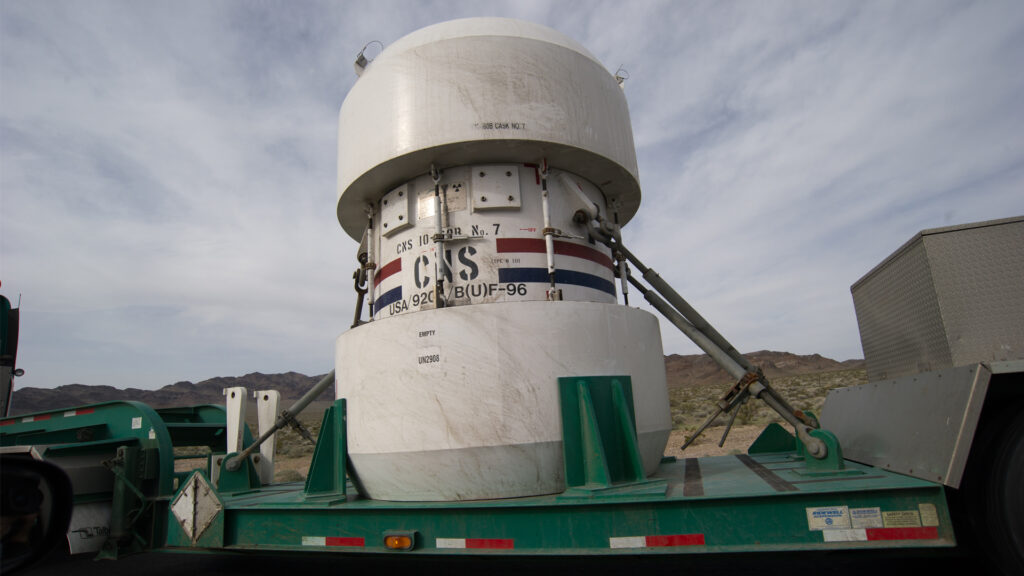
The use of fission reaction will still produce waste products that have long-term storage issues, and the distributed hazard may be harder to manage and secure. The schedule for design, permitting, fabricating and installation means that it will be several decades before there is any cost recovery of the initial investment.
There is also a more promising nuclear technology that could deliver truly clean energy in about the same time frame, in the form of nuclear fusion reactors. This technology is being demonstrated in Virginia and could reach utility scale by the mid-2030s.
The advantages are a plentiful, non-hazardous fuel supply and operation, and minimal amounts of short-lived waste products. This seems like a good bet for long-term clean and cheap energy supply.
In the meantime, there is no shortage of solar photovoltaic (PV) panels that could produce a much greater proportion of our energy supplied by our utilities, or even by individual consumers and businesses and institutions.
Paired with battery storage that is steadily ramping up, and with larger transmission and smart grid technology to compensate for the intermittent nature of solar facilities, the solar industry is capable of a much greater role in Florida’s energy mix. Solar is available in the market, has minimal permitting requirements and the pace of installation is much faster than any nuclear technology.
Florida’s utility companies recognize the advantages of solar PV over their legacy fossil fuel plants and are investing in utility-scale solar at a notable pace over the next 10 years, per their public 10-year site plans.
Some are better than others, with Florida Power & Light leading the pack. FPL currently gets 12% of its energy from solar and is projecting to reach 35% in 2034. However, FPL has actually slowed the pace of solar adoption, compared to its 2023 plan.
Duke Energy is dragging its feet, currently at 5% solar, projected to grow to 28% in 2034. Other Florida utility companies fall in this range.

Overall, the state of Florida is currently getting 75% of its power from natural gas, projected to fall to 57% in 2034. Solar is projected to almost quadruple, from 8% to 29% in 2034. (Nuclear is projected to be steady at 11-10%.)
The pace of solar adoption has actually slowed somewhat in recent statewide planning. The 2025 passage of the federal “Big Beautiful Bill” is expected to exert downward pressure on new solar adoption. But there is still much room for improvement in the adoption of clean energy/solar, which will be necessary if we have any hopes of meeting the Paris Agreement targets.
In conclusion, solar PV can play a much greater role in meeting Florida’s energy needs, in the near term and over the coming decades, in order to reduce the carbon footprint of our electric utilities. The recent experience with ever-increasing climate catastrophes demands that we make the transition to clean energy sooner than later.
The promise of clean fusion energy is appealing, but in the meantime, we should be using more energy from heaven and not from hell. Florida could very well lead in the modern energy transition to clean energy.
Tom Caffery is a retired civil engineer, with almost 50 years of practice, who has lived in Florida since 1978. He is active in environmental causes, recently with Third Act in Florida and its Power Up Communities national team. The group is currently promoting Sun Day this Sept. 20-21. Banner photo: An aerial view of a solar farm in Madison County (iStock image)..
Sign up for The Invading Sea newsletter by visiting here. To support The Invading Sea, click here to make a donation. If you are interested in submitting an opinion piece to The Invading Sea, email Editor Nathan Crabbe at ncrabbe@fau.edu. To learn more about small modular reactors, watch the video below.
