


By Bob Moore
This past Sunday, Sept. 21, was designated as Sun Day, a day where solar advocates around the country gathered to promote “the clean energy revolution.”
For the majority of Americans who are concerned about the impacts of climate change, solar and other forms of renewable energy hold significant promise. They can help to shift the ways we power our homes and economy to become more sustainable. That’s important for those of us who are seeing those impacts increasingly threaten our homes and property through stronger storms, flooding, sea level rise, dangerous heat days, longer fire seasons, health risks from particulate matter pollution and microplastics, etc.
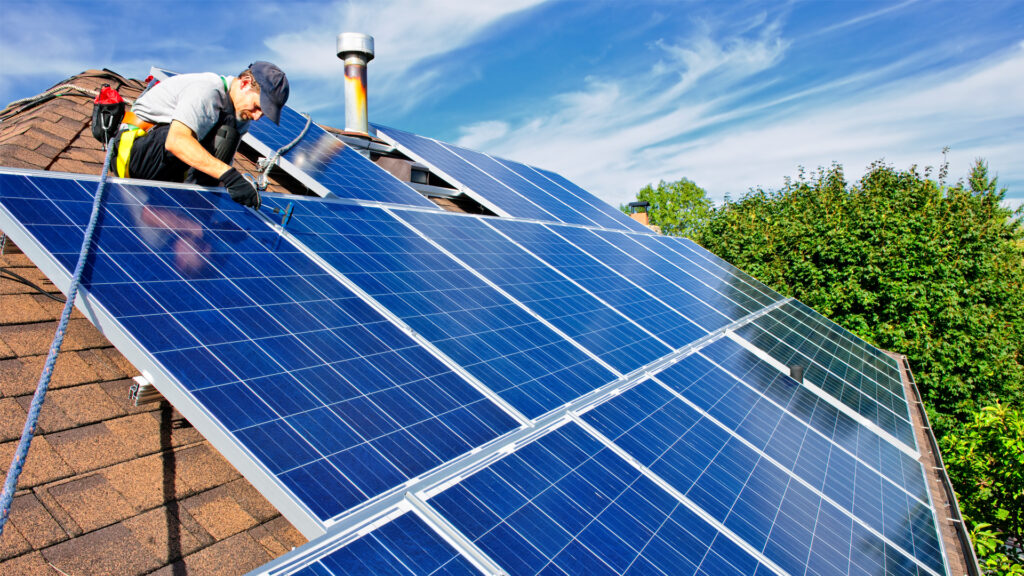
But even for those who believe the science about climate change’s impacts is overstated, there are good reasons to be excited about the advances in renewable energy technologies. Over the past decade, the cost of clean energy has plummeted. Today, the cheapest forms of electricity going onto the grid are solar, wind and batteries. These renewable energy technologies are less expensive than natural gas and far less expensive than coal and nuclear.
In Lazard’s 2025 Levelized Cost of Energy report, a widely cited, annual analysis that provides insights into the cost competitiveness of various energy generation technologies, found that: “Despite headwinds and macroeconomic challenges, renewables remain the most cost-competitive form of new-build generation on an unsubsidized basis (i.e., without tax subsidies). As such, renewable energy will continue to play a key role in the buildout of new power generation in the U.S. This is particularly true in the current high power demand environment, where renewables stand out as both the lowest-cost and quickest-to-deploy generation resource.”
In addition to being cheaper, investments in renewable energy technologies generate three times more jobs than those targeting fossil fuels. It is no surprise that those favorable economics are driving a renaissance in clean energy development.
According to an analysis of data from the U.S. Energy Information Administration, 93% of all new electricity coming onto the grid in 2024 was from solar, wind and batteries. And, despite our government’s irrational opposition, that trend is expected to continue through 2030 based on the projects that developers have planned to complete in that time.
Solar, wind and batteries also have the advantage of not adding to the costs associated with climate change. According to data from the National Oceanic and Atmospheric Administration, extreme weather costs in the U.S. exceeded $1.2 trillion in just the 10 years from 2015-2024 in inflation adjusted dollars. Further, an analysis from the re-insurance company, Swiss Re, shows that price tag could rise to $38 trillion dollars annually on a global basis in the next 30 years if no mitigating action is taken. That equates to 18% of the projected global GDP.
You might ask, why is our government attacking renewable energy subsidies and boosting subsidies for fossil fuels? Based on the economic data and the science behind climate change, you would think that a conservative administration that is looking to save money for the American people would be doing the opposite. As an electorate, we should be pointing that out.

For those of us living on a barrier island, solar and battery back-up also have tremendous resilience advantages. After Hurricane Ian left us without power for six weeks in 2022, we added battery back up to our rooftop solar. During the four-day power outage following Hurricane Milton last summer and the many shorter outages since, we have enjoyed full power, including AC to protect against mold damage.
We also power our electric vehicle from our rooftop solar, saving money and emissions. With solar and batteries, we don’t have to be concerned about accessing fuel for a generator to power our home, which is a comfort considering the damage to the Sanibel causeway and to many propane tanks during Hurricane Ian.
In a community survey conducted last spring by the coalition group SanCap Resilience, nearly two-thirds of Sanibel and Captiva respondents stated they would like to see the islands become a model of sustainability with respect to mitigating the future impacts of climate change. On the heels of this Sun Day, there are great reasons for this community to go all in on solar and other forms of clean energy.
Bob Moore is a retired senior vice president of a Boston-based health care company who lives in Sanibel. He currently serves as a chair of SanCap Resilience, a coalition of groups formed in response to the devastating effects of Hurricane Ian on the Sanibel and Captiva communities. He is also co-chair of the Sanibel-Captiva Renewable Energy Working Group and vice president of the Committee of the Islands. Banner photo: Florida Power and Light’s Discovery Solar Energy Center at NASA’s Kennedy Space Center (iStock image).
Sign up for The Invading Sea newsletter by visiting here. To support The Invading Sea, click here to make a donation. If you are interested in submitting an opinion piece to The Invading Sea, email Editor Nathan Crabbe at ncrabbe@fau.edu.
