


By Rebecca Fishkin, C-Change Conversations
Let’s be honest: telling your parents they might be wrong about something has never been easy. Now, throw in politics, Thanksgiving dinner and climate change? That’s a recipe for disaster – and indigestion.
But here’s the thing – if you approach the conversation in the right way, you can actually communicate some pretty challenging information without it spiraling into a shouting match. Here’s how to talk to your parents, or anyone on the other side of the issue, about climate change.
Acknowledge what’s true
First, ask their opinions and really listen. Showing respect for their position opens the pathway for them to reciprocate.

Don’t be defensive. Instead, look for facts everyone can agree on. Yes, the climate has always changed – we’ve had ice ages and warming periods. What’s different now is that it’s happening at an unprecedented speed – 10 times faster than normal climate swings – and human actions are driving it.
Unlike hunter-gatherers who could chase migrating herds when things got rough, there are nearly 8 billion of us now (soon to be 10) living in a complicated and interconnected global economy. We can’t just pack up and follow the food and water resources as they react to a changing climate.
We can also agree that fossil fuels have been extraordinary friends to us. Before them, life was nasty, brutish and short. They gave us modern medicine, global trade and Sunday football. But now financial and insurance experts – and all of the major scientific institutions – warn that burning them is changing the composition of our atmosphere and will trigger disastrous changes in our natural systems.
These changes will harm our economy and way of life and reverse that success story. Our new story will be a shrinking GDP and threats to our security and quality of life, especially for our children and grandchildren.
Use their own risk calculator
Instead of diving into climate jargon, invite your parents to evaluate it the way they’d evaluate any risk in life.
- How likely is it?
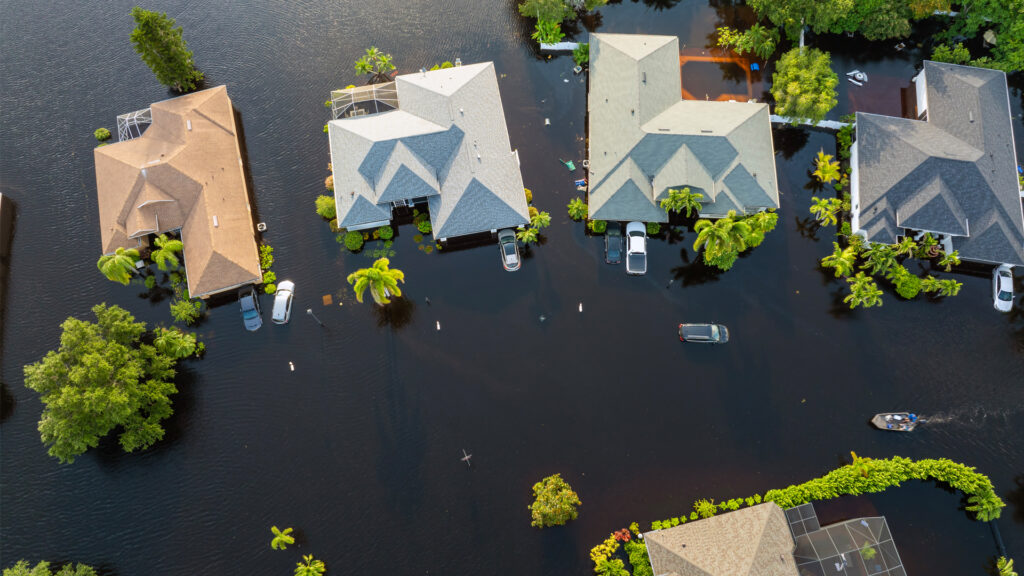
We can see it with our own eyes in our communities and in the news: Our summers are hotter and extend longer, we are more exposed to wildfires and wildfire smoke, our rain patterns are changing (causing both more torrential floods and extreme dry periods), and our sea level is rising rapidly (causing sunny day flooding and damage up and down our coastlines).
Every major scientific institution has recognized that climate change is happening and is a real threat. Every country except Yemen, Iran and Libya have recognized it as a real threat. Importantly, insurance companies and investment rating companies do, too. It’s not just likely, it’s already happening.
- What are the consequences if the worst comes to pass?
Credible projections predict temperatures and humidity levels will soon become too high for even young, healthy humans to safely be outside in some parts of the world. Crop yields are expected to plummet as heat thresholds are crossed and water systems are disrupted. Coral reefs – the nurseries to 25% of sea life – will die. Many cities and shoreline infrastructure will be under water. Conflicts will arise over dwindling natural resources and increased migration pressures.
These predictions aren’t from environmentalists – they are from military, scientific and economic experts. Anywhere else in our lives, when credible projections indicate such a dangerous outcome is possible, we would take action to lessen the risk.
- How hard is it to avoid?
We know that acting now will save us a lot of money and pain in the future. Waiting only makes things much worse.
We also have a plethora of solutions and newer technologies – like next-generation nuclear and geothermal and carbon capture – that most people favor. And numbers don’t lie – renewable energy has boosted jobs and grid security, particularly in conservative areas (80% of clean energy jobs are in areas that voted for President Donald Trump) and costs less than fossil fuel power sources.
Renewables costs have dropped so fast, they are now expected to provide 50% of all global power generation by 2030. They are playing a critical role in meeting growing power demand and mitigating skyrocketing energy prices.
Talk about what they care about
Most Americans, no matter their politics, consider these to be important issues when they vote:
- The economy and jobs
- Health and personal security
- Geopolitical stability
Climate change affects all three. Crops fail, businesses shut down and heat waves close job sites. Our military can’t train in extreme heat. Rising temperatures mean more allergies and asthma, heart disease and dangerous “can’t sweat it out” days. Droughts, floods and famines drive refugee crises and food shortages. All of this impacts our paychecks, our health and our national security.
Speak their language
Don’t lecture or harangue. Tone matters, and so do the words you use. Avoid jargon. Lean into the values that conservatives hold dear: prudence, stewardship, self-reliance and responsibility. Remind them that the longer we wait to act, the bigger the burden on future generations.
Point out that Republicans like George W. Bush, Kevin McCarthy, James Baker and George Shultz have taken climate change seriously. Share that young conservatives care about this issue too. Bring up that there are “conservative” solutions like protecting land, nuclear and carbon capture, or a fee on carbon.
Drive home that this topic isn’t a “their side” versus “your side” one – it’s about “all” of us, because we all want to protect what we love: our families, our communities and our way of life.
End with hope
Always end with optimism, not blame, guilt or defeatism. It’s not too late. We can adapt and mitigate. We can, and do, innovate. We can act in ways that make the economy stronger, our communities healthier and the world more stable. Use this to appeal to their hearts while talking to their heads.
And isn’t that what our parents always taught us? Take responsibility. Clean up your mess. Leave things better than you found them.
So the next time climate change comes up at the dinner table, don’t brace for battle. Invite a conversation. With the right tools and approach, it can be food for thought instead of a fight.
Rebecca Fishkin is director of communications for C-Change Conversations, a nonprofit organization dedicated to promoting productive, nonpartisan discussions about the science and effects of climate change. For more information on the organization, visit https://c-changeconversations.org. Banner photo: A family at Thanksgiving (iStock image).
Sign up for The Invading Sea newsletter by visiting here. To support The Invading Sea, click here to make a donation. If you are interested in submitting an opinion piece to The Invading Sea, email Editor Nathan Crabbe at nc*****@*au.edu.

This approach is a good one. It could possibly get through to someone who has a closed mind . It is an open nonaccusatory (is that a word?) way to present facts and ideas without any blaming. Also important, it is done without scientific jargon and terminology.
I’d add that we should talk also about what Global Warming ISN’T as well as what it IS. IE most polls show that the majority of Americans think that smog/ozone (ie dirty air) is the same issue. In fact, when Trump was asked in his debates about Climate Change, he cited “clean air,” expressed support, then changed the subject. Most look at the Air Quality Index and see that in our country, we’ve improved by ~70% since 1970. (https://www.epa.gov/air-trends/air-quality-national-summary )
Of course, that’s due to the EPA & congressional regulations, but that’s not the point. The point is – you can’t discuss solutions if you don’t understand the problem. Climate change is GLOBAL (not local) and is TRANSPARENT (not visible dirty air).
Since the industrial revolution, we’ve NEVER made progress with the growing GHG prevalence in the atmosphere.
manufacturing has moved overseas since the 1970s. We have just shipped our emissions to countries where things we consume are produced.
I’d add that we should talk also about what Global Warming ISN’T as well as what it IS. IE most polls show that the majority of Americans think that smog/ozone (ie dirty air) is the same issue. In fact, when Trump was asked in his debates about Climate Change, he cited “clean air,” expressed support, then changed the subject. Most look at the Air Quality Index and see that in our country, we’ve improved by ~70% since 1970. (https://www.epa.gov/air-trends/air-quality-national-summary )
Of course, that’s due to the EPA & congressional regulations, but that’s not the point. The point is – you can’t discuss solutions if you don’t understand the problem. Climate change is GLOBAL (not local) and is TRANSPARENT (not visible dirty air).
Since the industrial revolution, we’ve NEVER made progress with the growing GHG prevalence in the atmosphere.
i know this is a pop article. but seriously is this the science perspective at FAU? Article Ridden with copycat information. ” Every country except Yemen, Iran and Libya have recognized it as a real threat” ?? Please get your facts right. Iran has *many* scientists who work with climate change. Libya had programs promoting African self-reliance, and Gaddafi was overthrown as he challenged Western exploitation of Africa. Just because the State Dept has labelled them as terrorist countries does not mean these countries do not recognize CC as a threat. Au contraire, there is ONE country only that has not recognized it as a threat, and thats us, the US. what a joke. We pulled out of all treaties, dismantled our own EPA, defunded National park rangers, deleted the use of CC etc. Then you mention carbon capture as a solution. Once again you are parrotting the proponents of the carbon capture industry, without counting all the externalities of such an endeavor – like the energy costs. Restoring native ecosystems is the only sustainable way to suck in carbon. Renewable energy – thats again greenwash because it does not account for the environmental effects of unregulated mining cobalt, manganese, lithium and rare earths in the third world. One has to use less energy, and mnot just switch to “renewable” and go on living our resource wasteful lives.