


By Joe Murphy
Birding is a fascinating endeavor. Birders can simply observe birds in their backyards, or they can search the ends of the Earth. Birders can range from almost deity-like in their ability, omnipotent observers of sights and sounds most of us would miss – and, at the other end of the spectrum, they can be … me.
I am an aspiring birder at best, a birder in progress. Oh, how I long to reach the rarefied heights of the greats. That probably won’t happen, but a middling birder can dream.
It’s easy to acquire the equipment to be an entry-level birder: decent binoculars, a good bird guide and a sense of curiosity. That’s all it takes to start!
Accomplished birders often talk about the five S’s of birding: size, shape, shade, sounds and space. All of these factors can assist in identifying birds in the field. I fully support their use, but I have developed an alternative set of the five S’s: sunscreen, snakes, snacks, savage and slay.
Now that I have moved toward my senior years, I finally have admitted the need to actually use sunscreen. Reluctantly. My wife was right all along.
If you spend a lot of time with your neck crooked, staring upward through binoculars, sometimes snakes are a surprise when you look down at the forest understory or the marsh. Yikes! Wild Florida is home to some amazing snakes of all types.
Snacks are essential, central to any and all adventures. They can’t easily melt and need to be tasty. My snack requirements have evolved with age, and a quality set of snacks can make or break the birding trip. A good field companion brings good snacks.
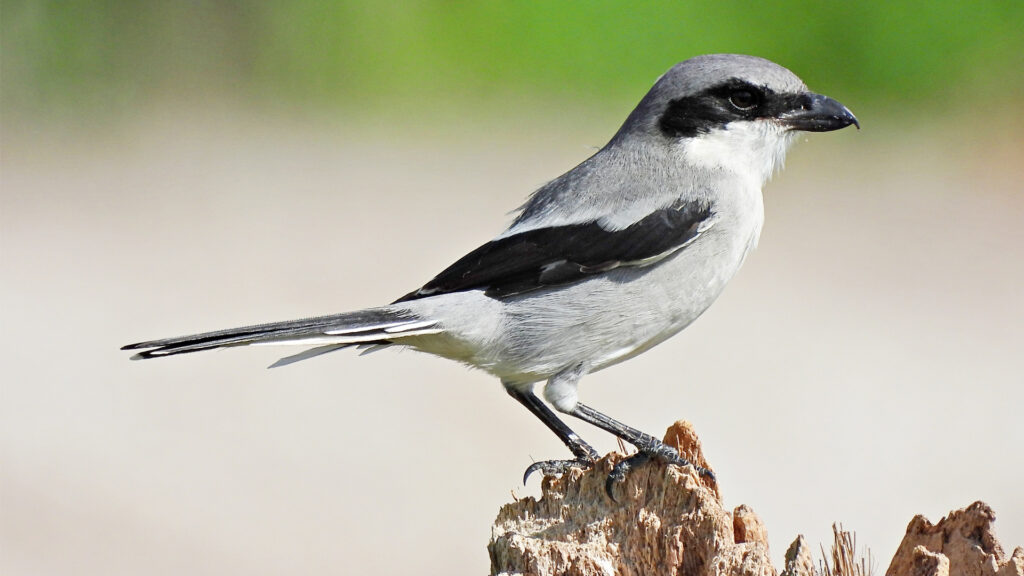
The concept of savage comes from the true, savage nature of most birds. Sweet songbirds, bluebirds of happiness, they are not. They are fierce and highly competitive, and many are supreme predators. A great example of savage is the loggerhead shrike.
The loggerhead shrike is a fierce and brutal predator, earning it the nickname “butcher bird.” It uses its beak to kill prey by biting and breaking their neck, then it impales dead prey on thorns or barbed wire to eat or store it for later. Savage, indeed.
Last but not least, my adult children have taught me the phrase “slay” to refer to doing something really well. When I have a great day watching wildlife, I slayed it. Using the words the kids use keeps me young — at least in theory. I slay at connecting with the kids.
For me, birding is an opportunity to connect with nature, to explore wild places. The closest related activity for me is fishing. The big difference is that I don’t eat the birds. Well, unless a fried chicken shows up in my binocular lenses.
The good news is that more parts of wild Florida are becoming ecotourism destinations for fishing, hunting, paddling, wildlife viewing, horseback riding, ATVs and off roading, etc. Local communities embrace the ecotourism dollars and the sustainability they can create.
It’s important when visiting a place steeped in nature and seeking to welcome ecotourists to converse with the locals and share why you are there. Some of the best local info and wildlife viewing guidance comes from locals who are proud to share their region. And it’s easier to get them to share birding spots than fishing holes. But it can’t hurt to ask.
To learn more about wildlife viewing and birding, please visit the excellent website for the Great Florida Birding and Wildlife Trail: https://floridabirdingtrail.com. And go slay those birds! Just don’t be a savage.
Joe Murphy is a lifelong and native Floridian who lives in the southern Nature Coast. Banner photo: A pileated woodpecker in Florida (iStock image).
Sign up for The Invading Sea newsletter by visiting here. To support The Invading Sea, click here to make a donation. If you are interested in submitting an opinion piece to The Invading Sea, email Editor Nathan Crabbe at nc*****@*au.edu.
