


By Chris Hildreth
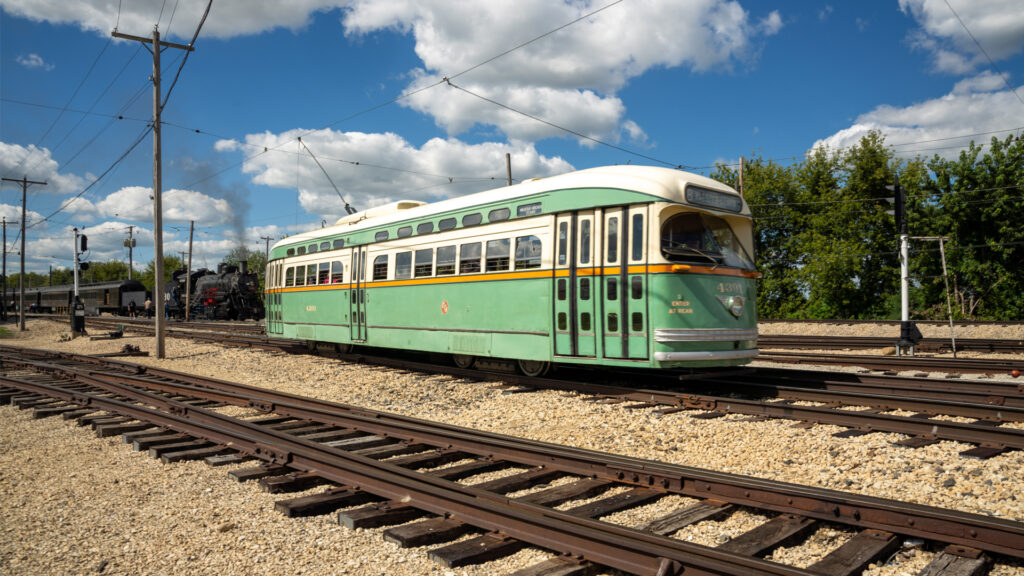
Streetcars are a thing … again. Currently, 38 active streetcar companies exist in the United States with a combined total of nearly 1,000 miles of track and an annual ridership of nearly a half-billion commuters.
It’s a good start. But, for the sake of context, in the early 20th century, Chicago’s streetcar service had that many miles of track and served nearly 900 million annual riders. Either way you look at it, there were/are a lot of people not driving a car – which, on average, emits about 4.6 metric tons of carbon per year.
To date in Florida, Tampa is the only city with a public streetcar system. Jacksonville has inaugurated the nation’s first public transportation autonomous vehicle system, essentially a driverless van, and is currently conducting trials in its sports and entertainment district downtown.
The city has also secured an agreement with a European autonomous vehicle manufacturer to set up its North American headquarters and production facility in the city. Both Tampa and Jacksonville, along with 13 other communities across the state, operated streetcar lines back in the day. Again, context: At the height of the streetcar era, the late 19th and early 20th centuries, over 1,200 streetcar companies operated nationally.
So, what’s my point? The lack of a carbon footprint.
These systems, then and now, ran on electricity with no carbon emissions from their vehicles. The early streetcars typically held between 50-60 passengers; today’s cars, 80 to 100. Also, for the most part, streetcar systems were privately held by public utility holding companies, real estate developers and entrepreneurs. These companies made money and moved people efficiently. So, what happened?
Between the years of 1938 and 1950, National City Lines – a bus company funded by General Motors, Firestone Tire and Rubber Company, Standard Oil, Mack Trucks and others – began buying up streetcar companies. Once purchased, the lines were dismantled and replaced with buses, all built by GM.
In 1946 Edwin Quinby, described by author Arthur Goldwag as “brilliant, eccentric, and very likely a crank” wrote a 32-page document detailing what was happening to the streetcar systems. The GM consortium was “buying up streetcar companies, scrapping their electric trolleys, and then locking the cities into contracts that required them to buy buses, parts and fuel from themselves.”
Quinby distributed copies of the document to a host of national, state and local politicians. At a federal trial in 1949, the involved companies were found guilty of conspiracy to monopolize interstate commerce in the sale of buses, fuel and supplies to NCL subsidiaries. Each of the guilty parties were fined $5,000. That notwithstanding, the erosion of streetcar lines continued apace.
It was by design that the buses were, on many levels, a poor replacement for the streetcars. This was a key part of the plan to create a bigger market for the car and the “need” for more roads.
In 1932, GM CEO Alfred Sloan created the National Highway User’s Conference with companies involved in any aspect of the car as members. The conference was at one time the largest lobby in the nation.
In 1935, Congress passed the Public Utility Holding Company Act. It was a multifaceted bill. One facet forced public utility holding companies to divest themselves of their streetcar lines – arguably making it easier for the NTL to accomplish its plans.
In 1953, former GM CEO Charles Wilson became secretary of defense. That same year Francis DuPont, whose family had the largest stake in GM stock, became chief administrator of highways.

Not surprisingly, there was a big push to construct and maintain an interstate highway system. The Federal-Aid Highway Act was passed in 1956. It established the Interstate Highway System and funded construction with the Highway Trust Fund from a gas tax specifically for construction and maintenance.
Another key part of the plan was the ubiquitous, beguiling and relentless promotional campaign conducted to keep us doe-eyed at dealership windows. Cars were always advertised in places you’d love to vacation or all alone on scenic highways, and it worked. Thus, the stage was set for the country to eventually lead the planet in carbon emissions – a dubious distinction at best.
The tide is turning. More lines are coming. Not only will our carbon footprint recede, it may just be possible our affordability crisis will subside as well if there’s so many lines that people begin to do the math. The annual cost of car ownership is more than $12,000 a year, around $1,000 monthly. By comparison a monthly pass on the D.C. Metro system is $216.
What could you do with $1,000 every month?
Chris Hildreth lives in Jacksonville and writes a Substack newsletter called Notes from the Third Rock (childreth.substack.com), where an earlier version of this piece first appeared. Banner photo: A historic-style streetcar in Tampa (Pokemonprime, CC BY 4.0, via Wikimedia Commons).
Sign up for The Invading Sea newsletter by visiting here. To support The Invading Sea, click here to make a donation. If you are interested in submitting an opinion piece to The Invading Sea, email Editor Nathan Crabbe at ncrabbe@fau.edu.
