


By Elise Bennett, Center for Biological Diversity
When Donald Trump released his plan last month to try to expand offshore oil drilling to much of our nation’s coasts, it was refreshing to see Florida’s elected officials stand up and fight back. Even Republicans staunchly loyal to the president spoke out against possible drilling in the eastern Gulf, or at least expressed a need for caution.
“It affects tourism and more importantly, it’s just bad for the environment,” said Rep. Vern Buchanan (R-Fla.). And Sen. Ashley Moody (R-Fla.) called the plan “HIGHLY concerning.” While the Gulf is dotted with thousands of oil rigs, the section closest to Florida has never had producing wells.
It’s important that Florida lawmakers hold strong against expanding drilling in the eastern Gulf. Healthy coastlines are our ecological and economic engines. The risk of oil spills darkening our beaches and estuaries is an existential threat to our very way of life.
But if our elected officials are serious about really protecting Florida, they need to think bigger.
Our state’s tourism economy, wildlife and coastal environment depend on our leaders speaking up about drilling everywhere — not just when it creeps closer to home. It’s naïve to think that just drawing a boundary around our state will keep us safe.
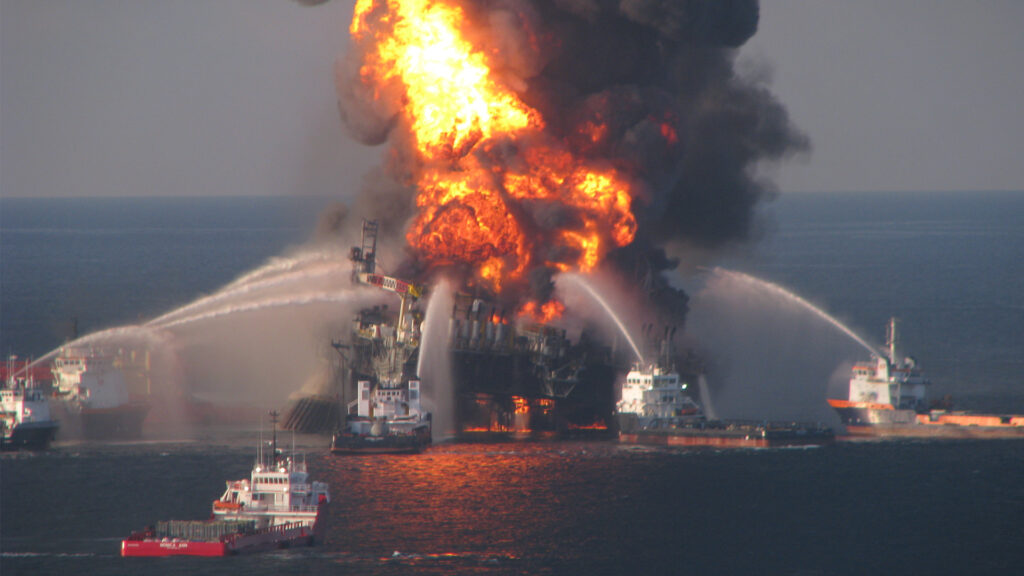
Even though the oil rig that exploded in the 2010 BP Deepwater Horizon disaster was more than a hundred miles from Florida, enough oil from that catastrophe washed up on Pensacola’s shores to shut down beaches and send tourists packing. Florida suffered more than $3 billion in damages and much of that was damage to our economy.
It’s not just about the next drilling disaster. Burning oil and gas is fueling climate change hazards. And Florida is already shouldering more harm from climate change than most states.
Extreme heatwaves are now a regular occurrence for us, and marine heatwaves are killing our ocean life. In October, two species of corals that were critical to building Florida’s reefs — elkhorn and staghorn — were declared “functionally extinct” in the Florida Keys.
The loss is heartbreaking for the sake of the marine ecosystem, but weaker reefs also mean our coasts are at much higher risk of flooding and storm damage. Reefs are also the nurseries for our fisheries and a major draw for snorkelers and divers who spend money in our communities.
We got lucky with a mild hurricane season in 2025, but of course we remember how destructive Helene and Milton were last year. We know we have to be prepared for more bad seasons to come, with storms of increasing intensity fueled by warmer waters. Even without storms, sunny-day flooding in Miami continues to worsen, demanding expensive repairs and adaptations.
All these challenges are a result of unchecked fossil fuel production and use. And the only way to turn things around is to stop drilling and start investing in more renewable energy.
Our senators and representatives are right to be indignant about drilling off Florida’s coast — but it shouldn’t stop there. They need to stick up for our Gulf Coast neighbors, as well as fellow Americans in Alaska and California, by saying no to expanded offshore drilling entirely. And they should speak out against Trump’s out-of-control plan to auction off our oceans for decades more fossil fuel extraction.
We can’t afford to fight all our fights alone, or to let short-term politics get in the way of a bright future.
Elise Bennett is the Florida and Caribbean director and an attorney at the Center for Biological Diversity. Banner photo: An aerial view of an offshore drilling rig in the Gulf (iStock image).
Sign up for The Invading Sea newsletter by visiting here. To support The Invading Sea, click here to make a donation. If you are interested in submitting an opinion piece to The Invading Sea, email Editor Nathan Crabbe.
