


By Arielle Perry and Nathan Crabbe
Coral reefs are “the most hyperdiverse ecosystems that we have on our planet” but face major threats, according to a keynote speaker at a South Florida climate change conference Wednesday.
Corals are dying at an “alarming rate” worldwide, said Steve Vollmer, director of Florida Atlantic University’s School of Environmental, Coastal, and Ocean Sustainability (ECOS). Vollmer spoke about the threat that diseases and high ocean temperatures pose to corals at the 17th Annual Southeast Florida Climate Leadership Summit.
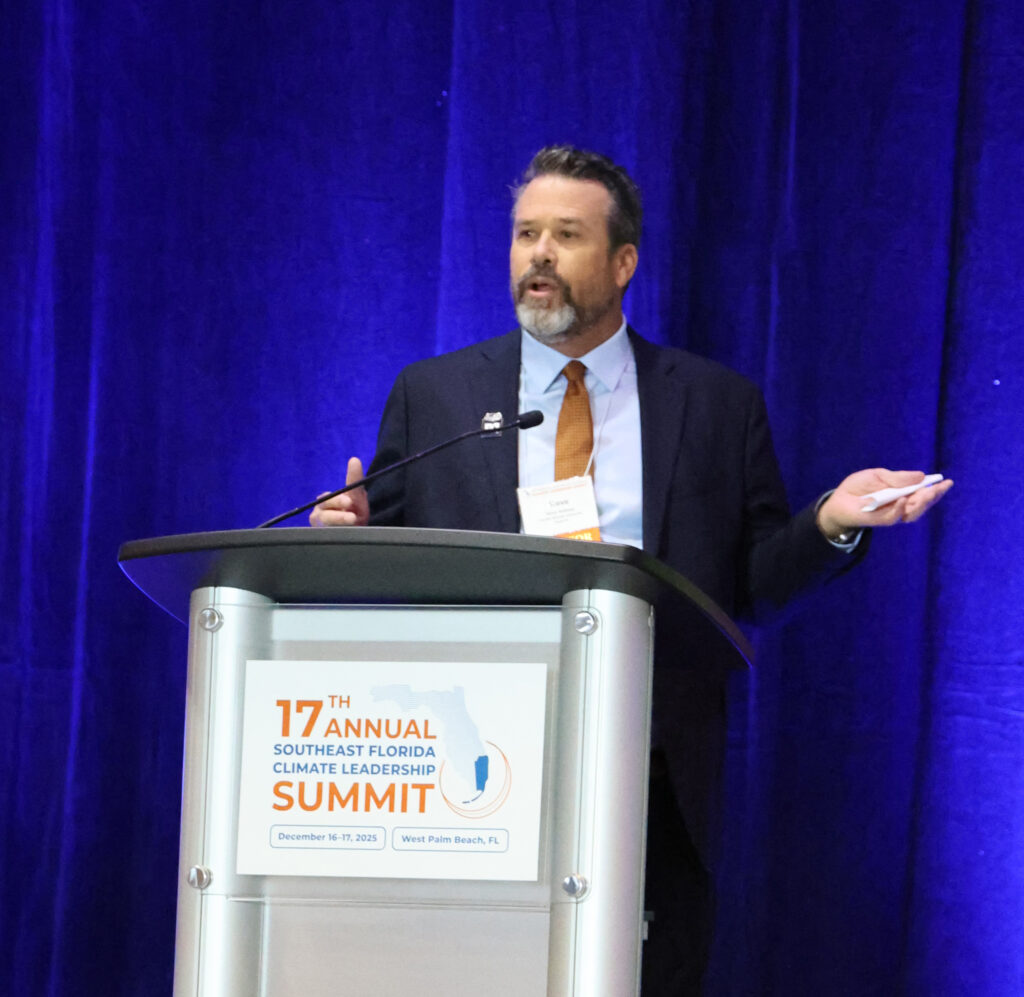
Coral reefs are “the canary in the coal mines” showing the impact of rising temperatures on oceans, Vollmer said.
The summit is held each year by members of the Southeast Florida Regional Climate Change Compact, a partnership between Broward, Miami-Dade, Monroe and Palm Beach counties to collaborate on addressing climate threats. This year’s event, held Tuesday and Wednesday at the Palm Beach County Convention Center in West Palm Beach, included panel discussions and speeches on topics such as disaster recovery, resilience technology and efforts to adapt to rising temperatures and sea-level rise.
Vollmer discussed how a 2023 heat wave affected coral reefs along Florida’s coast. Heat levels stayed for five months at or above the temperature threshold that causes coral bleaching, he said, which can result in corals dying.
Researchers have identified coral species that are resilient to diseases and are now trying to do the same with resilience to high ocean temperatures, Vollmer said. He noted that research on these “supercorals” and other efforts to protect and restore reefs lack the same level of funding dedicated to other natural resources such as forests.
“Let’s match the challenge that’s facing our coral reefs with the investment it needs,” Vollmer said.
ECOS was a lead sponsor of the summit and other FAU faculty members also spoke there. They included Jeffery Huber, an architecture professor and author of “Salty Urbanism: A Design Manual to Address Sea Level Rise and Climate Change for Urban Areas in the Coastal Zones.”
Huber said the experience of Hurricane Andrew hitting his childhood home in Homestead in 1992 shaped his work in resilience.
“It’s taught me that resilience isn’t just an add-on or a luxury, it’s the foundation of how we design places that truly support people through construction and recovery,” he said.
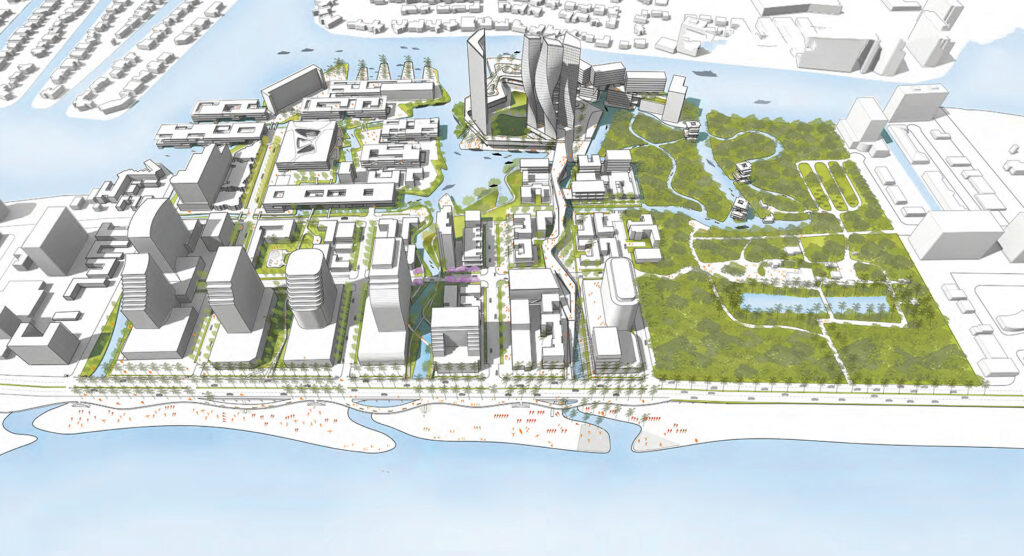
“Salty Urbanism” provides examples of architecture and urban design changes that would allow Floridians to live with rising sea levels. Huber noted Florida is home to 22 of the 25 U.S. cities identified as being most vulnerable to coastal flooding in a study by the nonprofit group Climate Central, 19 of which are located in the counties in the Climate Compact.
“This is where resilience stops being abstract and starts becoming local, immediate and unavoidable,” he said.
Serena Hoermann, associate director of the FAU Center for Urban and Environmental Solutions, took part in a panel about resilience technology. Hoermann discussed her work on virtual reality simulations showing the impact of flooding from sea-level rise and storms on South Florida communities.
“When you go to a typical meeting with residents and you try to talk about some of these concepts, it’s very difficult to picture the different levels of water, for example, or the different places on the map that it might impact,” she said, adding that providing an immersive experience “gave us a way to talk to people in a very visual way.”
Other summit panels covered issues such as innovative ways to protect properties from flooding and make buildings more energy efficient. Hoermann said such discussions illustrated how resilience efforts address problems such as affordability that are concerns for a wide array of Floridians.
“We’re not as far apart on a lot of these things as others … would like us to believe,” she said.
Arielle Perry is a master’s student in the Environmental Science Program at FAU and is a graduate research assistant at FAU’s Center for Environmental Studies, which manages The Invading Sea. Nathan Crabbe is editor of The Invading Sea. Sign up for The Invading Sea newsletter by visiting here. To support The Invading Sea, click here to make a donation.
Banner photo: Bleached wild and outplanted staghorn and brain corals at Sombrero Key Reef in the middle Florida Keys in the summer of 2023 (Ananda Ellis/NOAA, Public domain, via Wikimedia Commons). To learn more about coral bleaching, watch the short video below.
