


By state Rep. Monique Miller, R-Palm Bay
It’s time for Florida to make bold changes to its energy policy. More than 70% of our state’s electricity comes from natural gas, and none of it is produced here. That arrangement creates a dependency that threatens our domestic security and state sovereignty.
For years, Florida’s energy companies have tried to diversify, but the reality is that we have limited options. Solar is relatively expensive and less optimal than one would expect, given that this is the sunshine state. Wind was a failure and has been completely banned. Coal and gas are more expensive and less clean than natural gas. So what is left?
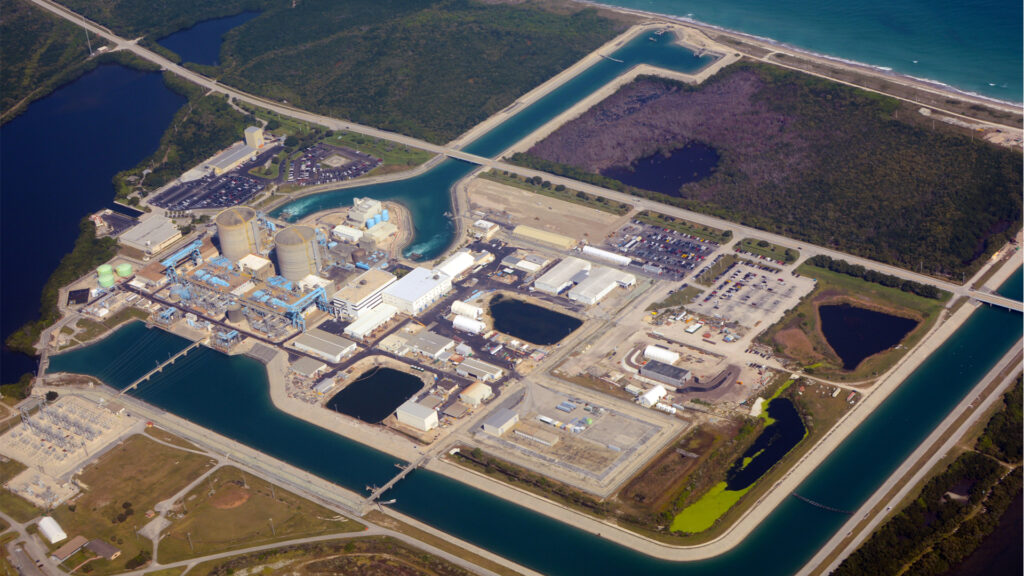
Ten percent of Florida’s electricity currently comes from nuclear energy. There are three traditional nuclear power plants in the state, one of which is in the process of being decommissioned.
Modern nuclear technology is clean and safe. Large-scale reactors still require a significant up-front investment and years of permitting and planning. However, the Trump administration has taken considerable steps to improve their viability and encourage their adoption.
But the biggest opportunity for Florida lies in advanced nuclear. Collectively, this refers to small modular reactors (SMRs) and microreactors. Typically, these produce around 300 MW and 20 MW of power, respectively. SMRs are about the size of a tractor trailer while microreactors are even smaller and specifically designed for maximum portability.
There are dozens of companies, ranging from established giants to brand new start-ups, racing to create the best advanced nuclear reactors. As with most new, manufactured technology, the first few units are expensive to produce. Once the company perfects the manufacturing process, subsequent reactors have a predictable cost of about 30% less than the first units.
Historically, because of the uncertainty and up-front investment, nuclear energy required government subsidies to make it an attractive alternative. However, we are in the midst of unique circumstances that present a terrific opportunity for Florida. There are large tech companies that urgently need energy for high-tech manufacturing facilities and data centers. They are willing to take on risk and pay more money to have immediate access to energy. Nuclear can provide them a dedicated, off-grid solution without impacting the electric rates of Floridians.
Best of all, these companies ― the free market ― would pick the winning technologies among the many choices of advanced nuclear. All the government has to do is get out of their way. Once the first few units are purchased, utility companies will be able to invest in these reactors for widespread use, at a predictable cost, with reactors from proven companies.

Last week, I introduced legislation that does three key things:
- It establishes that Florida, as a sovereign state, has the right to license and regulate advanced nuclear, through the Public Service Commission (PSC). Florida will be the first state to take this approach.
- It allows companies that want to make a direct investment in nuclear the opportunity to do so off the power grid, for their own use. Their reactor can be managed by a third party without the third party being considered a power company, for the purpose of regulation.
- It makes nuclear a highly preferred, clean alternative in the state’s energy plan and establishes the University of Florida’s Department of Materials Science & Engineering, which houses their nuclear engineering program as an advisory authority to the PSC.
By allowing the free market the ability to be an early adopter of advanced nuclear technology, we all win. Tech companies will get the power they desperately need without taxpayer subsidies, and consumers will get a new form of clean energy, once it is proven, at a predictable cost.
Once again, Florida is leading the nation.
Monique Miller is a state representative from Brevard County, representing District 33. This opinion piece was originally published by Florida Today and other USA Today Network-Florida newspapers, which are media partners of The Invading Sea. Banner photo: Power lines running along a canal in Everglades National Park near Fort Lauderdale (iStock image).
Sign up for The Invading Sea newsletter by visiting here. To support The Invading Sea, click here to make a donation. If you are interested in submitting an opinion piece to The Invading Sea, email Editor Nathan Crabbe. To learn more about small modular reactors, watch the short video below.

Nuclear energy is not clean. The extraction of uranium leaves a lot of contaminated waste . It also releases large amounts of carbon. The constuction of the facility releases a lot of carbon as does the manufacture of cement. Then there is the radioactive waste. Where will it be stored? A good place would be the homes of executives and stock holders. It also uses a tremendous amount of water Nuclear is not an answer for our future. We need solar wind both land and offshore. Composting organic waste to produce hydrogen. We need to stop using fossil fuels in the next decade. Climate change will continue to cause mass extinctions which will include us if we don’t change.
Meanwhile, Florida utilities continue to build solar farms and more often with battery storage. Why is that? The writer here should examine the economics of solar more closely. Duke energy sent me a notice that my bill will come down in 2026 in part because of their solar farms (sunshine is free). Solar is becoming a more sustainable energy source now as more companies are entering the panel recycling market (right here in Florida). The ‘waste’ problem for solar panels is being solved. Too bad we still haven’t solved it for nukes.