


By David Vaina
In 2020, Jay Rosen realized he was having to drive farther and farther away from his home in Alachua County to capture the natural brightness of the moon, planets and distant galaxies.
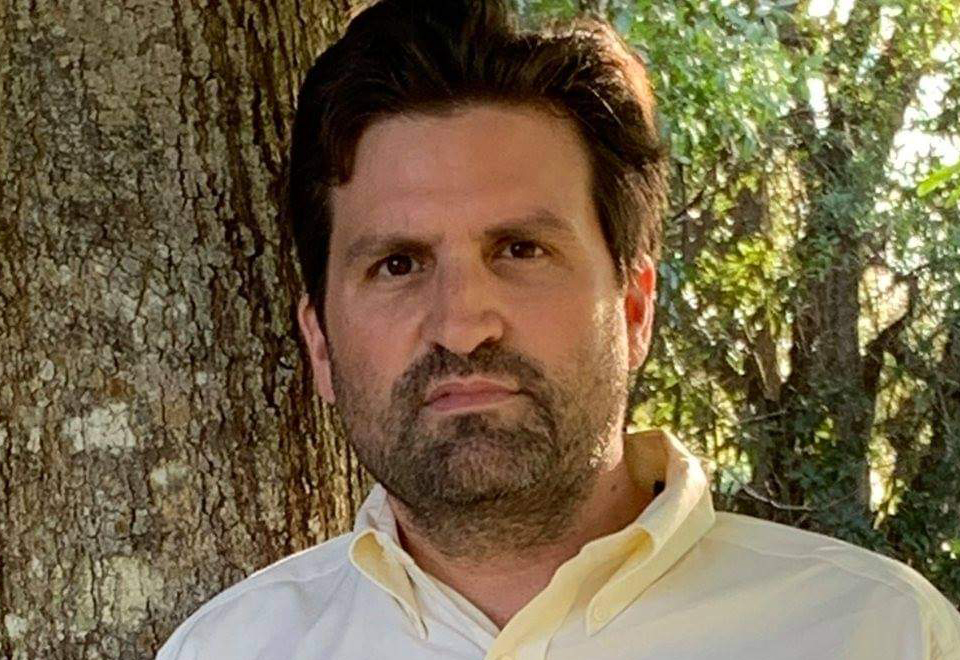
By day, Rosen is an expert in artificial intelligence who works at the University of Florida. By night, Rosen is active in the Alachua Astronomy Club and an amateur astrophotographer whose darkscape photos have been published on the Georgia state tourism website and elsewhere.
Rosen has lived in rapidly developing Gainesville for the last 15 years and has seen a significant uptick in the local level of light pollution. And the numbers that Rosen shares back that up. Between 2012-2025, according to satellite imagery captured by NASA, overall brightness in Alachua County has increased 19%. Data on Paynes Prairie Preserve State Park showing a 15% increase in “skyglow.”
While admission to the annual winter stargazing events hosted by the Friends of Paynes Prairie are among the hottest tickets in town for dark skies enthusiasts, Paynes Prairie now measures a mere four on the Bortle Scale. The nine-level scale measures sky brightness – with the lower the number, the darker the skies. A four classification suggests a sky transitioning from a rural to a suburban geography, with increasing light pollution making celestial objects difficult to observe.
In this moment of climatic crisis facing Florida’s environmental community, why should light pollution – known officially as Artificial Light at Night (ALAN) – that makes it harder to see the stars in Alachua County be of concern? Well, brighter skies aren’t only a concern for stargazing hobbyists.
There’s also an ecological impact on wildlife. Extended light hours exhaust animals and make them more susceptible to prey that can more easily find them.
Skyglow disorients birds, makes them fly off course and can cause fatal crashes. According to the National Audubon Society, 80% of North American birds migrate at night and as many as 1 billion birds a year die from these deadly collisions. Audubon launched the “Lights Out Program” to educates households and businesses on light pollution, encouraging communities to turn the lights off as much as possible during migratory times.
Human health can also be affected as light pollution impacts our sleep because it suppresses melatonin production that’s needed to feel sleepy. Excessive light exposure can interfere with the metabolic efficiency of flowering plants and other crops, and may also function as an environmental stressor for cattle as it throws off their hormones and reduces productivity.
Contrary to logic and public perception, excessive lighting may not make us safer at night because of the “disability glare” that allows predators to obscure themselves more easily in the light because of our decreased visibility.
To do something about increasing light pollution in Alachua County, Rosen went to work. First, he developed an app (Alachua Dark Sky Simulator) that provides a trove of resources on light pollution and its effect on both the human and non-human worlds.
Most interestingly, there’s a simulator component to the app that enables user-provided inputs that can be used to calculate mitigation costs, determine payback time and taxpayer savings, update Bortle classifications, and dynamically render both the light pollution map and the night-sky visualization in Alachua County. To explore the simulator, I adjusted the settings for Alachua County to require fully-shielded lighting; set color and temperature limits for new lighting installations (lower, warmer color temperatures emit less blue light, which reduces light pollution); imposed a lighting curfew so that lights are dimmed between 12 a.m. to 5 p.m.; and reduced the overall light intensity by 35%.
When Alachua County is reconfigured as such, the Bortle level in Payne’s Prairie drops to 2.5 – an ideal location for stargazing and astrophotography that no longer exists anywhere in Alachua County. If the most comprehensive measures are taken to reduce light pollution in Alachua County, Rosen estimates the cost would be around $15 million, though smaller investments can have an impact as well.
The app also includes examples of policies that local governments can adopt to reduce light pollution and Rosen wants to see Alachua County follow suit. He’s currently working with Alachua County’s Environmental Protection Advisory Committee, a county-appointed advisory group that makes recommendations to the County Commission on protecting and managing local resources (transparency: I currently serve as vice chair). This January, the committee voted for Alachua County to take steps toward becoming just the fourth community in Florida to become a certified DarkSky Place.
Along the way, Rosen will continue to do public education on light pollution – and hope that he will have shorter drives for his stargazing journeys. To learn more, Jay welcomes emails (studio@jayrosen.design) from his fellow dark-skies lovers.
David Vaina holds a Ph.D. in political theory and has published articles on social movements, political theory and climate change as well as a 2024 book (“On Ramps to a New Civil Society: Mutual Aid at the Edge of the Anthropocene” Rebel Hearts). He lives in rural north Florida. Banner photo: The Milky Way over Paynes Prairie (Photo courtesy of Jay Rosen Design).
Sign up for The Invading Sea newsletter by visiting here. To support The Invading Sea, click here to make a donation. If you are interested in submitting an opinion piece to The Invading Sea, email Editor Nathan Crabbe.
