


By Kristen Monsell, Center for Biological Diversity
We already know that offshore oil drilling leads to spilling. That’s not pessimism — it’s just what history tells us.
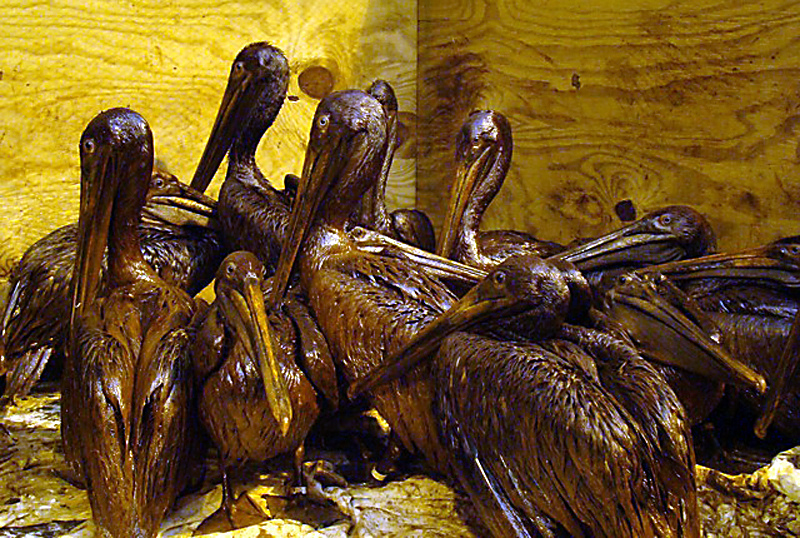
Spilling kills ocean wildlife, fouls beaches and disrupts coastal economies. Many people in Pensacola and along Florida’s Gulf Coast remember this all too well from the 2010 BP Deepwater Horizon disaster.
But Donald Trump is ignoring this reality and insisting on pushing for more and more offshore drilling in the oceans that belong to all of us. Unless we stop this unhinged buildout, he could lead us into a truly grim oil-soaked future.
If offshore drilling expands according to the horrific vision Trump laid out in his recent five-year plan, it could cause a staggering 4,232 oil spills over the next few decades. That means around 12 million gallons of crude dumped straight into the ocean.
Keep in mind: That’s a conservative estimate that doesn’t even include the possibility of major spills like Deepwater Horizon.
My colleagues at the Center for Biological Diversity and I ran an analysis on the spill risk of Trump’s plan to understand the potential harm we’re facing. We used data on average oil spill rates from 1974-2015 to come up with spill estimates for the up to 34 offshore lease sales the plan calls for.
The sheer area of the ocean that could be harmed by drilling is also overwhelming. Trump is proposing to auction off 1.27 billion acres of public waters in the Gulf, the Pacific and off Alaska in these sales. That’s equivalent to about half the landmass of the entire United States.
Can you imagine the outcry if anyone proposed selling half the land in our country to private oil companies? Yet Trump is auctioning off our oceans, which are the lifeblood of our planet. We need to keep them wild and healthy.
The spill risk we found by crunching the numbers is bad enough, but it’s not even the full story. Trump’s five-year plan is on top of another 36 oil and gas lease sales over the next 13 years that Congress mandated in the One Big Beautiful Bill Act. It’s truly nonsensical to fixate this much on an unpopular energy source we know causes harm in multiple ways.
Florida legislators on both sides of the aisle have been fighting back against drilling off the state’s coasts. While the swath of the Gulf closest to Florida won’t be included, just because oil rigs won’t be visible from Florida’s beaches doesn’t mean the coast will be safe.
Spilled oil can travel long distances, as it did after Deepwater Horizon. And we definitely won’t be able to escape harms from accelerated climate change caused by burning more fossil fuels, like marine heat waves, coral die-offs and flooding.
Spills would be devastating for wildlife. The Gulf is the full-time home of the Rice’s whale, a critically endangered species with only around 50 living individuals. Deepwater Horizon killed about 20% of the Rice’s whale population, according to scientists’ estimates.

Many of the whales probably died when oil coated their baleen and then entered their bodies with the food they ate. Some might also have eaten prey that had been contaminated. It’s a horrible way to go and we shouldn’t let it happen again. Another major oil spill could be the end of the Rice’s whale.
Thousands of other animals, including sea turtles, birds and dolphins, were also killed and harmed in that disaster. Many probably died slow and painful deaths. And only about 25% of the oil was recovered, which is common for spills. “Clean-up” efforts are in large part exercises in futility.
When introducing the drilling plan, the Trump administration cited the nation’s “growing energy needs” (without citing evidence). But at the same time he’s cancelling and obstructing renewable energy projects across the country. And in recent years, the United States has exported more petroleum than it’s imported. The numbers and justifications don’t add up.
Trump’s offshore drilling plan has to go through another revision before it’s finalized, and some of the damage can still be minimized. We need to take every opportunity to speak out about how destructive more drilling would be — or we may end up spending years trying to get oil off our beaches.
Kristen Monsell is legal director of the Center for Biological Diversity’s Oceans program. Banner photo: The surface burning of oil at Deepwater Horizon (David Valentine, CC BY-SA 4.0, via Wikimedia Commons).
Sign up for The Invading Sea newsletter by visiting here. To support The Invading Sea, click here to make a donation. If you are interested in submitting an opinion piece to The Invading Sea, email Editor Nathan Crabbe.
