


By Meghan Austin
I am a dairy farmer, a veterinarian and a small business owner in Marianna, a Florida Panhandle town that many people only notice when a hurricane’s projected path crosses it.
When we talk about climate change and sea-level rise, we usually picture beaches and coastal condos. But the choices we make on inland working lands like mine will help decide whether Florida has the ability to weather what’s coming.
My parents, Dale and Cindy, were first-generation dairy farmers. They didn’t inherit land or a herd. In their late 30s, after the large dairy my dad managed in Monticello sold out, they started from scratch by leasing old, mostly abandoned dairy facilities. Over 10 years, they built enough equity to buy land and, in 2004, constructed our current dairy.
Today, that farm supports about 400 dairy cattle, including milking cows and young cattle. That may not sound like a small dairy, but it is. The average dairy herd size in Florida is 1,800 cows. Dairies have had to become larger to survive. Environmental regulations have pushed cows indoors, where conditions can be controlled.
In the early 2000s, we, too, knew we were going to have to expand or do something different. We chose to do something different – diversify and value-add. Our dairy is the backbone of Southern Craft Creamery, an award-winning ice cream brand; a milk bottling plant; and a farm-to-table market, where we sell our beef and products from other farmers in our region.
Together, these enterprises form a circular system where land, water, nutrients and dollars cycle locally rather than wasting away.
A different kind of dairy
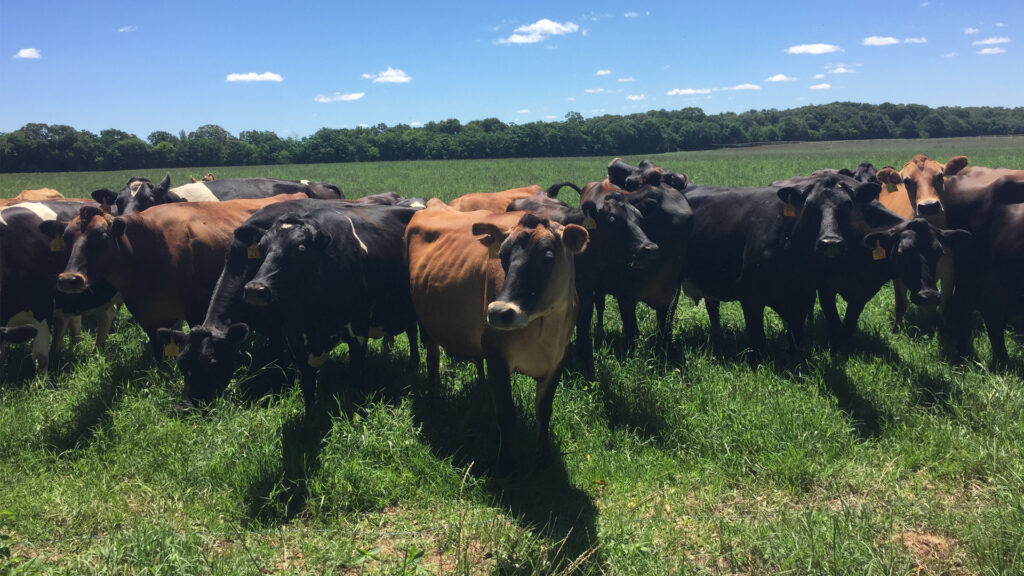
We are a pasture-based dairy. Our cows are rotationally grazed – moved through a series of paddocks so grass can recover and soils can recharge. Cows are expert upcyclers. My husband, Brad, who holds a Ph.D. in ruminant nutrition and reproduction, likes to say the only fertilizer we “buy” is the feed we bring onto the farm.
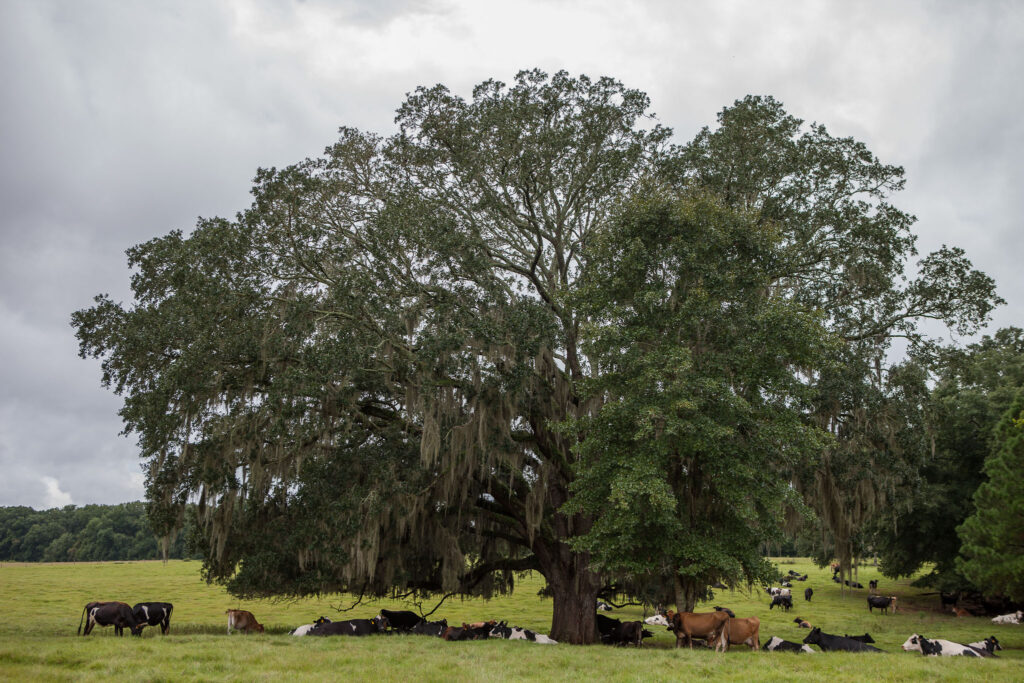
Cows turn grass and byproducts from other industries that otherwise would go to waste – cotton seed, citrus pulp, brewers grains – into milk, meat and manure. The manure, as well as water we capture after washing the barns, fertilize our fields and feed the soil. The soil grows more grass, and that grass feeds the cows once again. It’s a true circular system.
Given our degrees, people assume we run the most high-tech, intervention-heavy system around. The opposite is true. We switched from Holsteins to Jerseys, a smaller, more efficient dairy breed that fits our grazing model. We moved to seasonal calving, more like a beef herd: We calve in the fall and spring instead of year-round like most dairies. Most unusually for a dairy, we raise our calves on their mothers.
Not every farm can or should manage this way, but it works best for us and our family. And our experience points to a broader lesson: Smaller, pasture-based farms can be nimble innovators in animal welfare, soil health and water management – if policy gives us room to experiment instead of forcing everyone into the same box designed for the largest operations.
Working lands as assets to the community
About half of our 467 acres is woodland and wetland: a hickory forest, a spring-fed slough and diverse pastures with hardwood trees. For years, local birders came to our farm because they could find species here they struggled to see elsewhere. Today, black-bellied whistling ducks nest around our lagoon. We regularly see egrets, ibises, Mississippi kites, eagles, osprey, turkey, fox squirrels, gray and red foxes, bobcats, deer and the occasional alligator.
Wildlife coexists with cows. I know there are concerns about agriculture’s environmental footprint, but I also know this: Farms like ours that go out of business rarely become parks. They become subdivisions and parking lots.
In a warming, more volatile Florida, we desperately need working lands that:
- Store carbon in soils, trees and perennial roots.
- Slow and soak up stormwater.
- Provide wildlife habitat and migration corridors.
- Produce food close to where people live.
That is exactly what our farm does every day.
What Florida should do – and what you can do
From my vantage point in muddy boots, here’s what would help:
- Recognize and reward climate-smart practices on all farms, small, medium and large.
- Invest in local processing and markets – dairies, small meat plants, farm hubs – so more value stays in rural communities and fewer farms have to sell out.
- Ensure regulation does not overburden small producers or unintentionally block commonsense practices, like sourcing local ingredients in regional food processing.
For everyday Floridians, the most powerful step is simple: Buy from local farms when you can. Your milk, ice cream, meat, eggs and produce choices decide which landscapes survive the next generation of storms and development.
Meghan Austin and her family operate a pasture-based dairy and related enterprises, including Southern Craft Creamery, a bottling facility and a farm-to-table market in Marianna. More of her story is included in “Voices of Florida Farmers: Building a Circular Bioeconomy,”the Florida Smart Agriculture working group’s latest report. Banner photo: Cows at Austin’s pasture-based dairy (Photo courtesy of Meghan Austin).
Sign up for The Invading Sea newsletter by visiting here. To support The Invading Sea, click here to make a donation. If you are interested in submitting an opinion piece to The Invading Sea, email Editor Nathan Crabbe.