


By Jeremy Sabol
When I came home from college for winter break in 2022, I walked along the beach of my Space Coast hometown. I was surprised by what I saw: The shorebreak was less than 10 feet from beach-access points, dunes had eroded away and some staircases appeared like a game of pick-up sticks.
It was the most severe damage I had seen in six hurricane seasons in Florida. Three years later, I can confidently say what the appropriate response to coastal erosion is: managed retreat.
Coastal erosion is driven largely by the immediate impact of storm waves and the gradual loss of sand through tidal movement. The latter is becoming increasingly influential as rising sea levels reach further inland — a trend that will persist regardless of future emission trajectories.
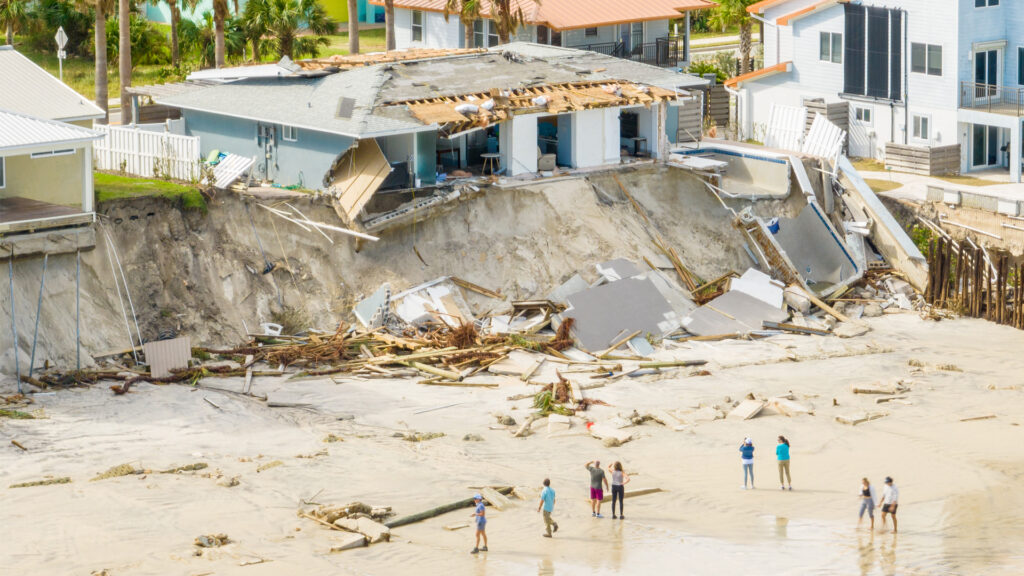
This persistence stems from the delayed response of Earth’s climate system to disturbances, a result of its global scale and incredibly complex dynamics. Accordingly, even if greenhouse gas emissions were cut to zero tomorrow, the planet would still warm for decades. The oceans would keep expanding as they absorb heat and land-based ice would continue melting, adding volume to the sea and worsening erosion.
Coastal municipalities too often address the issue with short-term vision. Hard, artificial “gray” structures such as sea walls used to be the preferred approach. However, these structures accelerate erosion of surrounding areas, prompting beach nourishment to become the new tactic. Yet, beach nourishment is only temporary. The sand inevitably washes away, and sourcing sand becomes increasingly challenging — logistically and financially — the more the strategy is used.
Between 2020 and 2050, sea levels in Florida are projected to rise by six to 14 inches, placing many coastal communities in imminent danger of flooding and storm surges. Helene and Milton from last year’s hurricane season are grim reminders of the potential devastation, further underscored by National Oceanic and Atmospheric Administration forecasts of three to five hurricanes of at least Category 3 strength for the 2025 season.
Seawalls and more sand no longer stand the forces at play. Accordingly, we need to turn to managed coastal retreat for long-term welfare.
Punta Gorda serves as a strong example of long-term planning. Since 2009, the city has integrated a citizen-driven Climate Adaptation Plan into its comprehensive city plan. It uses a phased-in approach designed to account for sea level rise and storm risk, adapting to changing conditions. Punta Gorda’s strategies include expanding seagrass coverage, installing living shorelines, buying out flood-prone properties, relocating city buildings and limiting development in risk-prone areas.
Sea level rise will affect 410 municipalities in Florida; nonetheless, many continue to build in risky areas. Part of the reason is that disaster aid and insurance systems absorb large losses, distorting risk.
Another contributing factor is that property owners either ignore the dangers or view coastal properties as attractive short-term investments. Projections of up to 97 days of nuisance high-tide flooding a year by 2050 will complicate this. Even then, the number can swell to 352 days per year by 2070, depending on global emissions, temperature increases and the melt of Antarctic and Greenlandic ice sheets.
The two main obstacles to managed retreat are funding and public support. Understandably, moving from homes and communities is psychologically and economically difficult. But, as Punta Gorda shows, early planning and public involvement can ease the transition.
Managed retreat doesn’t require abandoning the coast overnight. It means gradually relocating homes, buildings and infrastructure to safer areas on terms that citizens can get behind. The alternative is waiting until after the next destructive storm or flood, at far greater cost in lives and dollars.
Coastal living in Florida has long offered sun, pristine beaches and laid-back lifestyles. However, without proactive planning, it will also raise the chances of crisis. State and local leaders must look beyond the next storm and plan with the generations of Floridians to come in mind.
Jeremy Sabol is a Satellite Beach resident and University of Florida graduate, currently attending Duke University, pursuing a master’s degree in environmental management. This opinion piece was originally published by the Orlando Sentinel, which is a media partner of The Invading Sea. Banner photo: Heavy equipment performing restoration work on Satellite Beach in February. (iStock image).
Sign up for The Invading Sea newsletter by visiting here. To support The Invading Sea, click here to make a donation. If you are interested in submitting an opinion piece to The Invading Sea, email Editor Nathan Crabbe at ncrabbe@fau.edu.
