


By Mark McNees, director of Social and Sustainable Enterprises at Florida State University
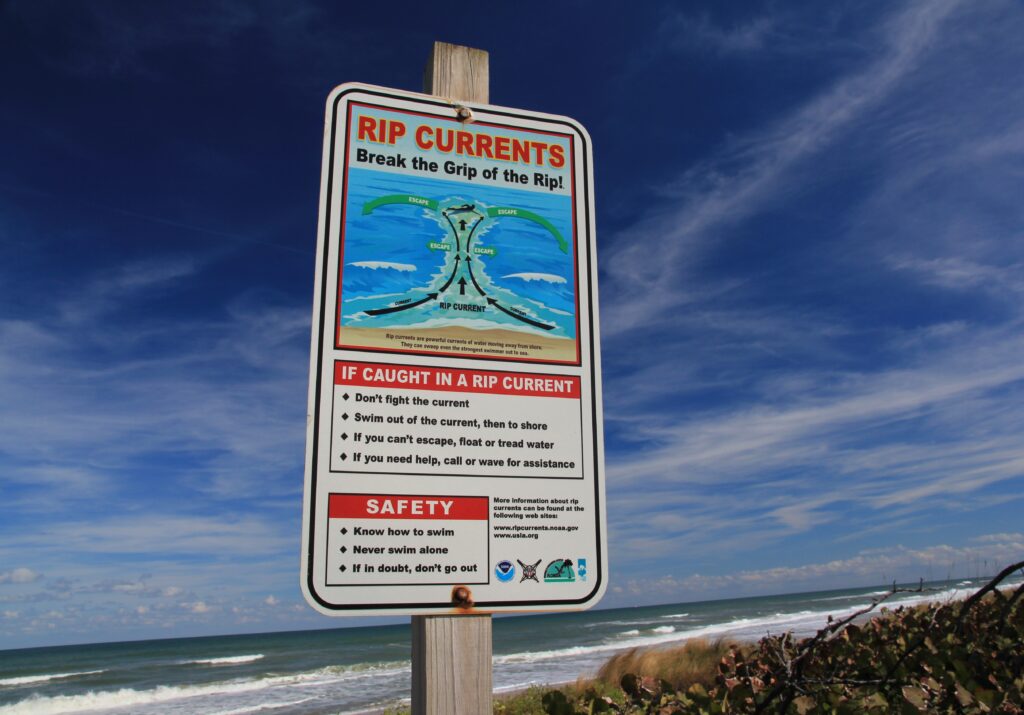
Every Florida beachgoer has seen the sign that shows you how to survive a rip current; you don’t fight it directly. You swim parallel to shore and work with nature’s forces to reach safety. Yet our state faces a critical choice about how to navigate the environmental and economic currents pulling at our coastline.
Florida families are struggling with insurance costs ranging from $5,300 to over $10,500 annually, roughly two to three times the national average. Like swimmers caught in a riptide, we’re searching for the best path to safety while in economic danger.
The University of Florida recently closed its Office of Sustainability, which had reduced campus energy consumption by 14.4% over 17 years. This followed Gov. Ron DeSantis’ veto of unanimously passed recycling legislation. These decisions reflect a broader debate about the role of government versus market solutions in addressing environmental challenges.
Environmental pressures are measurable. Hurricane Milton caused an estimated $34 billion in damage in October 2024. Orange production has declined approximately 92% since 2003-04. The 2018 red tide cost approximately $2.7 billion in tourism losses — significant for a state where tourism generates roughly $128 billion annually and supports 2.1 million jobs. Environmental groups project that future algae blooms could affect $17.8 billion in property values.
Florida Atlantic University polling shows 68% supporting increased state environmental action. This consensus crosses party lines, suggesting opportunities for collaborative solutions. Some political forces prioritize market-based approaches and fiscal responsibility, while others advocate for government-led environmental programs. Perhaps there is room for both.
Importantly, Florida has made significant investments in resilience. The state has allocated approximately $1.8 billion to resilience programs since 2021 and commits $625 million annually for Everglades restoration and water quality improvements. These investments demonstrate a recognition of environmental challenges, even as approaches and rhetoric to solutions differ.
The manatee situation illustrates complexity. With 477 reported deaths through July 2025, federal courts have identified links between water pollution and manatee mortality. This has prompted legal interventions requiring new approaches to water management, highlighting the intersection of environmental, legal and economic considerations.
The insurance market reflects these challenges. Seven insurers reportedly became insolvent over 13 months, while Citizens Property Insurance grew from approximately 511,000 policies in 2020 to 1.4 million in 2023. Recent reforms have shown some stabilization, with Citizens reducing policies through market improvements, demonstrating that targeted interventions can help.
Miami-Dade faces an estimated $400 billion in flood-vulnerable assets. Sea levels have risen approximately 8 inches since 1950, with projections suggesting an additional 10-12 inches rise by 2050. These changes affect property values, infrastructure planning and tourism attractions vital to our economy.
There is no doubt about it, we are stuck in a rip current. Different stakeholders offer varying solutions. Business leaders emphasize innovation and market efficiency. Environmental advocates stress the urgency of comprehensive planning. Fiscal conservatives highlight budget constraints and taxpayer protection. Each perspective contributes valuable insights to the conversation.
The path forward likely requires combining approaches: market innovation alongside strategic government investment, state solutions coordinated with federal resources and immediate economic needs balanced with long-term resilience. Like navigating a rip current, success requires understanding the forces at play and working strategically rather than fighting blindly.
Florida families deserve leadership that synthesizes these perspectives — protecting both our economy and environment. The question isn’t whether to act, but how to unite diverse approaches into effective action. By respecting both nature’s power and economic realities, we can chart a course that keeps Florida thriving for generations to come.
Mark McNees is the director of Social and Sustainable Enterprises at Florida State University and lead consultant at the McNees Group. This opinion piece was originally published by the Tallahassee Democrat, which is a media partner of The Invading Sea. Banner photo: Coastal homes destroyed by a hurricane (iStock image)
Sign up for The Invading Sea newsletter by visiting here. To support The Invading Sea, click here to make a donation. If you are interested in submitting an opinion piece to The Invading Sea, email Editor Nathan Crabbe at ncrabbe@fau.edu.
