


President Donald Trump’s 2026 budget proposal includes the total elimination of the Community Services Block Grant, a little-known but vitally important source of funding aimed at reducing poverty for many rural communities.
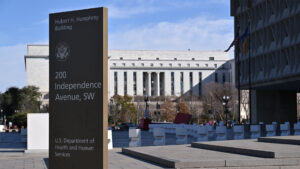
Run by the Department of Health and Human Services (HHS), 90% of the grant’s money goes to community action agencies that operate in nearly every single county in the United States.
While each agency offers programs specific to their communities, there are some common themes: two-thirds administer Head Start programs, about half provide utilities payment assistance through the Low Income Home Energy Assistance program and a few help families reduce energy costs using the Department of Energy’s weatherization assistance program.
It’s these initiatives the Trump administration is targeting. The 2026 budget request singles out community action agencies in California and Wisconsin that the administration says are “laden with equity-building and green energy initiatives.”
Recipients of the Community Services Block Grant say the potential elimination could hit rural communities especially hard.
For most rural community action agencies, the grant makes up a larger portion of their budget than those in cities, according to David Bradley, CEO of the National Community Action Foundation that advocates for community action agencies. Bradley was one of the original architects of the current iteration of the Community Services Block Grant program, created in 1981.
While the program is under attack now, Bradley said it’s not the first time the program has been on the chopping block.
“We’ve suffered from a misconception about what the agencies do and who we are,” Bradley said. “This program has changed so dramatically … There’s accountability, there’s responsibility, there’s trust by local elected officials.”
The program was first authorized by a bipartisan coalition in Congress pushing back against former president Ronald Reagan’s effort to abolish all offices of economic opportunity created during the “war on poverty” in the 1970s.
The Community Services Block Grant came from the consolidation of 77 anti-poverty grants into one block grant. It’s currently the only federal program whose primary mission is to fight poverty.
While the program itself hasn’t been reauthorized since 1998, Congress allocates funding to it every fiscal year. The amount allocated has wavered throughout the years: for fiscal year 2012, former President Barack Obama proposed cutting the funding in half, to $350 million.
Under former President Joe Biden, the program received $770 million every year spread across the approximately 1,000 community action agencies.
President Trump has been threatening defunding efforts like these since he entered office earlier this year, issuing a series of executive orders meant to ban diversity, equity and inclusion programs in the public and private sectors. He’s also paused or completely canceled funding to renewable energy projects like the ones community action agencies help administer.
“This is one of the foundational funding pieces of our agency,” said Debi Brandt, executive director of United Community Action Partnership, located in Southwest Minnesota. Her organization provides services to rural communities in 13 different counties.
The block grant helps them pay for the administrative costs for emergency housing programs, a car donation program and a transportation program for seniors. “These are programs that may not survive because we don’t have existing funding sources for them (outside of) the Community Services Block Grant,” Brandt said.
In May of 2025, Representatives Glenn Thompson (R-PA) and Suzanne Bonamici (D-OR) introduced a bill that would update and reauthorize the grant program for 10 years, but it’s yet to pass the House.
Now, advocates are waiting to hear whether Congress will approve the budget proposal that would eliminate the Community Services Block Grant.
Bradley said the National Community Action Foundation has been advocating with members of Congress on both sides of the aisle to prevent this from happening.
“We have Republican friends, Democratic friends in (Washington D.C.) … and we can prove we’re effective, we’re not greedy and when we present facts or needs or solutions, they’re listened to,” Bradley said.
This article first appeared on The Daily Yonder and is republished here under a Creative Commons Attribution-NoDerivatives 4.0 International License. Banner photo: A worker with Veterans Green Jobs puts insulation into the crawl space of a home as part of the Energy Department’s Weatherization Assistance Program (U.S. Department of Energy, Public domain, via Wikimedia Commons).
Sign up for The Invading Sea newsletter by visiting here. To support The Invading Sea, click here to make a donation. If you are interested in submitting an opinion piece to The Invading Sea, email Editor Nathan Crabbe at ncrabbe@fau.edu.
