


This piece was originally published by Gulfshore Life.
Charles Sobczak adjusted the seat on an electric bike, showed me the settings, confirmed I had plenty of water and sent me on my way.
It was July 2024. I was visiting Charles, a longtime resident and nature writer, to better understand Sanibel’s past as the city approached its 50th anniversary and witness how Hurricane Ian had impacted its present. Charles, like his neighbors, was optimistic about the future — not imagining the brutal storms to come. He insisted I begin by seeing Sanibel the way it’s meant to be seen: on two wheels.
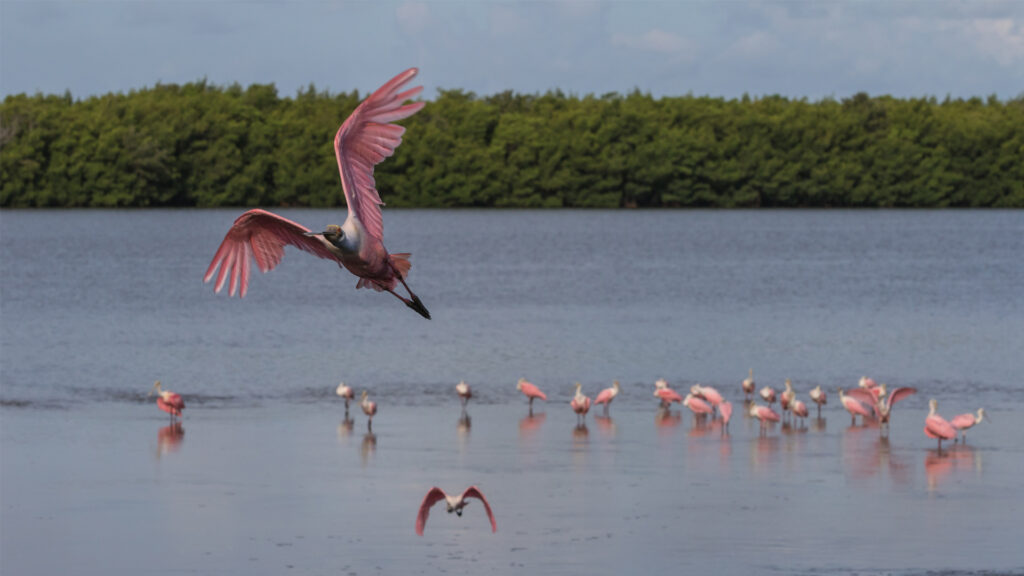
Time slowed as I pedaled the island’s 26-mile shared-use path, passing wildflowers, an ephemeral wetland and a footbridge over the slough. I was enveloped by wilderness — a forested area managed by Sanibel-Captiva Conservation Foundation (SCCF) on my left and another by J.N. “Ding” Darling National Wildlife Refuge to my right. Ahead: the Gulf, bright and unadulterated. There were no traffic lights, no neon, no buildings taller than the tree line. As I cruised along, it struck me that the landscape before me is much the same as what Charles and his wife, Molly Heuer, fell for when they first visited in 1979. It was easy, in that moment, to believe Sanibel had slipped through time, untouched by modern Florida.
That the island looked unchanged on that July morning was no accident. Fifty years ago, Sanibel islanders effectively stopped time. Alarmed by Lee County’s permissive development and the completion of the traffic-inducing causeway, residents in November 1974 voted to reject mainland leadership and form their own government. The city charter they put forth, known as the Sanibel Plan, is a first-of-its-kind mandate that puts nature first. Sanibel is and shall remain a barrier island sanctuary, it states. It defines the community’s attributes — beauty, diversity, uniqueness, character, stewardship — and lays out regulations to uphold them. The plan is so distinct, so comprehensive in its commitment to environmental protection and quality of life, that urban planners continue to study it today. In this golden anniversary year, the Sanibel Plan — and the people who love it — are being tested like never before. As hurricanes pummel the island with increasing frequency, the community that stopped time must learn to adapt—or risk losing everything they fought to preserve.
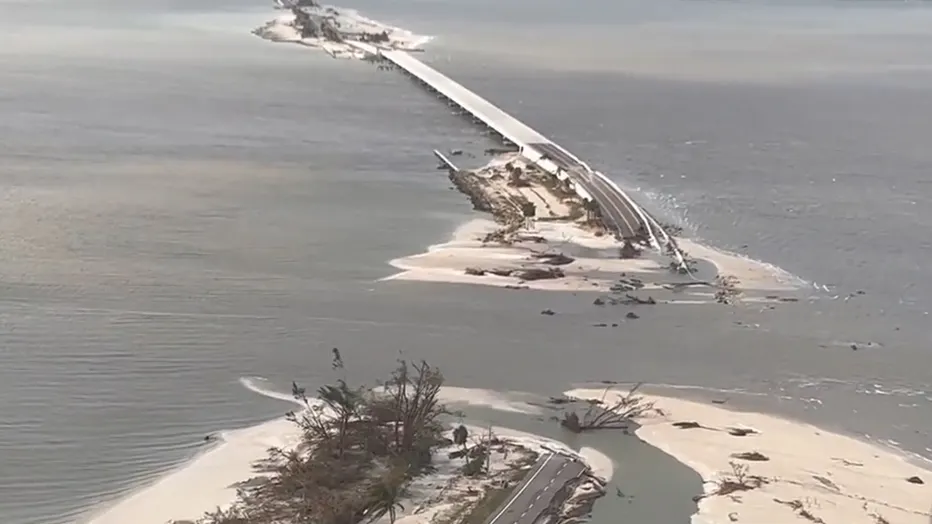
The parade of storms began in 2022, when Category 4 Hurricane Ian roared across the island. It swept away the century-old cottages at the Island Inn, ripped out sections of the causeway bridges, snapped an iron leg of the 138-year-old lighthouse, and collapsed beloved businesses like Bailey’s General Store and the Mad Hatter restaurant, establishments that felt like they’d always been there — and would always be there. Residents got over their shock and got to rebuilding. It was, they reasoned, a once-in-a-century storm. Then, in 2024, shortly after my bicycle tour, hurricanes Debby, Helene and Milton struck, one after another. The latter two flooded the island, shuttering businesses, soaking rebuilt homes, battering mangroves, and shriveling palms and hardwoods that survived Ian.
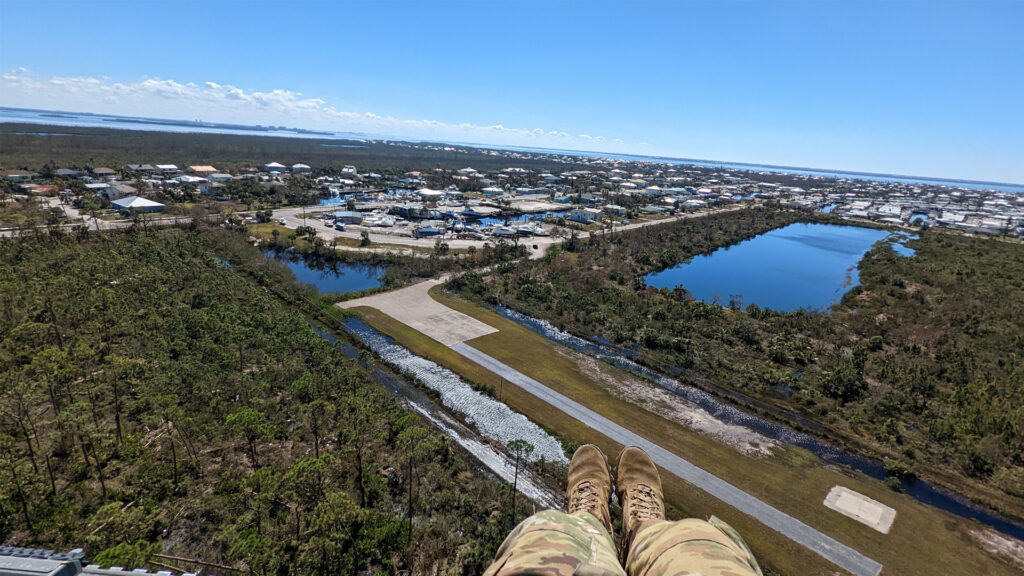
Confidence wavered and tempers flared. Trust in city leaders buckled. Conspiracy theories surfaced. Frustration with the Sanibel Plan and its heavy-handed regulations intensified. I shelved the original version of this story, unsure of the island’s fate and whether my sources would even choose to stay there. In early 2025, I returned to ask whether this battered community could still hold onto the essence it sealed 50 years ago, like a message in a bottle
To answer that question, you need first to understand what this community is all about. I start at the home of Charles and Molly, Minnesota natives who were smitten with Sanibel the minute they arrived. “All of a sudden, you cross onto this island and there are no high-rises and there’s all this green space,” remembers Charles, who’s also a Realtor. I kept hearing variations of that story, along with other themes — about civic spirit, a thriving arts scene, beloved small businesses, the equalizing effect of shorts and flip-flops, and free-range childhoods lived outdoors. One resident, Jean Baer, recounted when her son — then about 6 — fell asleep on the school bus on his way home. Her mother, who was minding the children, panicked. Jean did not. “Someone will bring him home,” she said. Minutes later, someone did. Residents enjoy tighter-than-typical relationships, trading hometowns everywhere to become part of Sanibel’s vision. “We became each other’s families,” Jean says. But families evolve. What that means for Sanibel is still unfolding.
The Sanibel residents’ treasure traces to a part-time islander who shaped the community’s environmental consciousness. Pulitzer Prize-winning cartoonist Jay Norwood ‘Ding’ Darling sketched blistering commentaries about America’s disregard for nature in the early 1900s. In 1934, President Franklin D. Roosevelt asked Ding to head a federal conservation agency. About a decade later, no longer in that post but still influential, Ding persuaded Florida officials to halt the sale of state-owned Sanibel land to developers. He later pressed the federal government to protect the tract as a national wildlife refuge. Now, the preserve spans some 6,400 acres and bears his name. Standing at a replica of his wooden desk, I think: This is how modern-day Sanibel got its start.
When a new causeway replaced ferry service in 1963, mainland leaders plotted a Miami-like resort town with 30,000 units packed into tiny lots and towering condominiums. Enter the CIA — though not in any way you might expect.
Three ex-agents, who’d settled on Sanibel, saw what was coming and helped rally their neighbors to self-determination. Among them was Porter Goss. He and his wife, Mariel, bought a big house on the island’s largely uninhabited north end, where their four kids and myriad pets could romp unencumbered. With a few friends, he launched a newspaper, The Island Reporter, to keep neighbors informed. Already, Sanibel’s waters, marshes and woodlands suffered from the surge of tourism and new development. The following year, 1974, Sanibel residents voted by a 64% margin to incorporate.
The new city battled vexed county officials and irate developers, prevailing each time. “It was really democracy on display,” says Porter, who became the first mayor and later served as a congressman and CIA director. Sanibel wanted its nature-first principles enshrined in policy. SCCF, which had emerged as the island’s leading environmental champion in the late 1960s, steered the process, the foundation’s current CEO, James Evans, tells me. The group commissioned a Washington, D.C.-based conservation group to help the city manage development without further environmental degradation.
Go ecozone by ecozone, the group advised. Steer clear of the wetlands; cluster development on the less-sensitive uplands. Armed with that advice, city founders birthed the Sanibel Plan, authoring the nation’s first land development code centered on preserving natural resources. National news crews descended to report on the tiny island’s big ideas. To guarantee nature’s protection, SCCF and the city began a long-term quest to acquire land. My favorite example is Charles and Molly’s backyard. The couple’s property was to be part of a 1,200-home development platted in the 1920s. Various national calamities and zoning battles stalled construction, but the threat loomed. Over decades, SCCF and the city tracked down landowners to purchase their properties, parcel by parcel. Charles volunteered his real estate services, anxious to preserve his “Mayberry by the Sea.” Only about a dozen homes, his included, were ever built. He beckons me to his back porch. Instead of rooftops, we overlook a woodland — part of the two-thirds of the island held in conservation. The Sanibel Plan capped development at 9,000 residential units — less than a third of what the county had envisioned. Height restrictions are fiercely enforced. Aside from an occasional pharmacy or gas station, corporate chains are restricted. “It’s lost Florida,” says the city manager, Dana Souza. In another 50 years, will we be able to say the same?
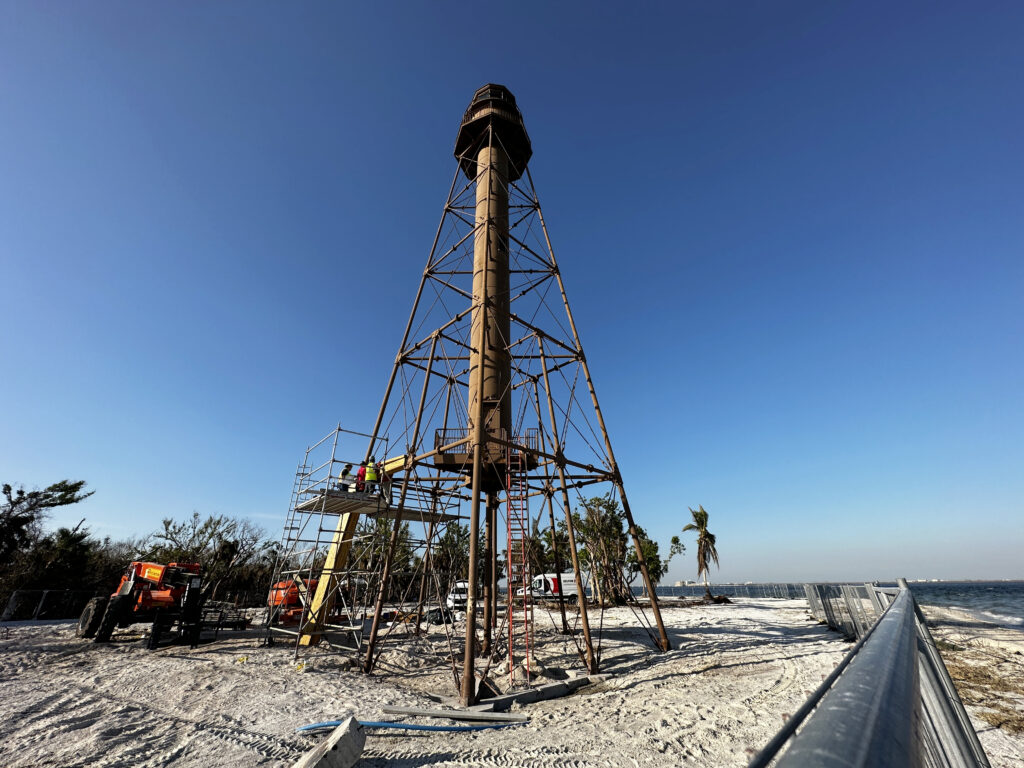
Before the Debby-Helene-Milton whammy, island residents were bullish about their comeback. Everywhere I went, I encountered an optimism as bright as the newly restored lighthouse. Three storms later, the island’s spunk had dimmed.
I drive out shortly after New Year’s and find Jean at the Sanibel Island Farmers Market, which she co-founded in 2008 and has grown into a Sunday tradition. The market is teeming with vendors and shoppers, a promising sign for an uncertain tourism season. Jean notes, however, the absence of Sanibel residents, some still displaced, others gone for good. Hundreds of homes went up for sale after the 2024 storms, when residents — many of them older, longtime locals — realized the fallacy of ‘once-in-a-hundred-years’ thinking. Another big storm will come, Jean says. She laments the loss of longtime neighbors but acknowledges there’s a next generation of caretakers coming in.
Over the winter, the city’s permitting department was deluged, residents and business owners complained that contractors were in short supply, and the Sanibel Plan, for all its positives, was proving burdensome in its bureaucracy. “What we’re beginning to hear from people now is, ‘It’s taking too long. Why can’t I?’” longtime islander Bob Brooks tells me over breakfast at The Lighthouse Cafe. He’s measured in his critique. City leaders have held strong against the big developers like the ones he remembers gobbling up the Jersey Shore after Superstorm Sandy and changing the area beyond recognition. But, he continues, it’s time for the city to find pragmatic solutions to ease recovery. Porter Goss, in his role as elder statesman, agrees. “The fussiness that sometimes drives a nail into the heart of common sense needs to be removed,” he told a crowd of a few hundred gathered for a State of the Islands symposium last winter.
Officials are listening. “Go to the code, look at the rules and look for a path to ‘yes,’” then-mayor Richard Johnson instructed city staff earlier this year. His family owns the 126-year-old Bailey’s General Store, which is under reconstruction. He gets it. The city has created or amended more than 45 ordinances since Ian. They say they’re maintaining the spirit of the plan, even as they offer wiggle room to height regulations, landscaping requirements and other hurdles keeping people from returning home. This summer, the City Council named a new steering committee to make the recommended updates to the plan. Richard also reminds me that Sanibel could have suffered far worse without those same height restrictions, native vegetation mandates and floodwater-absorbing wetlands.
Sanibel’s first 50 years began with a vision of living in tandem with nature. Its second chapter starts with adapting to nature’s new realities. The city has commissioned a vulnerability assessment, examining weak points in the infrastructure, and a stormwater study to manage projected flood risks. Dana and his staff are investigating road elevation and solar adoption, and they hired a chief resilience officer, who started in late July. SCCF’s native plant nursery growers are reassessing their plant recommendations and shifting to species that are more likely to survive saltwater immersion. The foundation’s land managers are also determining how to care for conservation lands amid changing climatic conditions.
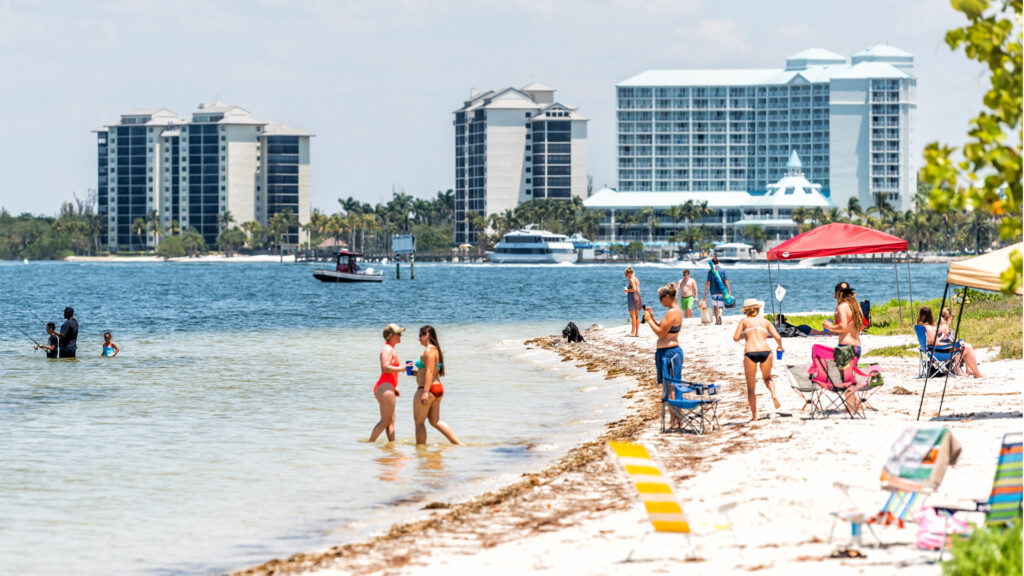
Meanwhile, residents are coming to grips with the risks of living on a barrier island today. “Milton packed, in a way, a bigger emotional wallop than Ian did,” says Kate Sergeant, a 14-year islander who serves on the planning commission and owns On Island boutique, where we meet one morning. After Milton swamped newly restored living rooms and buried roads under sand, residents understood they’d have to rebuild differently. Now, concrete replaces wood. People are installing solar panels, battery backups and top-of-the-line windows. And everyone, it seems, is elevating.
After Ian, a coalition of citizens and community groups formed SanCap Resilience to help islanders navigate climate risks and the complexities of storm-proofing and sustainable building. Chairperson Bob Moore believes the island will again set a global example, showcasing how to adapt while maintaining a sense of place. “Sanibel has a history of having an outsized influence on sustainability,” he says.
By July 2025, 84% of the island’s non-accommodation businesses and 65% of lodging units were open, Chamber of Commerce President John Lai tells me. Attendance at last year’s Island Hopper Songwriter Fest and Luminary Festival topped 2019’s crowds, a benchmark John uses to track progress. That was the year before COVID-19, and the last time Sanibel had a regular season. I drop by a few local businesses to see for myself. Congress Jewelers, re-established at Periwinkle Place, is so busy that I decide not to interrupt owners Scot and Melissa Congress. I continue down Periwinkle Way, noting artist Rachel Pierce’s newly opened home goods boutique. In the same plaza is MacIntosh Books + Paper, the island’s last remaining bookseller. Owner Rebecca Binkowski spent two years regrouping after Hurricane Ian, unwilling to let go of the shop, which has been passed between employees for 65 years. She moved into the new location in spring 2024 — then flooded twice. The lower third of the drywall has since been replaced with waterproof PVC, and the removable bookshelves now start 32 inches off the floor. Optimistic by nature, Rebecca holds firm. “The community is closer than it’s ever been, and people are taking comfort in that,” she says. I ask how she calculated the risk of reopening. “I don’t know that I did,” she responds. It just felt right — another new refrain on the island.
“The community is not the same without Bailey’s, and I have to be part of the future,” says Calli Johnson, Richard’s daughter and fourth-generation steward of Bailey’s General Store. We meet in an empty commercial unit that the family is transforming into A Bit of Bailey’s to serve the community while the main grocery store is under construction. Bailey’s has always been a gathering spot — provider of the first telegraph, first telephone, first jobs for island kids, first chance for seasonal residents to reconnect upon their return. Even with the family’s resolve, the last few years have tested every bit of their mettle. Bailey’s was not salvageable, and the Johnsons are rebuilding from scratch — with new resilience measures baked into the plans. Calli’s home flooded three times; she and her husband are elevating it, a cost comparable to buying new on the mainland. “There are lots of other special places, but they’re not ours,” she says on why she stays.
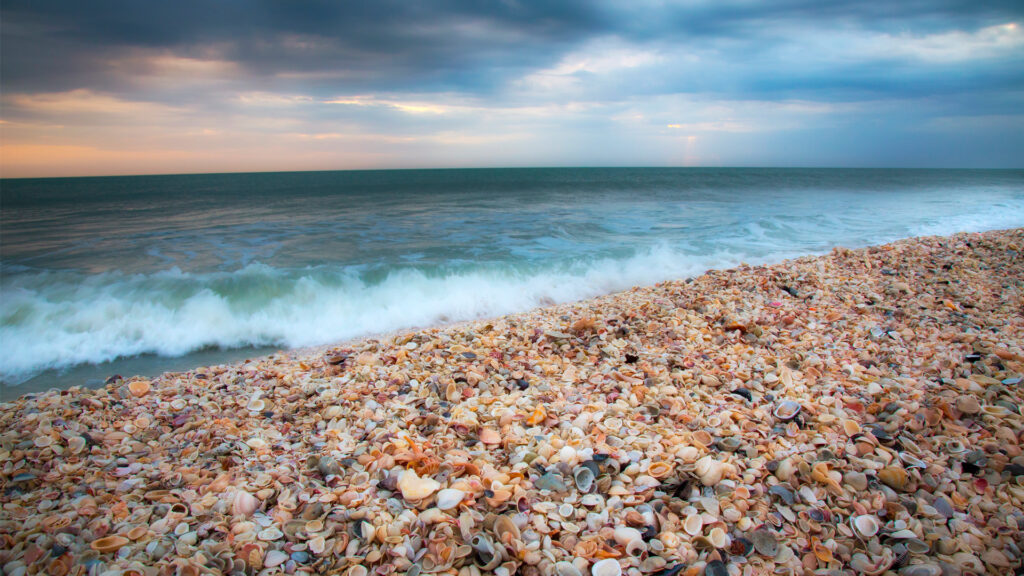
Sanibel will look different, and this might unnerve longtime residents and repeat visitors nostalgic for its old-fashioned appeal. I confess to being one of them. Last December, I bought a basketful of Christmas ornaments at the iconic She Sells Sea Shells. The owner, Anne Joffe, gave me a handwritten receipt. I was utterly charmed. The shop was spared stormy wraths and reopened, mostly unchanged. Other business owners are adjusting to reconstructed storefronts, infused with new paint, but they hope, endowed with old soul. “That Old Florida, shabby-chic feel is going away, but, overall, the feeling is going to stay the same,” Kate says. In June, she moved On Island to a nearby elevated plaza, along with neighboring Over Easy Café, which has rebuilt — twice — in the last two years. During those reconstructions, the restaurant’s owners, Trasi Sharp and Liza Clouse, faithfully replicated their restaurant’s French Country decor and welcomed back longtime staff, soothing a communal ache for the familiar. Starting over again will be hard, Trasi tells me, but it’s a good move. A smart move. “If we’re going to stay here, we have to build back better,” she says. She and Liza will do all they can to recapture the cafe’s vibe.
My last stop is — fittingly — a construction site. Dating back to 1959, Shalimar Beach Resort featured a small motel and wooden cottages, beloved, if time-worn. Hurricane Ian bulldozed everything. The owners, already well into retirement age, did not want to tackle a rebuild. Their grandson, Sean Niesel, stepped in. “I want Shalimar to go to my kids, to their kids and to keep it in the family and not see corporate America take over Sanibel,” he says. He broke ground in 2024, choosing his grandmother’s birthday, March 28, for the ceremonial shovel.
Sean worked with architect Joyce Owens, a leader in resilient building for the islands, to design a property that will stand the next 100 years — or longer, he hopes. Last winter, standing on the hotel’s rooftop, Sean and general manager, Romas Vaickus, narrate the features taking shape: over there, the new cottages, built of concrete and elevated about 11 feet above ground; to our right, the rooftop deck; on the ground below us, a common area where they’ll install a grill and other amenities. Sean imagines weekly guest gatherings like his grandparents had, spurring friendships that have lasted decades. When they resumed taking reservations for the 2025-26 season, longtime patrons booked without even knowing the rates, Romas says.
Hurricane Milton’s surge flowed underneath the new structures just as designed. “It’s about finding that balance — keeping the Old Florida charm, but at the same time, it’ll be a brand-new beach resort,” Sean says. I take in the view around me, the sparkling Gulf, the construction crews, the beachgoers and bicyclists determined to enjoy this imperfect paradise. Mostly, I look beyond rooflines to the unbroken swaths of woodlands. In this midwinter moment, they are tattered. But as you read this piece, the rains have returned, and the trees are flush with new growth. Entwined in their roots is the essence of Sanibel — a sanctuary island, a place governed for nature’s sake. And that’s not going to change.
This piece was originally published at https://gulfshorelife.com/people/sanibel-at-50/. Banner photo: An aerial view of the Sanibel Island Lighthouse following Hurricane Ian (iStock image).
Sign up for The Invading Sea newsletter by visiting here. To support The Invading Sea, click here to make a donation. If you are interested in submitting an opinion piece to The Invading Sea, email Editor Nathan Crabbe at ncrabbe@fau.edu.
