


Like many communities along the East Coast, the town of Crisfield, Maryland, has a flooding problem. As the climate changes, storms are growing more intense, and rising ocean waters are increasingly pushing into low-lying areas, causing chronic flooding.
Residents have been working on plans to address the problem, and starting in 2022, they received a boost from researchers at the Environmental Protection Agency’s Office of Research and Development, E&E News reported.
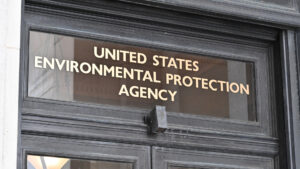
“EPA’s research project in Crisfield identified marshes and other natural buffers that would help reduce storm surge and flood damages,” the outlet reported. “The work was critical, city officials said, as the city government has no engineer on staff and a limited budget.”
But the Trump administration halted EPA support for Crisfield and many other communities when it began eliminating the Office of Research and Development, or ORD, this summer, and launching a new environmental research arm in the Office of the Administrator. The reorganization was completed last month, an EPA spokeswoman told E&E News.
In its previous form, ORD employed more than 1,000 people and ran 10 national laboratories across the country that researched air pollution and other environmental threats. During the reorganization, many ORD scientists accepted early retirement, while others were reassigned to positions elsewhere across the agency.
Earlier this year, the EPA said in a news release that cuts across the agency had already saved $748.8 million.
However, these short-term savings come at far greater long-term costs, both financially and in terms of human health, infrastructure, and national security. Reductions to federal-level environmental research make it more difficult to systematically collect and analyze national data on pollution, climate-warming gases, and air and water quality. With fewer researchers, it becomes harder to justify or enforce regulations on major polluters. And without a robust scientific workforce, the U.S. will struggle to respond quickly and effectively to emergencies like wildfires, chemical spills, or extreme weather, putting more lives at risk.
“This is total victory for the polluters right now,” Thomas Burke, an epidemiologist at Johns Hopkins University and former EPA science adviser, told ScienceInsider.
Solution: Establish an independent environmental science institute
One solution would be for a coalition of states, universities, and philanthropies to establish a nonpartisan scientific institution. Such a body could conduct independent climate and environmental research better insulated from political swings, and ensure that critical data and analysis remain available to protect public health and the environment.
This model is not unique. Canada’s experience shows how regional governments and independent institutions can step up when federal leadership falters. In 2012, Prime Minister Stephen Harper cut funding for the Experimental Lakes Area, a globally recognized freshwater research site. Rather than let the facility close, the provinces of Ontario and Manitoba partnered with the International Institute for Sustainable Development to take over funding and operations, keeping vital research on water pollution, climate change, and ecosystem health alive.
We may also take inspiration from an organization that was formed in response to an immunization crisis. When they realized that nearly 30 million children lacked proper vaccination in developing countries, a group of people (among them Bill Gates) decided to found the Global Alliance for Vaccines and Immunization, an internationally funded organization that researches vaccines and improves access to immunization around the world. In the past 25 years, they have helped vaccinate 1.1 billion children. Taking after their model, we could form an internationally funded climate initiative that brings together NGOs, research institutes, governments, and foundations to preserve environmental research.
Without the EPA’s research arm, we will be flying blind as we face threats from toxic hazards to rising seas. Whether through state-led coalitions or partnerships with nonprofit organizations, we can ensure that critical environmental research continues. In an era of proliferating climate threats, we have a moral obligation to preserve this scientific capacity.
Alessandro Hammond is a Harvard graduate, Schwarzman Scholar and incoming MD-PhD at Yale University. Arnav Sharma is a senior at Fairfield College Preparatory School.
This article first appeared on Yale Climate Connections and is republished here under a Creative Commons Attribution-NonCommercial-NoDerivatives 4.0 International License. Banner photo: Flooding from Hurricane Sandy in Crisfield, Maryland (The National Guard, CC BY 2.0, via Wikimedia Commons).
Sign up for The Invading Sea newsletter by visiting here. To support The Invading Sea, click here to make a donation. If you are interested in submitting an opinion piece to The Invading Sea, email Editor Nathan Crabbe at ncrabbe@fau.edu.
