


By Erin Murphy and J.P. Brooker, Ocean Conservancy
Yet again, Florida is the No. 1 U.S. destination for spring breakers this year, according to AAA data released earlier this month. Millions of people are coming to the Sunshine State to enjoy warm weather, amusement parks and gorgeous beaches.
They are eating out, buying souvenirs and stocking up on sunscreen, boogie boards and other gear. They are funneling billions of dollars in tourism revenue to the state, for which residents are grateful. But, intentionally or not, they sometimes leave more than just footprints behind.
Any Floridian visiting their local beach in the wake of spring break can attest: There are more bottle caps, food wrappers and plastic cups than usual.
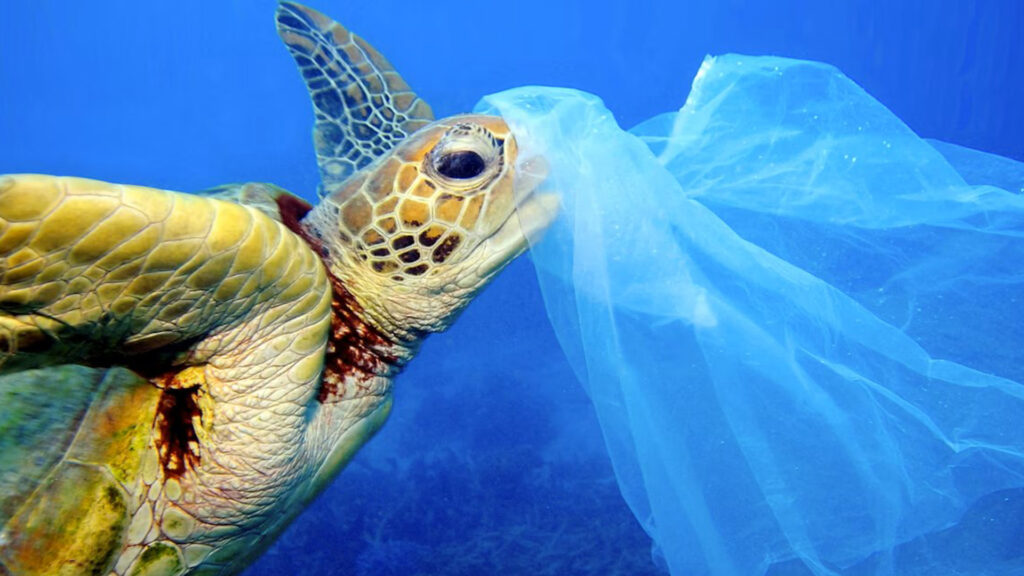
Sadly, these are more than eyesores or inconveniences — they can be deadly to some of our most beloved wildlife, according to research we recently published in Proceedings of the National Academy of Sciences. We collected and analyzed data from more than 10,000 necropsies, or animal autopsies, to identify the lethal dose of plastics for sea birds, sea turtles and marine mammals, and found that it’s much less than you might think.
Our analysis showed that just one baseball’s worth of soft plastics like plastic bags has a 50% chance of killing an adult manatee. The numbers are, of course, even more jarring for smaller creatures: Consuming just two sugar cubes’ worth of plastics kills one in two roseate spoonbills; less than half a baseball’s worth of plastics kills one in two loggerhead turtles.
Moreover, the data showed that plastic ingestion is all too common. Nearly half of all sea turtles and a third of all seabirds in the dataset had plastics in their digestive tracts at their time of death. Nearly 1 in 6 Florida manatees (16%) had plastics in their digestive systems when they died; for 1 in 25 that ingested plastic, that plastic killed them.
The research is an important reminder of the tremendous loss of wildlife resulting from plastic pollution, and how critical it is that we adopt policies to turn the tide on this issue. Around the world and across the U.S., Ocean Conservancy has been pushing for legislation to cut down on single-use plastics, which make up the majority of what pollutes beaches and waterways worldwide according to data from our International Coastal Cleanup.
Right here in Florida, we are proud to have spearheaded smoking bans on beaches that keep cigarette butts out of the sand, as well as a ban on balloon releases – an item found to be especially dangerous in our latest science.
But something that gives us hope from these bleak findings is the realization that alongside larger systemic changes, every little action to clean up plastic from the environment has the potential to protect the animals, like manatees, that we love.

In fact, we were able to estimate the potential positive impact based on the data from our research, and created an easy-to-use tool to help beach lovers – whether in Florida or anywhere else – easily visualize the benefit of their cleanups. Officially released this week, we call it the Wildlife Impact Calculator and you can find it at wildlifeimpactcalculator.org. Anyone who conducts a cleanup can input the number of specific items they’ve collected and see, based on the science, how many animals would have been impacted had they ingested those items.
We invite everyone to use this tool to motivate themselves, their family and their friends to go out – especially during and in the wake of spring break – to conduct a cleanup, log what you find in our CleanSwell app (there’s an app for that, too!) and consider using the calculator to see how much good one person can do.
We can’t think of a better way to welcome Earth Month than that, and in Florida we bet the manatees, sea turtles and seabirds would agree.
Dr. Erin Murphy is Ocean Conservancy’s manager of ocean plastics research and lead co-author of the research paper discussed above. She is based in Anchorage, Alaska. J.P. Brooker is Ocean Conservancy’s director of Florida conservation and lives in St. Petersburg. Banner photo: A wave pushes plastic pollution on a beach (iStock image).
Sign up for The Invading Sea newsletter by visiting here. To support The Invading Sea, click here to make a donation. If you are interested in submitting an opinion piece to The Invading Sea, email Editor Nathan Crabbe.
