


By Casey Gentile
On a Sunday afternoon in Boca Raton, children gathered around a classroom at Gumbo Limbo Nature Center, raising their hands to answer questions about tortoises and sea turtles. At the front of the room, Jessica Trease, a marine turtle specialist with the center’s sea turtle conservation team, guided the discussion, asking the audience what makes a turtle different from a tortoise and how human activity affects coastal wildlife.
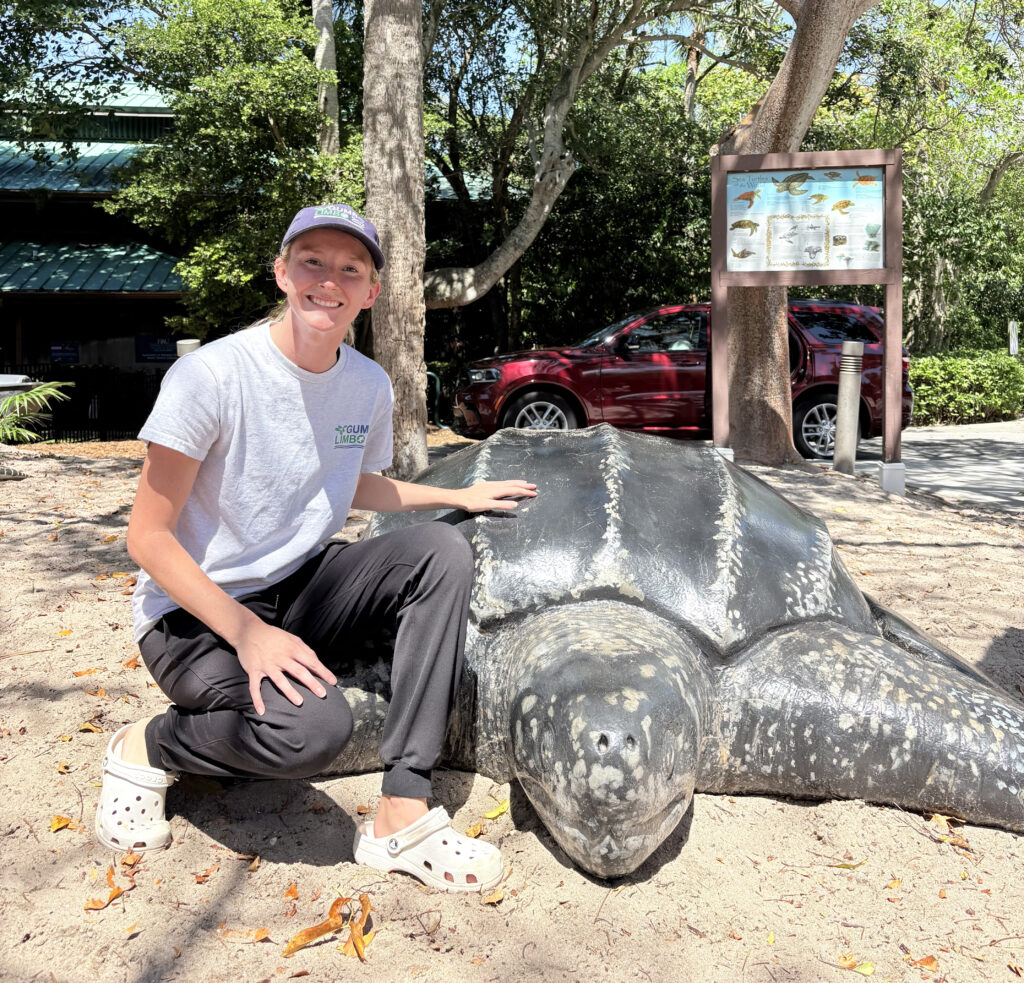
Trease, who studied marine science and environmental issues in college, said her career path was shaped by what she learned in school.
“I learned about a lot of problems affecting marine ecosystems, and I wanted to be part of the solution,” she said.
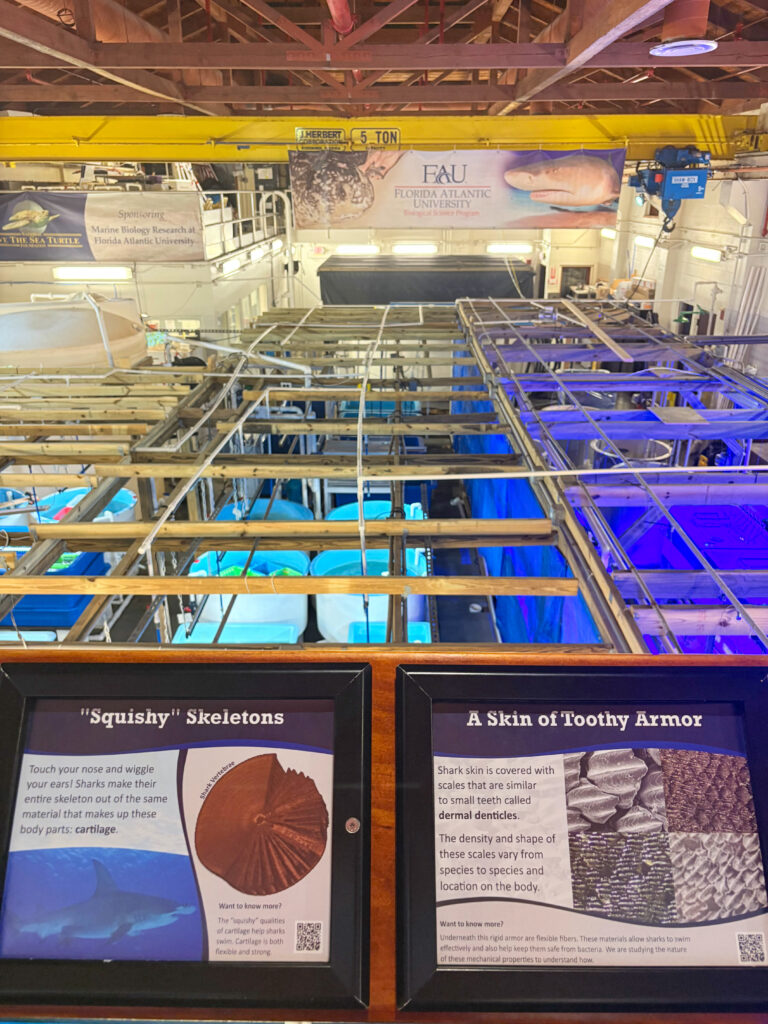
Gumbo Limbo Nature Center is located on a 20-acre coastal preserve on Boca Raton’s barrier island. Surrounded by a rare remnant of coastal tropical hammock, the facility includes a boardwalk through the forest, a 40-foot observation tower known as Jacob’s Outlook, outdoor marine aquariums and classroom space. The center also partners with Florida Atlantic University, which operates an onsite marine science laboratory with a public viewing gallery.
The center’s stated mission is to inspire stewardship of coastal and marine ecosystems. Trease said that mission is closely tied to its location.
“It’s very fitting for where we are located to inspire coastal stewardship,” she said. “We have a lot of access to educate about these specific environments.”
Although a nonprofit organization previously operated a sea turtle rehabilitation facility at Gumbo Limbo Nature Center, that program closed in 2025. Today, the center focuses on conservation, research support and public education, including seasonal Turtle Walk and Hatchling Release programs that bring residents and visitors to local beaches to learn about nesting loggerhead sea turtles.
During her presentation, Trease explained that sea turtles cannot leave their shells because the shell is part of their skeletal system. Damage to a shell, she said, can affect internal organs. She also discussed threats facing sea turtles in South Florida.
“Boat strikes are the biggest one,” Trease said, referring to common injuries seen along the coast.
Trease said education is a critical part of conservation work.
“Showing people what we are trying to protect is important,” she said. “It allows people to connect with their surroundings and understand why it’s important.”
She added that many residents do not realize the ecological role of native plants and coastal features.
“A lot of people don’t know why mangroves are important for storms,” Trease said.
Volunteer involvement is another key component of the center’s operations. Amy Kucken, volunteer coordinator at Gumbo Limbo, oversees approximately 170 active volunteers.
Kucken moved to Florida four years ago and began volunteering at the center shortly after arriving. With a background in biology, she said she wanted to learn more about Florida’s native plants, animals and ecosystems. After six months as a volunteer, she was hired to work at the front desk and later became volunteer coordinator.
“I started as a volunteer because I was new to Florida and wanted to learn more about the ecosystems here,” Kucken said.
As volunteer coordinator, Kucken manages recruitment, training and scheduling for volunteers who assist with education programs, events and daily operations.
“Volunteers are instrumental to the program,” she said.
Kucken said Gumbo Limbo’s mission is something the staff takes seriously.
“Our mission is to inspire stewardship of coastal and marine ecosystems,” she said. “We hope people leave here with an appreciation for the environment that we have.”
The center offers a range of educational programs for different age groups, including children’s environmental education classes and water-based programs such as kayaking and canoeing in calmer waters. According to Kucken, awareness of environmental issues in South Florida has evolved over the past several years.
“In the last eight years, there’s been more concern about water quality and preservation of the Everglades,” she said.
Visitors to the center include families, school groups, older adults and tourists. During Trease’s presentation, both young children and older adults asked questions about turtle behavior, nesting patterns and conservation rules. The interactive format encouraged participation, with Trease prompting the audience to think critically about how everyday actions can impact marine life.
The center’s Turtle Walk program, held on select summer evenings, begins with an educational presentation before participants caravan to the beach in hopes of observing a nesting loggerhead. While sightings are not guaranteed, the program emphasizes responsible wildlife viewing and adherence to state permitting rules, including a strict hands-off policy.
For Trease, connecting the public to coastal ecosystems remains central to her work.
“What I hope people take away after visiting is a better understanding of how connected we are to these environments,” she said.
Casey Gentile is a is a junior majoring in anthropology at Florida Atlantic University. Banner photo: The outside of Gumbo Limbo Nature Center (Casey Gentile photo).
Sign up for The Invading Sea newsletter by visiting here. To support The Invading Sea, click here to make a donation. If you are interested in submitting an opinion piece to The Invading Sea, email Editor Nathan Crabbe.
