


By Richard Wall, University of Bristol
A flesh-eating parasitic fly has spread north through Mexico to within a few hundred miles of the U.S. southern border.
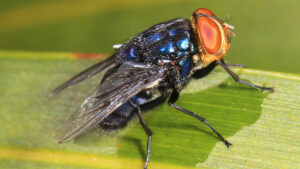
The New World screwworm (Cochliomyia hominivorax) lays its eggs in open wounds and in the orifices of live, warm-blooded animals – including, occasionally, humans. The maggots then devour the animal’s flesh, causing devastating lesions that can quickly kill the infested host.
Before the 1950s, it was found in the southern states of the U.S., where cattle infestations caused heavy financial losses for beef producers. But, during the second half of the 20th century, eradication efforts pushed it out of North and Central America.
In the past few years, however, screwworm control has unraveled, with cases spiking across Central America. The fly has now spread north through Mexico, reaching two Mexican states – Tamaulipas and Nuevo Leon – that share a border with Texas.
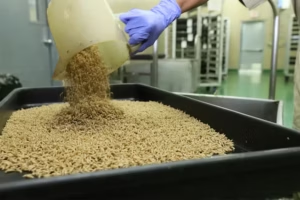
The method that was used to eradicate the fly is known as the sterile insect technique (SIT). This involves breeding vast numbers of a target species, sterilizing them, usually with radiation, and then releasing the males.
The sterile males mate with wild females, which then produce no offspring. By continuously swamping the wild population with sterile males, the wild groups go extinct. However, SIT alone may not be enough to control the current outbreaks.
To be effective, SIT has a number of critical requirements. One of the most important is that the immigration of fertile females into areas where outbreaks are already under control must be very limited (and ideally zero). If fertile females are allowed to reinvade, the population will reestablish.
The technique therefore works best on isolated or island populations. In other circumstances, barriers and continuous surveillance need to be maintained to prevent immigration and immediately stamp out any incursions.
SIT has been used many times on a vast number of pests over the past 80 years –
with mixed results. The eradication of screwworm from the US, Mexico and central America was its greatest success.
The natural range of the New World screwworm fly extends from the southern states
of the USA through Central America and the Caribbean Islands to northern Chile,
Argentina and Uruguay. In North America, the fly used to spread north and west each summer from its overwintering areas near the U.S.-Mexican border.
Historically, its effects were devastating. In 1935, during a screwworm epidemic, there were approximately 230,000 cases in livestock and 55 in humans in the state of Texas. Female screwworm lay batches of 200-300 eggs in open wounds and orifices. The catastrophic lesions caused as the maggots feed are known as myiasis.
Large-scale SIT for New World screwworm started in Florida in 1957-59 and was gradually rolled out to the west. Effective control by the U.S. was achieved in 1966.
Subsequently, using rearing facilities in Mexico, the fly was pushed back through Central America and was held at a barrier at the Darien Gap in Panama using continuous release and surveillance.
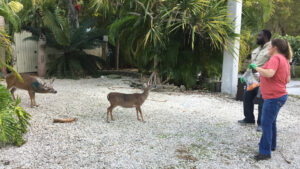
Occasional incursions in the U.S. have still occurred. In the summer of 2016, screwworm infestation was identified in deer in the Florida Keys. Such incursions clearly demonstrated that any relaxation of the control and surveillance effort could allow the return of this devastating parasite.
The recent breakdown of screwworm control has seen thousands of cases confirmed in animals and humans across Panama, Costa Rica, Nicaragua, Honduras and Mexico.
The insect’s continuing northward spread now raises the risk of a costly U.S. reinvasion. The U.S. Department of Agriculture estimates that an outbreak in Texas could cost livestock producers more than $700 million per year.
There are several probable reasons for the breakdown of screwworm control. Maintaining barriers, rearing facilities and surveillance operations are expensive. U.S. federal budget cuts, along with reduced foreign aid, hit screwworm control programs in Central America and weakened surveillance.
The UN’s Food and Agriculture Organization’s (FAO) global health security program, with responsibility for transboundary animal disease management, reduced its screwworm surveillance as U.S. funding was withdrawn in March 2025.
Loss of control over the illegal movement of cattle, lacking veterinary inspections, may also have been a contributing factor. Alongside this, in many countries there has been an ongoing loss of expertise as experienced veterinary entomologists have retired and not been replaced.
Traditional applied entomology has been viewed as dated in the face of, for example, modern molecular and genetic approaches to the identification of species. The retired entomologists have taken with them a generation of experience of screwworm control and insect pest management in general – the essential underlying knowledge on which other approaches often depend.
As a result, considerable efforts are now required to resume control of this pest and prepare for future outbreaks. Significant new U.S. federal funding for screwworm control has just been announced. But given that the pest is now re-entrenched in Central America, it may be too late to quickly reestablish regional control using SIT. As such, a fall back on insecticides seems like the only fix for immediate problems.
The rearing facilities for sterile insects in Mexico were shut down after screwworm was pushed out of North and Central America in the latter half of the 20th century. However, refurbishment is currently underway to allow them to restart producing sterile flies by summer 2026.
A new facility at Moore Airbase in Edinburg, Texas, close to the southern border, is being built. However, the suggestion that it is Mexico’s responsibility to prevent flies entering the U.S. seems fanciful.
There are several important lessons that emerge from this history. The first is that insects don’t respect borders. International cooperation is required for management at a geographically relevant scale. Unwillingness to support the efforts of less economically robust neighbors, or international organizations such as the FAO, may well come back to bite.
The cost of maintaining the barrier in Panama was almost certainly significantly less than the costs of what will now be needed to achieve preparedness, or what will be incurred by U.S. livestock producers if there is a persistent outbreak.
Finally, new pests and parasites (even some of the ones that seem to be under control) are an ever-present threat, particularly given greater global travel and the effects of climate change. Ignoring them, deprioritizing research and control, failing to train the next generation of veterinary entomologists and hoping for the best, is not a viable strategy.
Richard Wall is an emeritus professor in the School of Biological Sciences at the University of Bristol.
This article is republished from The Conversation under a Creative Commons license. Read the original article. Banner photo: Workers disinfect cattle at a ranch in Hermosillo, Mexico, amid the ongoing screwworm outbreak. Ranchers use disinfectants, pesticides and other treatments to control parasites and infections (Daniel Sanchez/EPA Images).
Sign up for The Invading Sea newsletter by visiting here. To support The Invading Sea, click here to make a donation. If you are interested in submitting an opinion piece to The Invading Sea, email Editor Nathan Crabbe.
