


By Joe Murphy
I was born April 21, 1970. My first full day of life was April 22, 1970: the original Earth Day. I have been alive for all the Earth Days and am hopeful for a few more – 56 years of hope and loss.
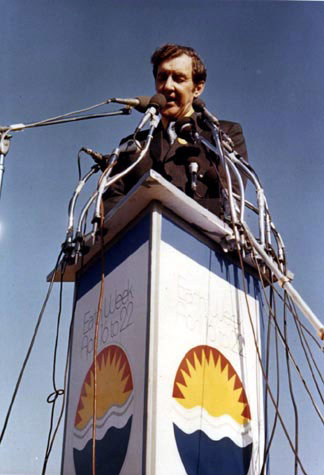
The original Earth Day helped launch a conservation movement that produced great progress and soaring hope. The Endangered Species Act, the Clean Air Act, the Clean Water Act and the National Environmental Policy Act were all passed within a few years. Just six years earlier, the Wilderness Act passed.
Major cities were choking on pollution, the Cuyahoga River had literally caught fire and iconic species were in danger of disappearing. The public demanded action and, to their credit, elected officials responded. Hope flowed like a river and the future seemed bright.
Power and profit though do not simply disappear when challenged. They pushed back. Earth Day 1970 eventually led to folks like Interior Secretary James Watt under President Ronald Reagan and his radical anti-environmental agenda. Powerful forces set in motion loss that lessened hope. We see that today as our nation’s environmental laws are gutted.
Corporate America became very good at co-opting the message of conservation and Earth Day and branding it, selling it and using it for their goals. The focus shifted to individual actions, not community actions that would change policy or practice and be accomplished through laws and regulations.
What “we” can do was shifted to what “you” can do. Individual actions and responsibility are important, but in an era of climate change, global trade, rampant development and wholesale gutting of environmental policy, people acting together, in shared purpose, have the best chance of conserving public health and the natural world.
Fifty-six years after Earth Day 1970, we still teeter between hope and loss. Five decades later, the cost of failure is much higher.
Climate change and sea-level rise have consequences that could impact us for centuries. The Age of Extinction we are in now is fundamentally altering evolution and humans are now driving extinction and loss through our actions. We have become the variable that determines who survives, and who enters extinction.
So, we must choose. Hope versus loss. Action versus apathy. Protecting the rights of future generations or abandoning our responsibility to them. I say we choose hope.
We need to work with hope driving our hearts, science leading our minds and the wonder of nature guiding our souls. We need to think big and act big.
The Florida Wildlife Corridor gives me hope. The audacity and bold vision of connecting over 18 million acres of habitat for large wildlife to transverse Florida from the Everglades to the Panhandle to the Okefenokee is amazing. And it is happening.
The growing grassroots resistance to never-ending growth and development in Florida gives me hope. I talk with people every day who are of different parties, perspectives and ideologies who all agree they want to see rivers and springs protected, overcrowding reduced, green space conserved and the endless creation of rooftops abated. Candidates who ignore this undercurrent of opposition may do so at their peril. The 2026 elections in Florida could offer some true surprises.
Prescribed fire as a land management tool and its continued and expanded use gives me hope. It is tough to conduct as Florida develops, but landscapes that were robbed of fire and its life-giving value for decades now are being reborn in fire. Fire in Florida is as important as rain to the natural world, and Florida’s land managers have embraced that. Public lands are better for it.
If you care about the conservation of wild Florida, you can succumb to the feeling that loss is everywhere. And it is surely occurring. But it is balanced with glimmers of hope. Progress has been made with some species and in some landscapes, but it is fragile. It must be nourished and protected. Every acre of natural Florida must be cherished and conserved to avoid loss overcoming hope.
The powerful truth is loss will only expand if left unopposed. The irony is that the very species that is driving the natural world toward continued disaster is the same species that has the power to reverse the loss.
Hope versus loss: Let us choose hope, then act with it, share it, cultivate it and celebrate it. Let us do it together. That is an Earth Day to celebrate.
Joe Murphy is a native and lifelong Floridian who lives in Brooksville. You can follow Joe and his “Season of Public Lands” efforts on Instagram (@naturecoastjoe) and on Facebook (https://bit.ly/joemurphyfacebook). Banner photo: An event marking the anniversary of Earth Day is held (National Archives at College Park, Public domain, via Wikimedia Commons).
Sign up for The Invading Sea newsletter by visiting here. To support The Invading Sea, click here to make a donation. If you are interested in submitting an opinion piece to The Invading Sea, email Editor Nathan Crabbe.
