
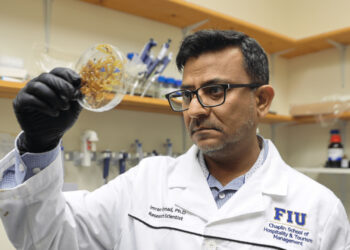
Florida sargassum could become food, researchers say
FIU, FSU and FAU scientists study seaweed's potential as a source of food-grade ingredients.


FIU, FSU and FAU scientists study seaweed's potential as a source of food-grade ingredients.

The Atlantic Meridional Overturning Circulation (AMOC) helps regulate weather patterns and sea levels.
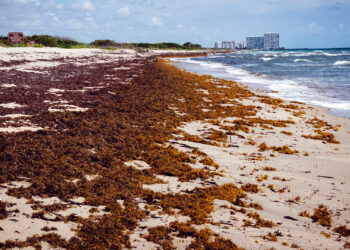
Accumulations of sargassum have affected coastal ecosystems, fisheries and tourism in the tropical Atlantic.

Sargassum is declining in the region where it was first reported by Christopher Columbus in the 15th century.
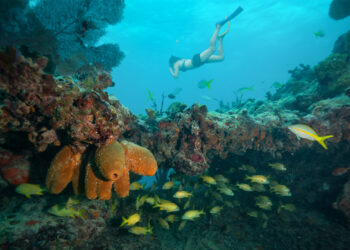
Coral reef growth rates in the western Atlantic have slowed, erasing coastal protection benefits they once offered.
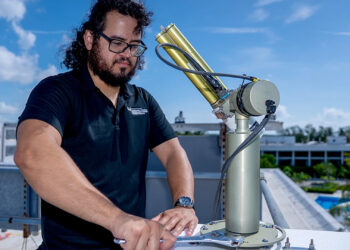
A University of Miami device measures aerosols in the atmosphere to assist research on local and large-scale weather patterns.
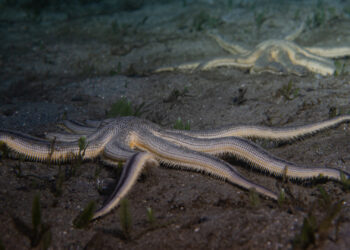
The discovery of Sea Star Wasting Disease represents a major expansion of the disease into the Atlantic Ocean.
China’s carbon emissions help fuel the proliferation of sargassum on Florida beaches, impacting tourism.
Researchers documented sea surface temperatures exceeding 86 degrees F across the equatorial Atlantic.

Unprecedented marine heat waves in the North Atlantic have been driven in part by a recent drop in shipping emissions