


By Mark McNees
We are blessed to live in the Sunshine State, but extreme weather events can leave us without power for days, costing our economy billions and tragically claiming the lives of those dependent on electricity for medical equipment. For elderly residents on oxygen, families with special needs children or anyone needing refrigerated medications, outages can be fatal.
That’s why I’m concerned about losing the 30% federal solar tax credit expiring Dec. 31, 2025, coupled with Florida eliminating renewable energy targets from state law. Solar plus storage is more than sustainability, it’s about durability, our economy and Floridians’ safety.
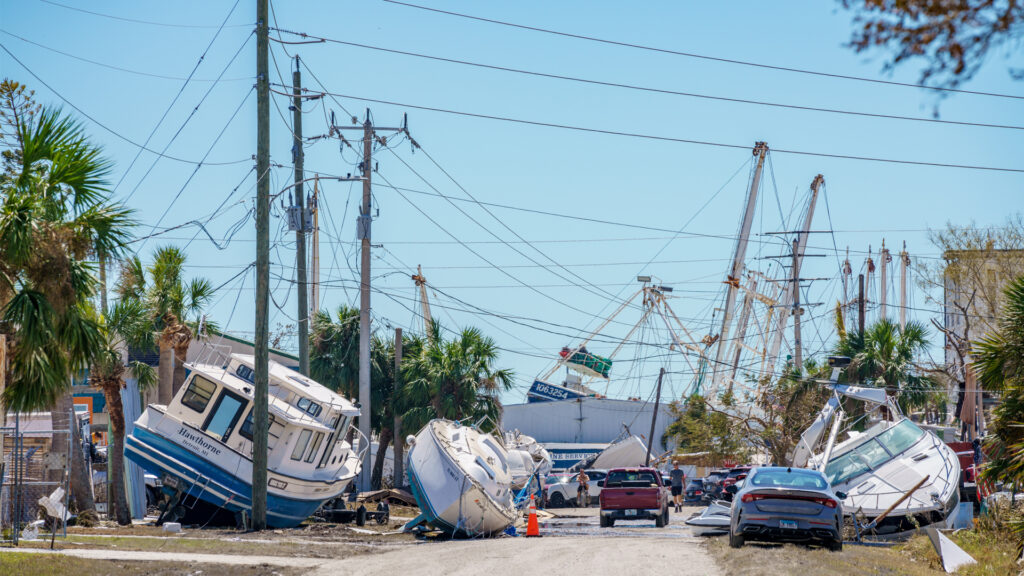
Recent hurricanes prove that centralized power systems can fail when needed most. While hundreds of thousands lost power during Hurricane Ian — with outages alone costing Florida’s economy an estimated $5 billion — those with solar panels and battery storage kept lights on, refrigerators running and medical devices functioning.
The most compelling example is Babcock Ranch, Florida’s first solar-powered town. When Ian’s 150-mph winds devastated Fort Myers 12 miles away, Babcock’s 5,000 residents never lost power. Their 700,000-panel solar array and underground power lines proved that renewable energy hardens infrastructure when centralized systems fail.
This durability creates economic benefits. Florida’s solar industry employs approximately 14,000 workers with strong recent growth. Every installation creates local jobs. When power stays on during storms, businesses avoid losses, hospitals maintain operations and families avoid hotel costs. The economic case for solar durability equals the environmental one.
Smart reliability strategies recognize that distributed energy systems strengthen the entire grid. When homes generate and store power, they reduce strain on infrastructure during peak demand. Solar plus storage homes are lifeboats, keeping families safe while making everyone more secure.
The good news: Florida’s Property Assessed Clean Energy (PACE) financing program allows property owners to finance solar panels, battery backup and hurricane-resistant improvements with no upfront costs, repaid via property taxes. Funded by private capital, not taxpayer dollars, PACE enables complete durability solutions providing automatic power during outages.
However, PACE operates locally, requiring county-by-county approval, creating uneven availability. Critics worry about costs, but PACE spreads expenses over time while community solar ensures equitable benefits.
Utilities face legitimate challenges adapting to distributed generation. These challenges could be eased by partnering with solar producers through time-of-use rates or virtual power plants, ensuring stability while rewarding homeowners. This is a win-win because National Renewable Energy Laboratory studies show that distributed solar reduces infrastructure costs by decreasing peak demand.
This represents a fundamental choice: Do we want energy security and extreme weather durability, or continued dependence on centralized systems that may fail when families need power most?
Florida lawmakers should:
• Champion solar as essential infrastructure. Protect net metering — which credits solar owners for excess power — streamline permitting and ensure statewide PACE availability.
• Follow California’s lead mandating solar on new homes. When builders integrate solar from the beginning, costs drop dramatically and every house becomes a resilience hub.
With the federal tax credit expiring on Dec. 31, 2025, and disjointed PACE financing availability for solar and battery storage, we need political will to make programs universally accessible.
Florida’s energy security requires leadership embracing our natural advantages. As the Sunshine State, we were born to lead in solar. With proper planning and fair policies balancing utility needs with consumer benefits, we can harvest sunshine to power prosperity and build a stronger, safer future for all Floridians.
Mark McNees is the director of social and sustainable enterprises at Florida State University and a business consultant at The McNees Group. This opinion piece was originally published by the Tallahassee Democrat, which is a media partner of The Invading Sea. Banner photo: Solar panels on a Florida home (iStock image).
Sign up for The Invading Sea newsletter by visiting here. To support The Invading Sea, click here to make a donation. If you are interested in submitting an opinion piece to The Invading Sea, email Editor Nathan Crabbe at ncrabbe@fau.edu.
