


By Lourdes Mederos, UF/IFAS Communications
While artificial turf and rock-heavy xeriscapes are marketed as low-maintenance, drought-resistant alternatives to traditional lawns, research by University of Florida scientists shows it comes at unexpected environmental and public safety costs.
A recently enacted Florida law, effective July 1, prohibits local governments from banning synthetic turf installation on certain single-family residential properties. This change could make installation easier and encourage homeowners to replace natural grass with synthetic alternatives, especially in communities previously restricted by local ordinances.
However, turfgrass scientists at UF’s Institute of Food and Agricultural Sciences (UF/IFAS) caution that the shift toward synthetic turf may come at a steep price, according to a study that received international attention recently.
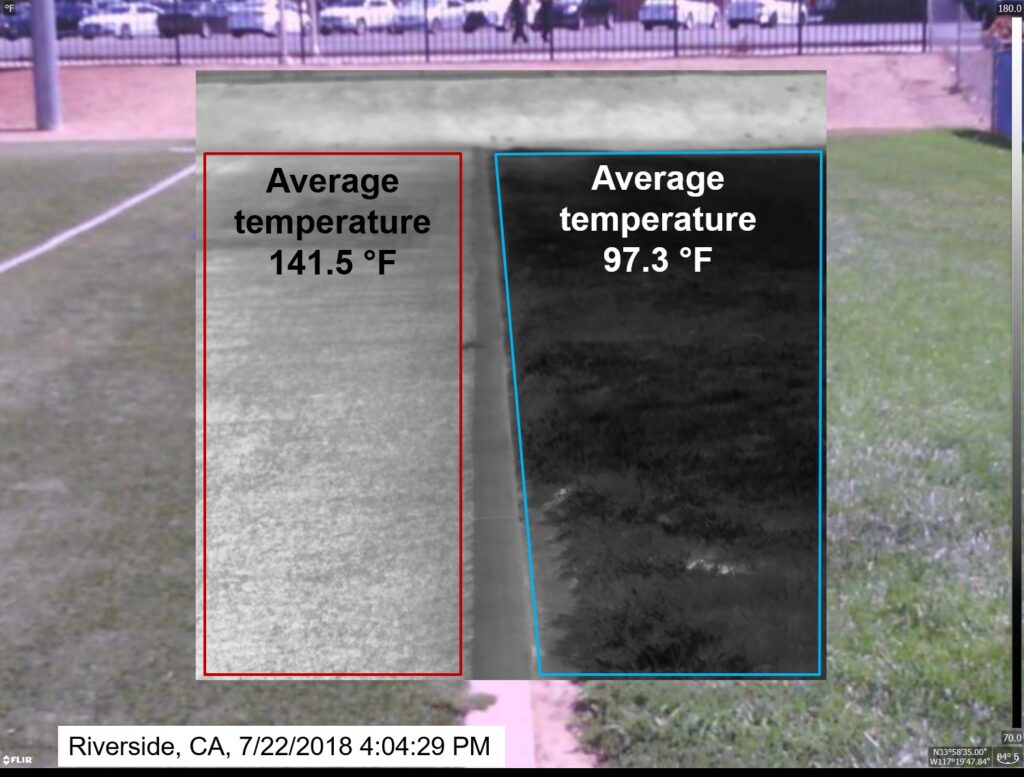
“In the hottest summer days, artificial turf surfaces can reach a scorching 79 degrees C (174 degrees F), temperatures hot enough to cause burns on human skin,” said Marco Schiavon, assistant professor of environmental horticulture and turfgrass science based at the UF/IFAS Fort Lauderdale Research and Education Center. “Meanwhile, natural turf stays closer to a more manageable 39 degrees C (102 degrees F) thanks to evapotranspiration and shade.”
That striking temperature difference is at the root of his most recent published research and one he brought into sharp focus when invited to present the research at the International Turfgrass Research Conference in Japan this month, among 500 of the world’s leading turfgrass scientists.
Schiavon found that natural turf was consistently cooler, often by more than 10 degrees C (18 degrees F) than synthetic and water-scarce landscapes such as xeriscapes.
Florida isn’t California — it’s wetter, more humid and prone to flooding rather than drought, he said. But as more Floridians consider replacing lawns with gravel-heavy xeriscapes or artificial turf to save water or reduce upkeep, this study offers a cautionary tale.
“Natural turf helps cool the air and surface around homes and public spaces,” said Schiavon. “In Florida’s humid climate, removing turf can make backyards and neighborhoods feel hotter — especially in cities prone to urban heat island effects.”
Unlike California, Florida hasn’t implemented widespread turf-removal rebates or watering restrictions. However, some municipalities are promoting the use of native plants and sustainable landscaping techniques that require little to no irrigation, in anticipation of future resource concerns.
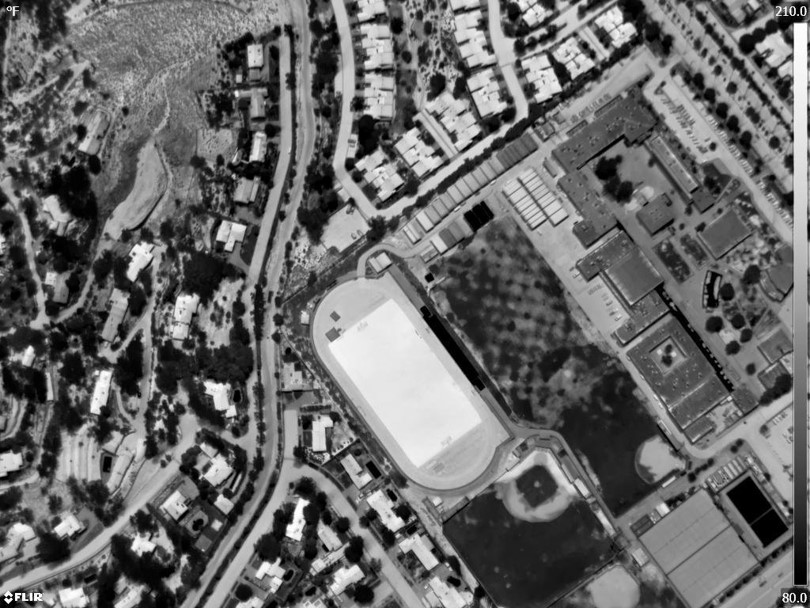
In California, Schiavon and his team even discovered that all artificial turf athletic fields were being watered just to make them usable in summer — potentially negating the water savings often used to justify turf removal. And while xeriscape yards use minimal irrigation, their surface temperatures were up to 30 degrees C (54 degrees F) warmer than lawns with living grass.
“People assume artificial turf and xeriscape are always more sustainable,” said Schiavon. “But the thermal impact can be substantial, and in some cases, homeowners may end up watering artificial turf to make it tolerable, which defeats the purpose.”
Another insight: xeriscaping isn’t one-size-fits-all. Xeriscapes made up primarily of rocks or mulch were much hotter than those with more plant cover, but the study could not separate these effects due to aerial imaging limitations highlighting a need for further research on xeriscape design.
Florida homeowners, landscapers and planners can draw multiple lessons from this research.
In Florida’s subtropical climate, the Florida-Friendly Landscaping approach promoted by UF/IFAS Extension may offer the best of both worlds: water savings and thermal relief. It encourages using drought-tolerant turfgrass species, mulching, native plants and proper irrigation systems rather than full-scale turf removal.
“Not all grass is wasteful,” Schiavon said. “With the right species and smart irrigation, turf can help cool neighborhoods, improve air quality and support outdoor enjoyment, even as temperatures rise.”
This piece was originally published at https://blogs.ifas.ufl.edu/news/2025/07/30/scorching-temps-from-california-turf-raises-questions-about-artificial-turf-xeriscaping-in-humid-states-like-florida/. Banner photo: Artificial turf in the front yard of a Florida home (ProGreenGrass, CC BY-SA 4.0, via Wikimedia Commons)
Sign up for The Invading Sea newsletter by visiting here. To support The Invading Sea, click here to make a donation. If you are interested in submitting an opinion piece to The Invading Sea, email Editor Nathan Crabbe at ncrabbe@fau.edu.
