


By John Cortinas
Earlier this year, I retired after 34 years with NOAA’s Office of Oceanic and Atmospheric Research (OAR), where I had the honor of leading its 10 national labs and collaborating with top university research institutes across the country.
Instead of easing into my retirement, I’ve found myself alarmed by a deeply troubling development: the proposed elimination of the very office I served for over three decades. When I read that President Donald Trump was working to eliminate this research office entirely, I wasn’t just shocked — I was deeply concerned for the safety and wellbeing of the American people.
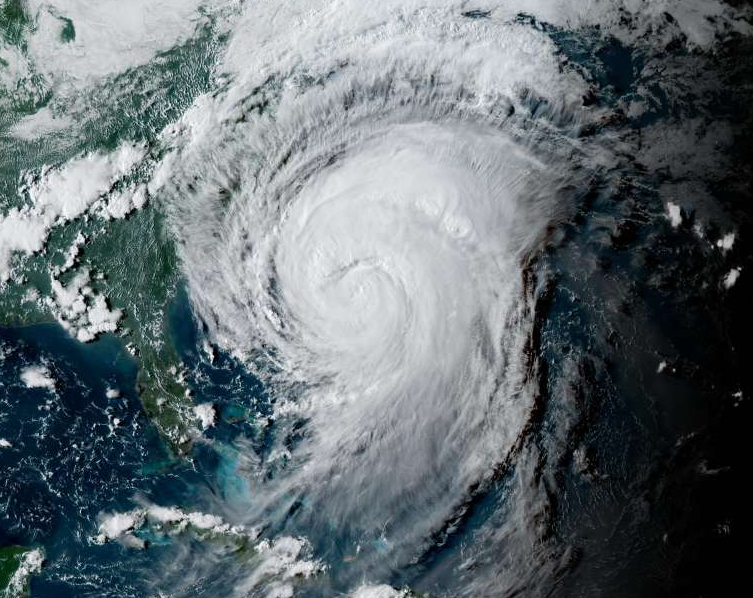
And as we all watched Hurricane Erin travel along the Eastern Seaboard of the U.S., we were reminded that OAR is the research backbone of the forecasts and warnings Americans and businesses rely on every day. It’s where NOAA’s innovation begins — developing the tools, models and data that make our forecasts more accurate and actionable. Without this critical foundation of research, our country risks falling behind in its ability to anticipate and respond to increasingly dangerous weather, air quality and ocean threats.
Much of what Americans take for granted in weather and water prediction today is the result of long-term research by OAR scientists and partners. NOAA’s weather radar systems, tsunami detection buoys, fire weather models and hurricane forecasting tools were all developed or improved by a network of OAR research teams. Models that predict severe thunderstorms, flash flooding and tornadoes have roots in these labs. Even the social science research that helps ensure people understand and act on urgent warnings — another OAR contribution.
The benefits of all this research extend beyond weather. It supports ocean condition forecasts vital to shipping, recreation, offshore energy and fisheries. Its work helps safeguard coastal economies and bolster marine industries across the country.
OAR’s long-standing partnerships with top research universities, through NOAA’s cooperative institutes, have created one of the most efficient and impactful public science models in government. These centers combine the innovation of academia with the mission-driven focus of federal service, ensuring that scientific breakthroughs translate into real-world tools for saving lives and protecting property.
If the Trump administration eliminates OAR, this research ecosystem — built over decades — would collapse overnight. There will be a major reduction in sustained research driving improvements in forecast accuracy, no organized pathway to test and adopt next-generation models and no framework to integrate new technology — like artificial intelligence — into forecasting systems. We’ll lose ground on hurricane intensity prediction, wildfire forecasting, flash flood detection and more. Just as critically, we’ll lose the ability to prepare for the future.
As the climate changes, extreme weather events are becoming more frequent and intense. Cutting off the research needed to understand and adapt to these changes is not just shortsighted — it’s dangerous.
Eliminating OAR would have devastating, lasting consequences. It takes years to build this kind of top-notch scientific capacity, infrastructure and collaboration. Once dismantled, it will not be easily or quickly restored.
The proposed elimination of OAR sends a troubling signal that science and public safety are no longer national priorities. That we are willing to sacrifice progress — and ultimately, lives — in the name of budget cuts. But the cost of inaction will be far greater. Every delay in advancing our forecast systems, every missed opportunity to improve public warnings, puts more people at risk.
The horrific recent flooding in Texas and other states show us what happens when we fail to both anticipate and prepare for each catastrophe.
We must continue to invest in research to be better prepared and reduce the impact of future tragedies.
As someone who dedicated a lifetime to NOAA’s research mission, I know how urgent it is to reject this proposal to eliminate OAR. It represents the very best of what government science can achieve: collaboration, innovation and service to the public good.
Let’s protect the science that protects us — by preserving OAR, we are not just defending data and models. We are defending lives, livelihoods and our ability to face an uncertain future with confidence.
John Cortinas is former deputy assistant administrator for science in NOAA’s Office of Oceanic and Atmospheric Research. He lives in Miami. This opinion piece was originally published by the Palm Beach Post, which is a media partner of The Invading Sea. Banner photo: A small boat launched from a NOAA ship works to recover a Deep-ocean Assessment & Reporting of Tsunamis (DART) transponder buoy, part of the U.S. early tsunami detection system (NOAA, Public domain, via Wikimedia Commons).
Sign up for The Invading Sea newsletter by visiting here. To support The Invading Sea, click here to make a donation. If you are interested in submitting an opinion piece to The Invading Sea, email Editor Nathan Crabbe at ncrabbe@fau.edu.
