


By Jamie Molnar, Florida Power and Light
More than halfway through this hurricane season, it’s tempting to think we’re in the clear. Already, there’ve been seven storms, including an incredibly powerful Category 5. Thankfully, so far, we have avoided a landfalling, named storm.
But instead of taking a sigh of relief, we should refocus our attention.
We have officially reached the historical peak for activity during the Atlantic hurricane season, which according to the National Hurricane Center, is generally in the middle of September. We learned this all too well around this time last year when hurricanes Helene and Milton devastated the Southeastern U.S. within two weeks of each other as those major storms made landfall in Florida on Sept. 26 and Oct. 9, respectively.
Florida stood up to that challenge and will stand up in the face of any storms that come our way this year.
As one of the fastest-growing states in the country and one of the largest economies in the world, we must continue to make smart investments that enhance our grid to help us bounce back quickly. Resiliency is essential and something we have and continue to make a top priority.
Thanks to Storm Protection Plans supported by the Florida Legislature and approved by the Florida Public Service Commission, utilities like FPL continue to strengthen the electric grid, both above ground and below ground. Steel, concrete and reinforced power poles, more underground neighborhood power lines, and smart grid devices throughout the system are just some of the ways we are building a more resilient grid to support our state.
Florida is an amazing place to call home. Unfortunately, the persistent risk of living in our beautiful state is exposure to hurricanes, severe weather and the destruction they can bring. That’s why our storm preparedness and resiliency work is absolutely essential — especially as we face the prospect of stronger and more frequent storms.
While we can’t make our system 100% stormproof, we can and should take steps to be ready. For utilities, this means strengthening and undergrounding more power lines, hardening our substations and investing in smart grid technologies that can isolate damage and restore power faster. For every Floridian, it means having an emergency plan, stocking supplies and knowing your evacuation zone before the next storm forms.
The preparation we do today — both as an industry and as communities — determines whether we merely survive the next storm or emerge from it stronger. The choice, and the responsibility, belongs to all of us. I’ll keep hoping for no storms — and, at the same time, I’ll keep preparing.
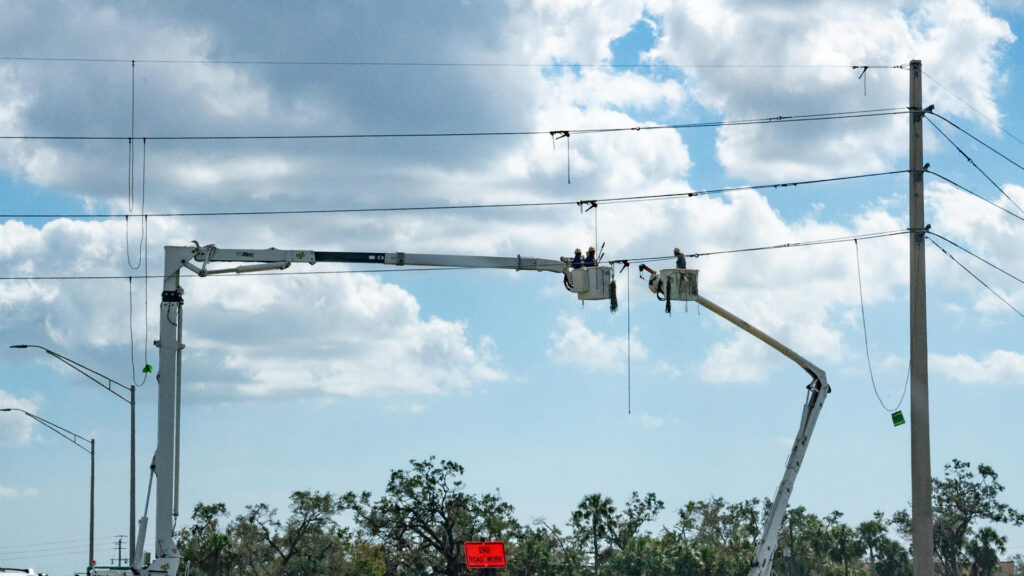
Jamie Molnar is executive director of emergency preparedness for Florida Power and Light Company. This opinion piece was originally published by the Orlando Sentinel, which is a media partner of The Invading Sea. Banner photo: A utility worker fixes a power line (iStock image).
Sign up for The Invading Sea newsletter by visiting here. To support The Invading Sea, click here to make a donation. If you are interested in submitting an opinion piece to The Invading Sea, email Editor Nathan Crabbe at nc*****@*au.edu.
