


By Arielle Perry, FAU Center for Environmental Studies
Last month in Fort Lauderdale, tidal flooding was higher than expected, with some tides coming in more than a foot above forecasts. As the city experiences what are known as king tides in the weeks ahead, the impacts could be a preview of what’s to come in the future.
King tides are exceptionally high tides that occur when the alignment of the sun and moon exert additional gravitational forces on the ocean. In Florida, king tides typically occur during the fall around a new or full moon.
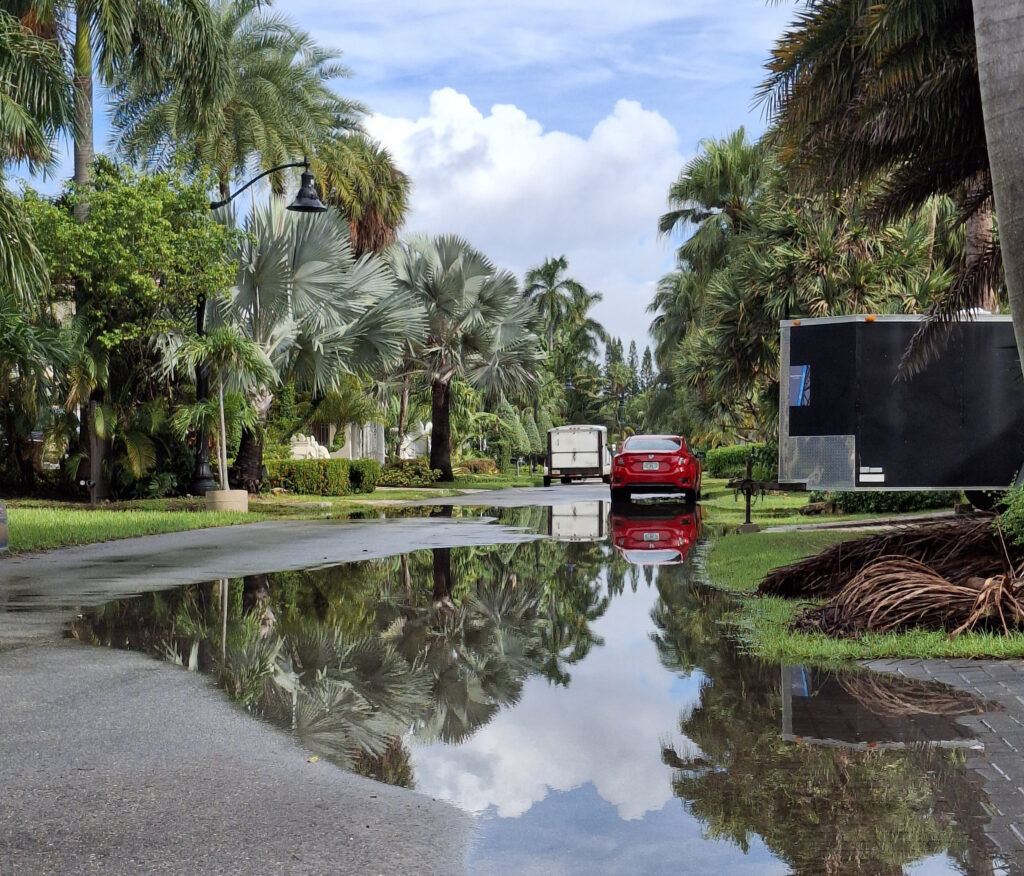
King tides can result in flooding even on sunny days and lead to impacts such as road closures, overwhelmed storm drains, property damage and the saturation of driveways, backyards, sidewalks and streets.
“Tidal impacts could be so significant as it could block people’s egress or ingress to their properties; they can’t get home, or they can’t navigate safely from work. Roads may be closed, their walking or running paths might be closed,” said Gregory Mount, Broward County’s assistant chief resilience officer.
King tides provide insight into what future daily high tides might look like due to sea-level rise. Although king tides are not caused by sea-level rise, tidal flooding is expected to intensify as a result of rising sea levels.
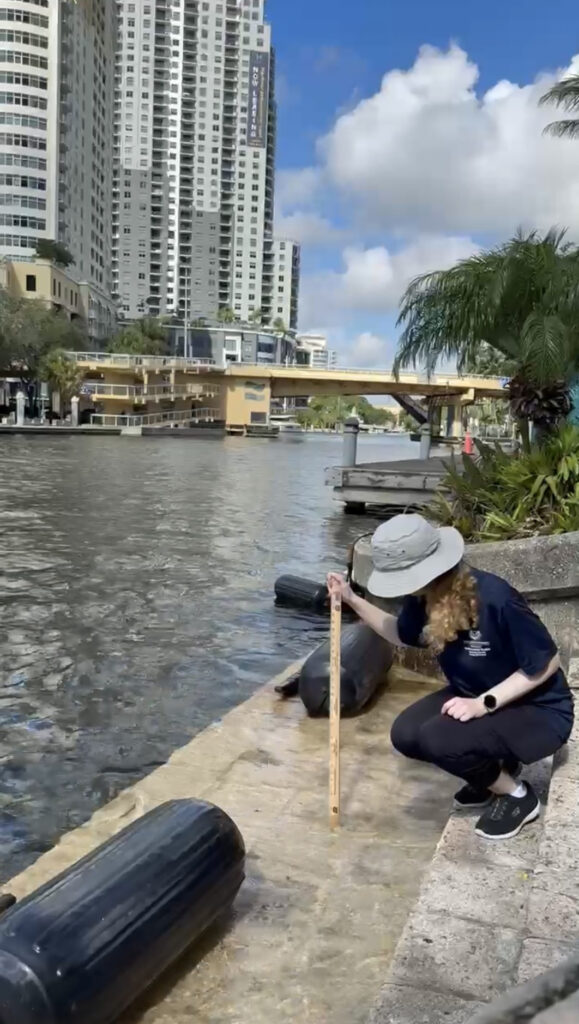
This year, king tides started in early September and were worse than expected in the city of Fort Lauderdale, according to Nancy Gassman, the city’s chief resilience officer.
“Since the very beginning of September, we have seen that the tide has been coming in way higher than predicted, and that throughout the month of September alone, we have seen 41 tides that have exceeded the threshold for flooding in the city of Fort Lauderdale,” Gassman said.
Low-lying coastal neighborhoods in the city are often hit hardest by king tide flooding. King tide flooding among coastal neighborhoods was evident in both early and late September. Water sat in large puddles that clung to driveways, submerged front lawns and bubbled up from storm drains — and with it came a foul, stinky odor.
These conditions are only expected to worsen in the coming weeks as the king tide on Wednesday is expected to be the one of the highest tides of the year.
“Residents should anticipate … some small-scale perturbations, and perhaps changing the route home or to work or home from work, and during those (king tide) times, they should be conscious of water-covered roads,” Mount said.
To address these and future concerns, both the city and other municipalities in the county have invested in infrastructure and outreach efforts to reduce the risk of flooding and educate residents about king tides. Municipalities across the county have installed thousands of tidal valves that help prevent seawater from backing up into drainage infrastructure. Around 200 tidal valves have been installed in Fort Lauderdale alone.
Both the county and city have been installing and raising seawalls to help keep the water out. The city’s $1.6 billion stormwater improvement initiative, Fortify Lauderdale, will also help reduce the frequency, duration and intensity of flooding caused by king tides in the coastal neighborhoods of Southeast Isles and Victoria Park.
In addition, the city annually sends out a postcard to households in flood vulnerable areas, notifying them about the dates of upcoming king tides. Both the city and county also have resources on their websites to help prepare residents for king tides and other flood events.
“There’s a saying that’s ‘turn around, don’t drown.’ If you don’t know the depth of the water, don’t drive into it, because you’ll end up ruining your car, or you’ll end up getting stranded,” Gassman said.
Both Gassman and Mount stressed the critical role of public awareness regarding king tides.
“Knowing that the tides are happening and about what time they’re going to happen is a key factor in successfully navigating the season,” Mount said.
Arielle Perry is a master’s student in the Environmental Science Program at Florida Atlantic University and is a graduate research assistant at FAU’s Center for Environmental Studies. The center manages The Invading Sea. Banner photo: Another image of king tide flooding last month in Las Olas Isles (Arielle Perry photo).
Sign up for The Invading Sea newsletter by visiting here. To support The Invading Sea, click here to make a donation. If you are interested in submitting an opinion piece to The Invading Sea, email Editor Nathan Crabbe at nc*****@*au.edu.

This king tide business is turning South Florida into one giant, slightly stinky puddle. Who knew high tides could be so… disruptive? Turn around, dont drown indeed – sounds like a fun new beach motto. Good on Fort Lauderdale for their Fortify Lauderdale initiative and those fancy tidal valves; maybe they should install a few for the roads too, so you can choose between flooded streets or flooded cars. Cant wait for the next round – perhaps Ill time my commute to coincide with the highest tide and really test the small-scale perturbations theory. Just hope my sneakers make it home this time!vòng quay online