


By Tony Murray, Julie Harrington and Michael Garcia
Florida’s Big Bend is one of the last undeveloped coastal regions in the continental U.S. Natural features like rivers, salt marshes, longleaf forests and seagrass meadows form a connected, vibrant ecosystem. The ecological health of this area is critical for supporting local livelihoods, traditions and the economy.
Increasingly, policymakers, conservation groups and local communities recognize that protecting the Big Bend’s natural systems is an environmental responsibility and a key economic strategy. This approach is called the Big Bend Conservation Economy, based on the principle that nature itself functions as economic infrastructure.
Marshes protect property from storms, seagrass meadows sustain important fisheries, and rivers and springs drive recreation and water-based industries. Preserving these natural assets is crucial for the region’s ongoing economic resilience.
Tidal marshes absorb storm surges, preventing significant inland damage. A recent economic study found that marshes that cut wave energy significantly can translate into tens of millions of dollars saved in avoided damage during major storms. As hurricanes grow more destructive, preserving these natural coastal barriers is a vital part of economic planning.
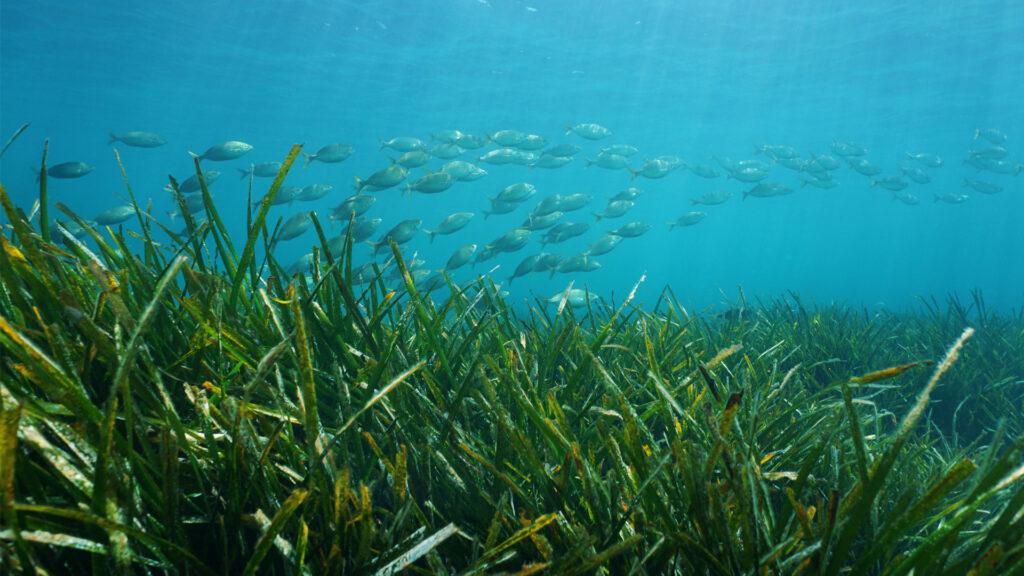
The region’s seagrass beds — among the largest in North America — are the foundation for a thriving commercial and recreational fishing industry. The seasonal scalloping season brings substantial revenue to local businesses. The success of oyster and scallop fisheries are tied directly to the health of the water, consistent freshwater flow and thriving seagrass.
Notably, seagrass beds are natural water purifiers that support healthy marine life. For every hectare of seagrass, it costs $19,002 per year to build and maintain a wastewater treatment plant to achieve the same level of water filtration. Seagrass lost to dredging, pollution or industrial activity will result in fewer economic opportunities and greater costs for the region.
Seagrass habitats are among the most economically valuable ecosystems in the world. Florida’s Big Bend region remains one of the last strongholds where healthy seagrass can thrive, with approximately 240,000 acres of coverage alone. Research in Florida consistently shows that each acre of seagrass contributes between $20,000 and $22,500 in economic value through fishing, tourism and storm protection. Based on these estimates, the Big Bend region generates between $4.8 billion and $5.4 billion in annual economic value.
Inland, the Apalachicola, St. Marks, Wakulla, Wacissa, Aucilla and Suwannee river systems are key to the local economies as well as water security. These rivers, springs and floodplain forests attract tourism and support activities such as fishing and birding. Additionally, they recharge the Floridan Aquifer, the state’s main drinking water source. Protecting their headwaters is vital for sustaining tourism and ensuring long-term water resources for the region, the two main pillars of regional prosperity.
The region’s natural and cultural heritage is irreplaceable. Once fragmented, polluted or developed, the Big Bend will never function the same way again. Its value derives from continuity — of marsh migration zones, longleaf pine ecosystems, shell middens and other archaeological ties to prehistory, undammed rivers and the deep cultural traditions of fishing, forestry and river-based community life.
For this reason, an emerging partnership to secure UNESCO World Heritage recognition for Florida’s Big Bend is not just a conservation imperative — it is an economic one. World Heritage designation is associated with higher levels of ecotourism, improved resource protection and broader national visibility. Communities from Steinhatchee to St. Marks and Apalachicola will benefit from global recognition, which can reinforce the need to safeguard the natural systems that make the region unique.

A World Heritage site designation can boost tourism and local spending. In Nova Scotia’s Grand Pré, a quaint Canadian rural town, UNESCO status was estimated to increase annual visitor numbers by 3,000 and inject $200,000 into the local economy annually. For Scotland’s UNESCO sites, research estimated an annual economic impact of £10.8 million in 2014-2015 due to World Heritage status. For a region as large and ecologically significant as the Big Bend, the potential benefits could be significantly amplified via its unique wildlife, expansive seagrass beds and various recreational and commercial opportunities.
The Big Bend Conservation Economy is a strategy for lasting prosperity. It recognizes that the region’s environment is its main economic asset. Protecting natural features supports property values, fisheries and water supplies. Preserving cultural sites enhances local identity and diversifies tourism.
The Big Bend stands at a crossroads facing rising seas, more powerful storms and mounting development pressure. A thriving future depends on protecting the natural systems that have sustained the region. The Big Bend Conservation Economy acknowledges the region’s environmental value and invites all stakeholders to link economic prosperity with responsible stewardship of this extraordinary place.
Capt. Tony Murray is founder and director of the Big Bend Coastal Conservancy. Julie Harrington, Ph.D., is director of the Florida State University Center for Economic Forecasting and Analysis (CEFA), and president of the Friends of Wakulla Springs State Park. Michael Garcia is a graduate researcher at CEFA. Banner photo: An aerial view of a coastal marsh in the Big Bend region (Chastizement, CC BY-SA 4.0, via Wikimedia Commons).
Sign up for The Invading Sea newsletter by visiting here. To support The Invading Sea, click here to make a donation. If you are interested in submitting an opinion piece to The Invading Sea, email Editor Nathan Crabbe.

Yaw missed Ecofina River State Park……The land should be bought on Hwy14 behind the SRM mining plant…before it’s lost……I know for a fact there was a substantial plaza-city,villages on the Cofina side and the Econfina River side a beautiful spring is hidden in a swamp neT a huge mound and creek right before a road dead ends at the river.
There asking $4,000,000.
Nathan Crabbe is a familiar name I recall from all our years of testifying with FL physicians and others at our FL Capitol for protection of concerns mentioned in article which remain at even greater risk today as more and more people move into North FL coastal regions like Steinhatchee where we’ve owned property for over 65 years.
As seas warm dramatically each year producing fiercer storms and higher sea level rise, it gets harder and harder to maintain often hard-hit river and beach properties and roads!
As we watch places we love get damaged and destroyed,— even as more people, many from South Florida, continue to pour in to build new homes
In flood threatened areas! Truly concerning for those who love our coast and work to protect it all we can!
Thanks, Nathan, for continuing to bring attention to what is truly a present and rapidly growing crisis in our FL panhandle and all across Florida!
Gale Dickert (johnw512@yahoo.com) 193 NW Hamilton Avenue, Madison, FL 32340