


By Bob Maliva, WSP
The signs of a changing climate are no longer subtle, they’re here, and they’re reshaping life in Florida. Hurricane Helene was a wake-up call. According to the World Weather Attribution, its wind speeds were 11% stronger and rainfall totals about 10% higher because of climate change. Tampa’s own Vulnerability Assessment confirms what many already suspect: extreme rainfall, storm surge and gradual sea-level rise are among the greatest risks facing the region.
For utilities, these changes aren’t abstract, they’re operational challenges that demand immediate action. How we prepare today will determine whether we can reliably deliver water, power and essential services to a growing population in the decades ahead.
Climate adaptation isn’t just technical, it’s financial. Utilities should start budgeting for resilience projects now and explore grants, partnerships and regional collaborations to share costs. Waiting until the next major storm or flood event will only make solutions more expensive and harder to implement.
Hotter, drier
Florida is projected to get hotter, with summer temperatures climbing 3 to 5 degrees Fahrenheit by 2075. That means more energy demand for cooling and more stress on water systems. At the same time, rainfall patterns will become less predictable. Swings between heavy downpours and prolonged droughts will be the new normal.
For water utilities, this means planning for greater irrigation demand, less aquifer recharge and uncertainty in supply. The old assumption of steady seasonal rainfall is gone. What can utilities do now?
- Expand water storage capacity through reservoirs or aquifer recharge projects to buffer against drought
- Invest in water reuse and recycling systems to stretch every gallon
- Promote smart irrigation and drought-resistant landscaping to curb demand
- Enhance leak detection and pipeline maintenance — every drop counts
- Adopt tiered pricing and conservation incentives to encourage efficiency
- Work with energy providers to forecast cooling demand and integrate renewable power for pumping and treatment
- Strengthen emergency response plans for both floods and dry spells
These steps aren’t just good practice, they’re essential for resilience in a hotter, less predictable climate.
Sea-level rise
Sea-level rise may feel distant, but it’s happening now. Based on long-term Key West data, Florida’s sea level is expected to rise 0.7 feet by 2050 and 1.6 feet by 2075. While most homes and businesses won’t be underwater soon, the impacts will be real: permanent loss of coastal ecosystems, amplified storm surges and more frequent flooding in low-lying areas like Tampa Bay, the Gulf Coast and barrier islands.
Higher seas mean higher groundwater, more saltwater intrusion and greater risk to infrastructure. Action steps for utilities should include:
- Map vulnerable assets — pump stations, treatment plants, substations — and prioritize upgrades
- Elevate or harden critical facilities above projected flood levels
- Plan for saltwater intrusion with desalination or blending strategies
- Upgrade stormwater systems to handle surge and prevent backflow
- Ensure emergency power and access routes for crews during floods
- Coordinate with local governments on protection priorities and funding
- Invest in monitoring and predictive modeling to stay ahead of groundwater changes
These measures require foresight and investment, but the cost of inaction will be far higher, service disruptions, emergency repairs and public safety risks.

Some risks remain hard to model, like a rapid collapse of the Antarctic ice sheet, which could accelerate sea level rise beyond current projections. These low-probability, high-impact events underscore the need for flexible planning. Utilities should incorporate safety margins into designs and keep pace with evolving climate science.
Climate change is insidious because it moves slowly until it doesn’t. It’s easy to push adaptation down the priority list when day-to-day demands feel more urgent. But ignoring these trends will leave Florida’s utilities — and the communities they serve — vulnerable.
Meeting the water and energy needs of a growing population is already a challenge. Layer on hotter summers, erratic rainfall and rising seas, and the stakes become clear: Resilience must be mainstreamed into every planning process. Decision-makers should stay informed, build flexibility into designs and act boldly now.
Florida’s future depends on it.
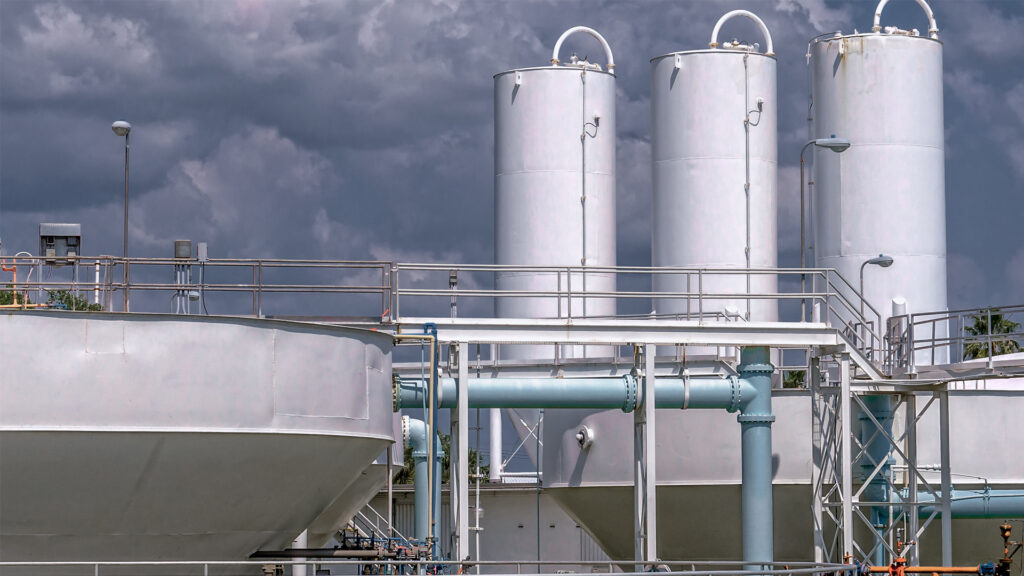
Bob Maliva, who lives in Fort Myers, is the principal hydrogeologist at the engineering firm WSP. This opinion piece was originally published by the Tampa Bay Times, which is a media partner of The Invading Sea. Banner photo: An aerial view of a wastewater treatment plant. (iStock image).
Sign up for The Invading Sea newsletter by visiting here. To support The Invading Sea, click here to make a donation. If you are interested in submitting an opinion piece to The Invading Sea, email Editor Nathan Crabbe. To learn more about the impact of sea-level rise on Florida’s water infrastructure, watch the short video below.
