


By Chrystal Blair, Public News Service
Offshore aquaculture could soon move from concept to reality along Florida’s Gulf Coast.
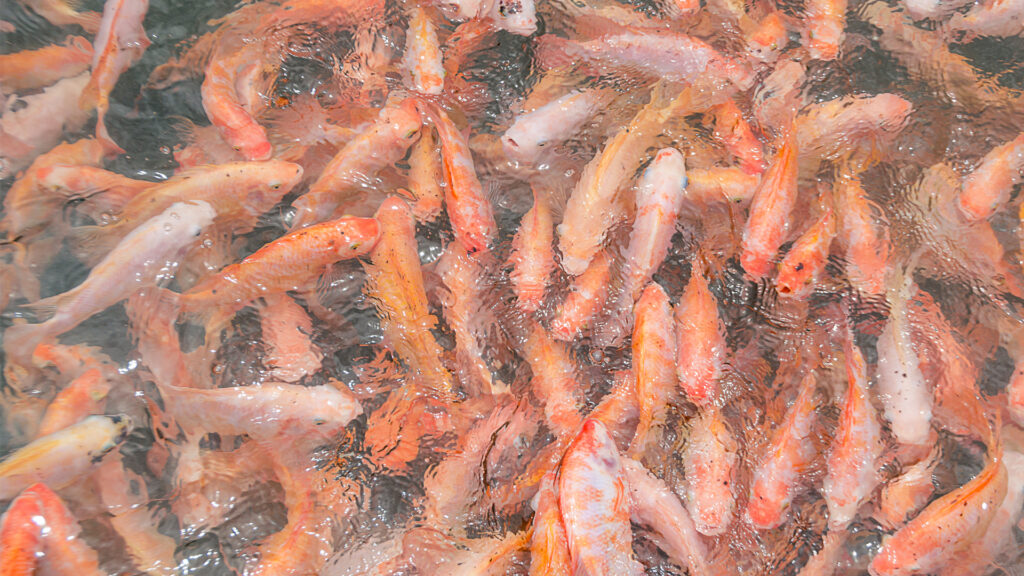
Research shows Americans now eat more farmed seafood than wild-caught, and the vast majority of it is imported. A proposal to place large fish farms in federal waters near Florida aims to change it, raising questions about environmental effects, seafood supply and the future of fishing in the Gulf.
Melvin Jackman lives near salmon farms in Newfoundland and said large-scale fish farming has damaged local waters and coastlines.
“It makes a few jobs but the jobs don’t justify the environmental damage,” Jackman asserted. “It simply doesn’t. I want my grandkids to walk on a clean shore.”
Supporters of offshore aquaculture say newer, deep-water fish farms could reduce reliance on imported seafood and limit environmental harm, arguing the technology being proposed for Florida’s Gulf waters is fundamentally different from older nearshore operations.
Neil Anthony Simms, founder and CEO of Ocean Era, which is seeking approval for an offshore fish farm in federal waters off Florida’s Gulf Coast, said offshore placement makes the difference.
“All of the evidence confirms that if you do this in deep enough water with a bare sand bottom and with some reasonable water movement, you have no significant environmental impact and often no measurable environmental impact at all,” Simms contended.
Simms’ proposed farm is facing legal challenges from environmental groups. With no clear federal permitting framework, the future of offshore fish farming in the Gulf is uncertain. But for people like Jackman who live near these fish farms, one thing is certain: what’s at risk.
“Think twice before they put that in your area,” Jackman urged.
Public News Service is an independent, member-supported news organization providing “news in the public interest” through a network of independent state newswires. This story is based on original reporting by Carlyle Calhoun and Boyce Upholt with the Food and Environment Reporting Network. Banner photo: Fish farming (Asc1733, CC BY-SA 4.0, via Wikimedia Commons)
Sign up for The Invading Sea newsletter by visiting here. To support The Invading Sea, click here to make a donation. If you are interested in submitting an opinion piece to The Invading Sea, email Editor Nathan Crabbe.

No farmed tilapia or any garbage farmed fish
No aquaculture basin for fish farming on our coastal water.
No Fish farming in any of our waters period.
Really? No progress allowed to feed people more sustainably? Better to overfish wild stocks??
Want to stop farming on land too? Smh
Leave our waters alone. Fish farming will hurt the rest of the fish population. Unless you can figure out how to fish farm tuna, that would the only thing that would make sense, everything else forget aboutA
No fish farms we are destroying our wild fish by raising fish in these fish farms
Only reason people eat more farmed seafood is because local government and federal make it way to hard for commercial fishermen and women to work license and permits are overwhelming. Farmed seafood has no health benefits other than it fills your stomach. Wild clean seafood is what the human body craves and needs. Please Ron DeSantis no seafood farms in gulf of America
No fish farms in the Gulf of America
Terrible idea. No fish farms off Florida’s coast.
They catch juvenile fish or shrimp then raise them . That’s wrong leave them alone and let them grow wild. You can’t take juvenile species without destroying the species