


By Sean Mowbray, Mongabay
Last year, a spate of deaths in Florida caused by Vibrio vulnificus, known as the flesh-eating bacteria, made headlines. Infections of this kind are troublingly on the rise as ocean temperatures surge higher and marine heat waves increase in frequency and intensity due to climate change.
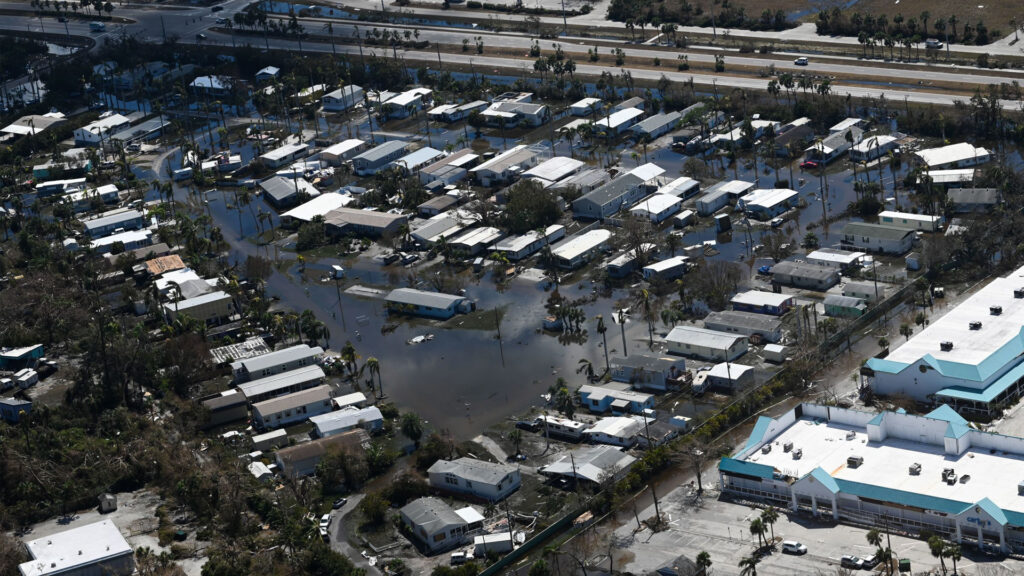
Experts are especially concerned that marine heat waves, when combined with an influx of pollution in coastal areas — especially untreated sewage and synthetic agricultural fertilizers — could be fueling the growth of harmful pathogens, including V. vulnificus.
There are at least 12 species of Vibrio harmful to people, including V. cholerae, which causes cholera, a disease infecting 1.3-4 million people annually and killing 21,000-143,000. Humanity is significantly worsening cholera outbreaks by creating ideal conditions for V. cholerae growth and spread, via increased global temperatures, extreme weather (both floods and droughts) and contaminated water sources.
It’s important to note that all these bacterial species occur naturally in marine environments. V. vulnificus and V. parahaemolyticus are two other pathogenic species of major concern today, while another, V. alginolyticus, is less well-known but also on the rise. Human activity, particularly climate change, is creating conditions for their growth and spread to new waters.
An emergent disease threat
In 2024, experts warned that humanity was on the “cusp of an alarming global increase in Vibrio disease,” driven by increasing seafood consumption and global trade, recreational use of coastal waters and climate change.
“We’re really concerned with regards to climate change, because (Vibrios) track ambient environmental temperature,” says Craig-Baker Austin, a research microbiologist at the Weymouth Center for Environment, Fisheries and Aquaculture Laboratory. “Wherever there’s a heat wave, we tend to see an increase in these sorts of infection risks.”

Warmer waters are now spreading infection risk to areas where they weren’t historically present, such as northern Europe. According to the Lancet Countdown, each of the last three years has seen cases of vibriosis — or infection with non-cholera Vibrio pathogens — break records. In 2022, an estimated 609,000 people worldwide contracted infections; in 2023, 692,000; and in 2024, that figure jumped to an estimated 722,780 infections. In the U.S., there are roughly 80,000 cases annually, with 50,000 of those linked to contaminated seafood.
Vibrios aren’t just a concern for human health; they also degrade ecosystems and can cause mass die-offs in filter feeders such as oysters and other commercial marine species like shrimp. Some of these bacterial species can even impact coral reefs, degrading ecosystems vital as nurseries for a wide range of marine life.
Experts say the global health care and economic cost of Vibrio is already counted in the billions of dollars. And that, too, is expected to increase with climate change.
The problem with Vibrio isn’t necessarily the number of cases, as these are lower compared with other human illnesses, notes Jan Semenza, a public health expert at Sweden’s Umeå University. The big concern is potential severity: V. vulnificus infections via exposure to contaminated water or seafood can result in septicemia and death.
“We are not talking about a huge disease burden, but the outcome can be catastrophic. It can be very serious,” he says.
When heat waves and pollution collide
The global spread of Vibrio, researchers say, is fundamentally due to increasing temperatures. These species of bacteria need it warm to thrive, above 15 degrees Celsius (59 degrees Fahrenheit) and love brackish water. “Many of these pathogenic Vibrios have a preference for warm water conditions, and they can occur in higher concentrations when water temperatures are elevated,” says Justin Seymour, leader of the Ocean Microbiology Group at the University of Technology, Sydney. “There’s also evidence that numbers and impacts of human infections can be higher during warm-water periods.”
Experts worry that other human activities are exacerbating the Vibrio problem. Research by Sean Norman, an associate professor and director of the Molecular Microbial Ecology Laboratory at the University of South Carolina, found that V. vulnificus exposed to sewage wastewater in a controlled lab experiment showed enhanced growth and potential for increased virulence. A 2024 paper regarding the Baltic Sea found increased Vibrio growth in areas polluted with nutrients.
Sewage pollution is a global problem in developing and developed countries alike. It, too, is being worsened by climate change, as increased precipitation and severe storms wash larger volumes of untreated waste into waterways, out into bays, estuaries and oceans.
Greatly exacerbating this problem are antiquated urban sewage treatment systems that rely on combined sewer overflows (CSOs). Nineteenth- and early 20th-century city planners designed CSOs to run raw sewage and stormwater through the same pipes into waste treatment plants. This system worked fine in drier weather and during historically milder storms, with waste disposal facilities keeping up with the flow of waste.
But today, the record deluges brought by climate change easily overwhelm outdated CSOs with a flood of fecal-contaminated stormwater, so much in fact that treatment plants must be bypassed, allowing raw sewage to flow into coastal waters.
CSOs remain an intensifying source of pollution in cities the world over, including New York, London, Paris, Berlin, Shanghai, Mumbai and Cape Town. And it’s not only big cities with a CSO problem. In Europe alone, there are around 650,000 such storm overflows. Fixing the problem would cost the world many, many billions of dollars.
Nutrients make pathogens grow
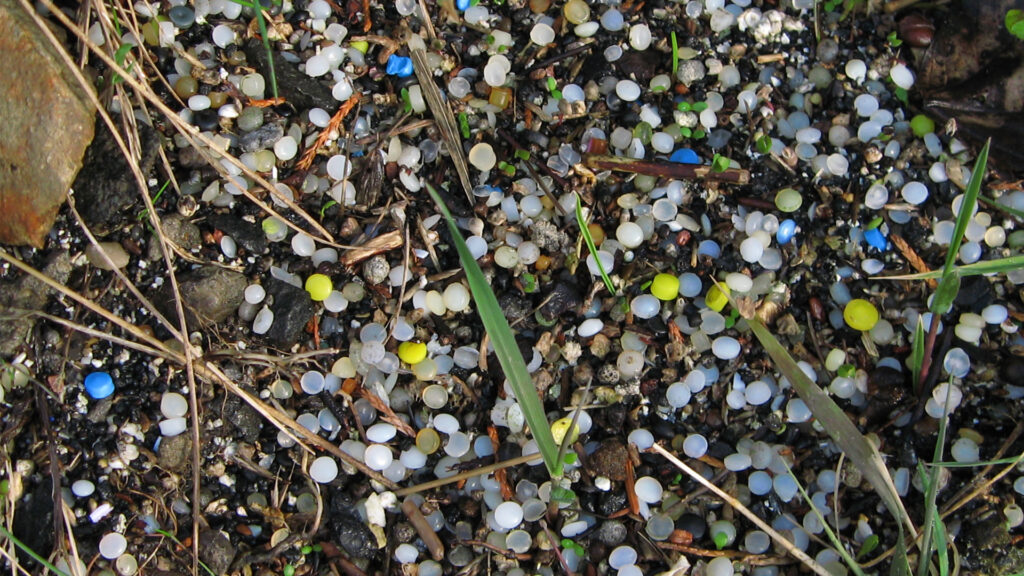
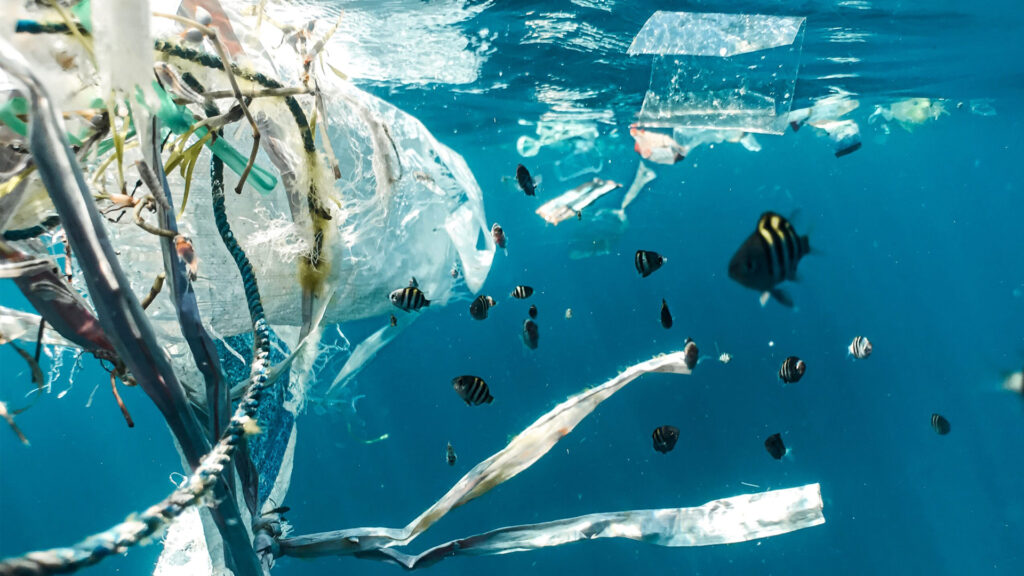
Raw sewage pollution is made up of a host of contaminants, among them, nutrients such as nitrogen and phosphorus (which act like fertilizers making bacteria grow) as well as microplastics. Recent research has shown that bacteria, including pathogens such as Vibrio, can colonize plastics in the marine environment, allowing them to persist.
“Whenever these (pollutants) come out into the environment, it starts providing a selective pressure for the microbes,” Norman says. “So, Vibrio are growing in those environments, and now you’re providing a selective advantage for certain types of Vibrio (such as) those that are resistant to antibiotics.”
A 2025 study found that bacteria grown on microplastic biofilms not only thrive, but when crowded together in large numbers, they can more easily exchange antibiotic resistant genes — becoming 100-1,000 times more resistant to antibiotic drugs and therefore far harder to kill. Microplastic pollution is ubiquitous in oceans worldwide.
Researchers note that our understanding of current marine pathogen surges is far from complete, with further studies needed to fully determine how sewage pollution affects Vibrio and bacterial species other than vulnificus.
“The connection between those nutrients being put into the environment and Vibrio is not clear yet,” Seymour says. Nor has the connection with microplastics been fully discerned.
Wildfires and algal blooms
Norman’s lab has looked at yet another troubling human connection with disease: Climate change-intensified and more numerous wildfires produce vast amounts of ash that can be carried on wind and deposited in fresh and saltwater environments, acting as a potential driver of pathogen growth.
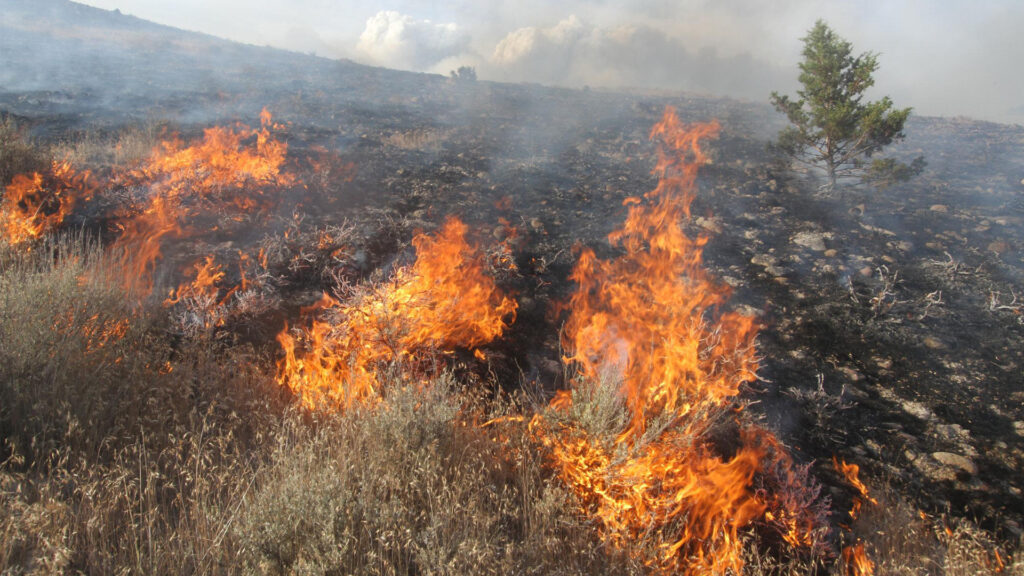
When forests burn — an increasingly common occurrence in the U.S. West, Canada, Russia, Brazil, Bolivia, Greece and elsewhere — they deposit large amounts of ash in rivers that are then flushed out to sea. That ash, according to Norman’s research, appears to also enhance V. vulnificus growth and possibly its antibiotic resistance, maybe due to the presence of iron in the ash.
Rounding out this complex suite of climate-pollution-linked factors are harmful algae blooms. Like wildfires, these have become more common in oceans and seas around the world, exacerbated by marine heat waves, overall higher ocean temperatures and nutrient pollution, especially from agricultural fertilizer runoff.
Experts note that once these algae blooms subside, there is often an increase in Vibrio abundance and infections. That’s likely because the blooms provide nutrients helping the bacteria proliferate, though this is still an active area of research, Norman says.
“Climate change, coupled with a lot of these socioecological factors, are leading to more selective pressure for the growth of Vibrio that may have enhanced virulence pathways,” he adds. “We’re also starting to see a complete global redistribution of the environmental conditions where these microbes can thrive, and for longer periods of the year as well.”
Algal blooms are also linked to ciguatera fish poisoning, the most common form of non-bacteria-induced seafood poisoning in people. Eating contaminated seafood can result in gastrointestinal, cardiovascular and dermatological symptoms, and death in rare cases. “These are organisms that thrive in these algae blooms caused by the warming oceans and runoff from urban environments into the oceans,” Semenza says, adding that they pose a rising threat to human health.
Vast oceanic algal blooms continue to be caused in the Gulf of Mexico and in estuaries around the globe as staggering sums of petrochemically based nitrogen fertilizers run off of agricultural lands into rivers and out to sea.
A long-running algal bloom has struck southern Australia since March 2025 and is a striking example of rapid and concerning changes in the marine environment. It has caused the deaths of thousands of marine animals — nearly 90,000 according to one estimate — and is producing potentially harmful brevetoxins that can affect people. Experts have identified the extensive marine heat wave and nutrient pollution as likely factors triggering the event.
A bloom of this magnitude has never happened before, Seymour says. “We’re starting to see more and more of these types of processes occurring, indicating that we might be at a tipping point where we might really start to see some drastic (disease) threats from the marine microbiome,” he says.
Keeping safe
In the face of a rising risk of infection from Vibrio and other waterborne pathogens, steps can be taken to reduce exposure, experts say, including greater public awareness, particularly during warmer summer months and after major precipitation events.
The surge in marine pathogens also signals the need for better monitoring, says Baker-Austin. Though Vibrio cases are monitored and reported in North America, this isn’t the case elsewhere, including in Europe, where Vibrio is becoming a widespread problem. “We need to start to get a better idea about what’s actually going on,” he says.
Modeling a combination of factors such as temperature and salinity to predict where Vibrio prevalence is high is key to develop early warning systems, researchers say. Such global models already exist, including one developed by the European Center for Disease Prevention and Control. Seymour says his group is working on models directly supporting fisheries at local scales as well.
Vibrio isn’t going to go away, since it naturally occurs in the environment, experts note. To reduce its spread, we need to stop nurturing it by slashing fossil fuel emissions, to curb rising ocean temperatures. The world also needs to tackle the global pollution problem, doing away with CSOs and reducing plastics production and the overuse of nitrogen fertilizers.
“The prime answer is stopping climate change, but that is, of course, a difficult thing to do,” Seymour says.
Mongabay is a U.S.-based nonprofit conservation and environmental science news platform. This piece was originally published at https://news.mongabay.com/2025/12/marine-heat-waves-and-raw-sewage-combine-to-put-human-health-at-risk/. Banner photo: A sewage outflow pipe in Bangkok, Thailand (Image by Trey Ratcliff via Flickr, CC BY-NC-SA 2.0).
Sign up for The Invading Sea newsletter by visiting here. To support The Invading Sea, click here to make a donation. If you are interested in submitting an opinion piece to The Invading Sea, email Editor Nathan Crabbe.
