


This article originally appeared on Inside Climate News, a nonprofit, non-partisan news organization that covers climate, energy and the environment. Sign up for their newsletter here.
By Amy Green, Inside Climate News
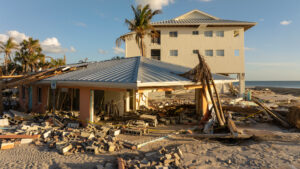
After three hurricanes battered Florida in 2024, state lawmakers approved legislation that supporters said would help communities recover. But the measure has had the much more far-reaching consequence of blocking local sustainability and resilience efforts.
The provisions of SB 180 that enhance growth and development in this booming state, which is uniquely vulnerable to more damaging storms, rising tides and flooding, are poised to be a top issue as the legislative session begins this week.
Three bills have been introduced to address the widespread concerns over the measure, which sparked two lawsuits after taking effect last July. The state moved to dismiss both complaints, and the cases, both filed in Leon County Circuit Court, have since been consolidated.
“Under the guise of helping people rebuild damaged structures, they did developers around the state a huge favor and basically froze in place all existing development standards in an area, in a state that has major problems that we need to address relative to sea level rise, environmental protections, habitat protections, water quality protections, affordable housing,” said Richard Grosso, an environmental attorney representing an advocacy group, 1000 Friends of Florida, in one of the lawsuits.
“Planning is supposed to be, has always been, an ongoing endeavor. You adjust your rules as you meet changing conditions and new challenges. And I don’t think anybody who is seriously knowledgeable about local land use planning in the state that would say our rules right now, they’re good, they’re adequate for all the future challenges Florida is facing.”
SB 180 goes to the heart of a dialogue that arises often in Florida after destructive hurricanes. On one hand, there is a widespread collective resolve to rebuild. But on the other, there is awareness of the inevitability of future storms and the prudence of rebuilding more sustainably. After Hurricane Andrew struck South Florida in 1992 as a Category 5 hurricane, building codes were strengthened, but as written, SB 180 prevents the implementation of similar actions.
The law prohibits local governments from enacting any land development policies that could be considered to be “more restrictive or burdensome.” Because of the way the measure is written and the widespread impacts of the 2024 hurricane season, which spawned Debby, Helene and Milton, it affects every county and municipality in the state. Opponents say the measure, which applies retroactively, essentially freezes all local planning and zoning regulations as they stood on Aug. 1, 2024, and keeps them frozen until Oct. 1, 2027.
“It really squashed community planning, any improvements to community plans, for up to three years,” said Kim Dinkins, policy and planning director at 1000 Friends of Florida. “We could be hit with additional damaging storms that local governments couldn’t have put in place any additional protections.”
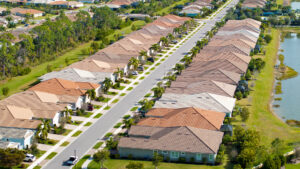
Since SB 180 took effect, more than a dozen local governments across Florida have received letters from the Department of Commerce, which oversees land planning in the state, declaring their proposed land development policies null and void under the law, according to 1000 Friends of Florida. Many of the changes were meant to strengthen stormwater management measures, protect natural resources and prevent urban sprawl. Some local governments have been slapped with lawsuits because of the law. Multiple local governments have joined to file their own litigation challenging the measure’s constitutionality.
State Sen. Nick DiCeglie (R-St. Petersburg), who sponsored SB 180, did not respond to a request for comment from Inside Climate News. But ahead of the legislative session he filed a new bill that would revise some of the more controversial aspects of the law. SB 840 would narrow the law’s scope so that it would apply to communities situated within closer proximity to a hurricane’s path. The bill would also reduce the threat of lawsuits against local governments and shorten the law’s duration, moving the end date from Oct. 1, 2027 to June 30, 2026.
Two other bills have been filed to revise SB 180 but are much more limited in scope, Dinkins said. She characterized DiCeglie’s legislation as a good start but said it could go further.
“A lot of local governments have already put forth future land use amendments and been told they can’t adopt them,” she said. “If (legislators) were to redefine the impacted local governments, that would at least free up those local governments that are being impacted that had no storm-related damage.”
This piece was originally published at https://insideclimatenews.org/news/15012026/florida-legislators-reconsider-resiliency-efforts-law/. Banner photo: St. Petersburg homes destroyed by storm surge from Hurricane Milton in 2024 (iStock image).
Sign up for The Invading Sea newsletter by visiting here. To support The Invading Sea, click here to make a donation. If you are interested in submitting an opinion piece to The Invading Sea, email Editor Nathan Crabbe.
