


By
Ingrid EisenstadterFor more than three decades I was the director of grants for a science foundation that funded, in large part, environmental protection. Over that time my attention increasingly turned toward news about huge nuclear power plant disasters, numerous radioactive waste leakages here and abroad, and the lack of a permanent U.S. radioactive-waste storage facility. Through subscribing to many science publications over these decades, I recognized that much of the reporting on these nuclear issues was contradictory, misleading or incorrect, especially in the lay press — a trend that continues today.
The U.S. currently has 54 nuclear power plants with 94 operating reactors in 28 states. Soon there could be more: President Donald Trump plans to resuscitate the nuclear power industry by building 10 new nuclear reactors, which are scheduled to begin operation as soon as 2030. To make that happen he is speeding up the approval and construction processes while simultaneously laying off more than 2,000 Department of Energy staffers — including Nuclear Security Administration employees.
Oh, and he’s simultaneously decapitating the green energy industry with $22 billion in clean energy projects cancelled just this year, according to an analysis at The Hill.
It all amounts to a huge gamble, not just for the country but for people’s lives — and the planet.
Companies that profit from nuclear power find nuclear to be safe
Just last summer the U.S. Department of Energy published a long, congratulatory article about Trump’s four executive orders to speed along this process of licensing and launching new reactors. Similar cheerful articles come from the Nuclear Energy Institute, World Nuclear Association, International Atomic Energy Agency and other organizations that make money from nuclear power.

Are people who do not work in the nuclear power industry similarly happy about this nuclear resurgence? Recent public-opinion surveys by organizations such as Pew Research Center, Bisconti Research and Gallup suggest that a majority of Americans support nuclear power.
But there’s a problem if you look closer: For example, the Gallup poll asked participants “Do you favor or oppose nuclear energy as one of the ways to provide electricity for the U.S.?” The results yielded a 61% finding that Americans favor nuclear power “strongly” or “somewhat.” What there is no sign of in Gallup’s website discussion about this poll is questioning respondents about whether they ever heard of Chernobyl, Fukushima or Three Mile Island, or know about the many radioactive leaks from plants in numerous locations in the United States and abroad, or that there’s nowhere to safely store radioactive waste that can remain active for millennia.
In the press coverage of this Gallup poll there was no sign of reporters who actually went beyond the press release summary to the Gallop website to examine the questions asked, find out how the survey audience was selected or how many people were in the survey that claims its results apply countrywide. Nonetheless, the results were found to be worth reporting as fact at Forbes, The Hill, Grist and others, including The Motley Fool.
The problem is everywhere
Today approximately 440 nuclear power reactors operate in 31 countries. An additional 70 are under construction, and more than 110 are in various planning stages around the world, according to the World Nuclear Association.
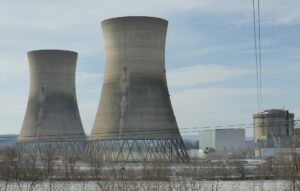
Megacompanies investing billions in partnerships with nuclear plant owners to accommodate their energy-guzzling AI ambitions include Amazon, Microsoft and Google.
As we’ve seen from the disasters at Three Mile Island, Fukushima and Chernobyl, there’s no such thing as a fail-safe nuclear plant, but these profit-making companies are prepared to take the gamble.
Around the world there have been at least 140 incidents of nuclear power plants malfunctioning in 17 countries, many of them with multiple incidents.
Each plant’s site will react in its own unpredictable way to earthquakes, floods, lightning strikes, wildfires, radioactive leaks, wartime bombs and terrorists, as well as more common human errors of construction and maintenance.
The companies building and operating these plants understand the risk, but as with all gambling, the house always wins. In the United States, reactor owners are limited to $500 million liability for damages by the Price Anderson Act. Retroactive insurance-payment increases can raise coverage, but ultimately the federal government — i.e., the taxpayer — covers damages that rise to hundreds of billions of dollars.
In Japan and Ukraine
To understand the risks, we need to keep the biggest nuclear disasters to date in mind, including the 1986 power plant explosion in Chernobyl, Ukraine, which was caused by errors in the design of the plant’s reactors, as well as errors in their maintenance.
The blast released 400 times more radiation than the Hiroshima bomb, contaminating 40,000 square miles with radioactivity. Residents’ descendants won’t be able to return to their family homes in the 1,000-square-mile exclusion zone for another 24,000 years.
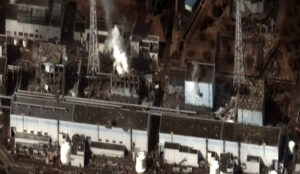
The also disastrous 2011 nuclear plant meltdown in Fukushima, Japan, was caused by an earthquake’s tsunami flooding the plant. Explosions followed the four reactor meltdowns. This should not have come as a surprise: More than three dozen earthquakes have hit Japan since just the turn of the century, and the country registers tremors every day due to its location along the Pacific Ring of Fire, a subduction zone that causes the constant grinding of two plates in the earth’s mantle.
Estimates of Fukushima’s cleanup costs start at about $540 billion. But when you include the ripple effect throughout Japan’s lands, waters and economy — along with the 30-40 year duration of the cleanup — costs will soar to 23.4 trillion yen or $1.6 trillion dollars, according to The Japan Times (in an article that was subsequently deleted from its site but remains accessible through Archive.org). An estimated 880 tons of radioactive fuel debris remains at the Fukushima plant and the release of treated, radioactive waters will go on for at least 30 years.
As with Chernobyl, cost estimates do not and cannot accurately include all financial losses that will drift through these economies for decades. While not much information has been published about Chernobyl-caused losses, we do know that Japan does not include indirect economic losses such as the car exports that plummeted after the meltdown, long-term tourism declines, the cost of clearing the ghost towns, years of healthcare expenditures, the cost of contaminated food-fish from untreated radioactive water that leaked into the ocean and soils, and more.
In the United States
The most radioactively polluted site in the world is right here in the United States: the Hanford nuclear site in Washington state, launched in 1944 and still home to 53 million gallons of nuclear waste. Cleanup estimates range from $364 billion to $589 billion with a 2086 completion date, according to a 2025 report from the Department of Energy.
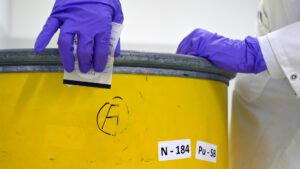
At our 94 operating reactors, the radioactive waste produced is stored right at these facilities, many of which have been known to leak this waste. In 2017 the Nuclear Regulatory Commission released a list of 43 leaks at 65 nuclear power plants, but it includes only tritium leaks. In 2024 the commission put out a second such list in which the number of known tritium leaks dropped to 37 without clear explanation. Since then leaks have been reported state by state, in the absence of a comprehensive list.
What we do know that there is no safe, permanent radioactive-waste storage site in the country — despite the prolonged effort to establish one at Yucca Mountain, Nevada — nor will there ever be a 100% safe way to transport this waste.
Any nuclear reactors operating today — or soon to be built — will become permanent additions to the landscape. It’s not possible to truly “shut down” nuclear reactors after an accident or after they have run their projected life spans. They remain radioactive indefinitely and will always require flawless maintenance of containment domes — assuming we design domes that can function indefinitely. For example, iodine-129 and cesium-135, both produced by nuclear plants and found in nuclear waste, have half-lives of 15.7 million years and 2.3 million years respectively.
While we build new nuclear plants, we waste energy
Proponents claim we need energy output from these new reactors, but we could achieve the same goals by using energy more efficiently — something we’re still not very good at. Here are some key sources of wasted energy:
Cars and trucks: According to the U.S. Department of Transportation, in 2022 there were a total of 278,870,463 trucks and cars — mostly occupied by a single individual — registered to drivers. Most of these vehicles are bigger and heavier than those in other parts of the world, thus consume more energy according to The Economist.
Electricity: Lights that burn all night, including in empty buildings, are a well-known phenomenon in this country and the problem is increasing at the rate of almost 10% a year. This can be traced to a number of problems: Indifference and ignorance are high on the list, as are inadequate policy and insufficient coverage in the press about the damage done.
Food: The Food and Drug Administration estimates that between 30% and 40% of our food supply becomes waste. In 2010 FDA research found that 133 billion pounds of food worth $161 billion turned into garbage.
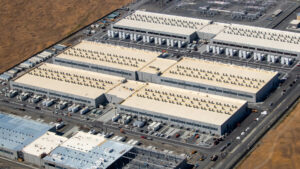
Artificial intelligence: AI is extremely energy consuming, and our skyrocketing commitment to it will send energy demand soaring. Power consumption for AI data centers here is anticipated to amount to almost half of the growth in electricity demand by 2030, according to the International Energy Agency. The IEA finds that “Driven by AI use, the US economy is set to consume more electricity in 2030 for processing data than for manufacturing all energy-intensive goods combined.”
Trump betrumps
As Trump plans to reboot the nuclear power industry, relaunching the Indian Point plant is on the agenda. It shut down in 2021 after 59 years in operation. From 1973 to 2016 there were at least 14 accidents — radioactive leaks, fire and equipment failures — as well as numerous incidents of sending contaminated water into the Hudson River. This is the plant that’s 25 miles from New York City. If a disaster were to strike Indian Point, there is no safe way to evacuate the city’s millions of residents and the millions more that live nearby.
The Three Mile Island plant in Pennsylvania, about 170 miles from Manhattan, is also set to reboot as early as 2027. The plant’s 1979 meltdown, caused in large part by human error, brought about the shutdown of one of its two reactors just three months after it launched. Two million people were exposed to low-level radiation — insufficient to harm them, due only to good luck. The cleanup took from 1979 to 1993 and cost $2 billion.
In his enthusiasm for nuclear power, President Trump withdrew the U.S. from participation in the United Nation’s international Paris Agreement climate accord on the first day of his second term. With this move he retracted our promised $4 billion contribution to that effort. Trump’s Environmental Protection Agency also halted $7 billion in federal grants for solar panels allocated to low- and moderate-income families.
Meanwhile Trump makes frequent claims that climate change is a “hoax.” At the recent U.N. General Assembly convening, in a speech before 150 world leaders, he called the wind energy and solar power alternatives to nuclear a “scam” and “con job.”
His alternatives are anything but clean: Trump has issued numerous executive orders to expedite oil (which can cause spills), natural gas (well known for its explosions) and coal mining (a major cause of air pollution).
As the president aggressively abandons renewable energy, both the Ukraine and Japan calamities raise a question: Can one such calamitous nuclear power plant accident wipe out all the savings allegedly cheap nuclear power has brought to the damaged country?
In light of the decades-long — and for some elements millennia long — recuperation process, the question is unanswered.
And unanswerable.
This piece was originally published at https://therevelator.org/nuclear-power/. Banner photo: The Three Mile Island nuclear plant in 2019 (Constellation Energy, CC BY-SA 4.0, via Wikimedia Commons).
Sign up for The Invading Sea newsletter by visiting here. To support The Invading Sea, click here to make a donation. If you are interested in submitting an opinion piece to The Invading Sea, email Editor Nathan Crabbe.

“As we’ve seen from the disasters at Three Mile Island, Fukushima and Chernobyl, there’s no such thing as a fail-safe nuclear plant”
By the same logic, the examples of Lassie, Rin-Tin-Tin, and Toto show there is no such thing as a dachshund. Anything can be done badly. An example of something done badly does not show it cannot be done well. See, for example, the Kairos design for a nuclear power plant which will be impervious to meltdowns.
“The most radioactively polluted site in the world is right here in the United States: the Hanford nuclear site”
That was a bomb fuel production site. It is either ignorant or deliberately misleading to bring that up as an argument against civilian nuclear power, which had nothing to do with it.
“there is no safe, permanent radioactive-waste storage site in the country”
There is no urgency to develop permanent storage. The Deep Isolation team is developing an option which should be quite cheap and safe.
“nor will there ever be a 100% safe way to transport this waste.”
Transportation itself is not 100% safe.. Almost nothing is. For relative context:
Global deaths from traffic per year: roughly 1.2 million
Global deaths from fossil fuel pollution per year: more than 3 million (possibly more than 8 million)
Global deaths from smoking per year: 8 million
Global deaths from fire per year: 1.5 million
Global deaths from falling per year: 0.7 million
Global deaths from nuclear power spent fuel per year: zero
“Proponents claim we need energy output from these new reactors, but we could achieve the same goals by using energy more efficiently”
Hundreds of millions of people are energy-poor because of insufficient energy supply. More efficiency won’t help them. We’ll need lots of new nuclear for computing, for synthetic fuel production, for infrastructure transition, for cargo ship power, and probably the biggest one–for removing around a trillion tonnes of CO2 from the air. Top climate scientists (see the 2013 letter from James Hansen, Ken Caldeira, Kerry Emanuel, and Tom Wigley), and the IPCC, and the Nature Conservancy all support the development and deployment of advanced nuclear power. Without it, the battle against catastrophic warming is almost certainly lost.