


By Paul Gray, Audubon Florida
The snail kite is one of the most iconic birds of the Florida peninsula. With its striking dark plumage, deeply hooked bill and slow, buoyant flight just above the water’s surface, the kite is uniquely adapted for one purpose: feeding on apple snails.
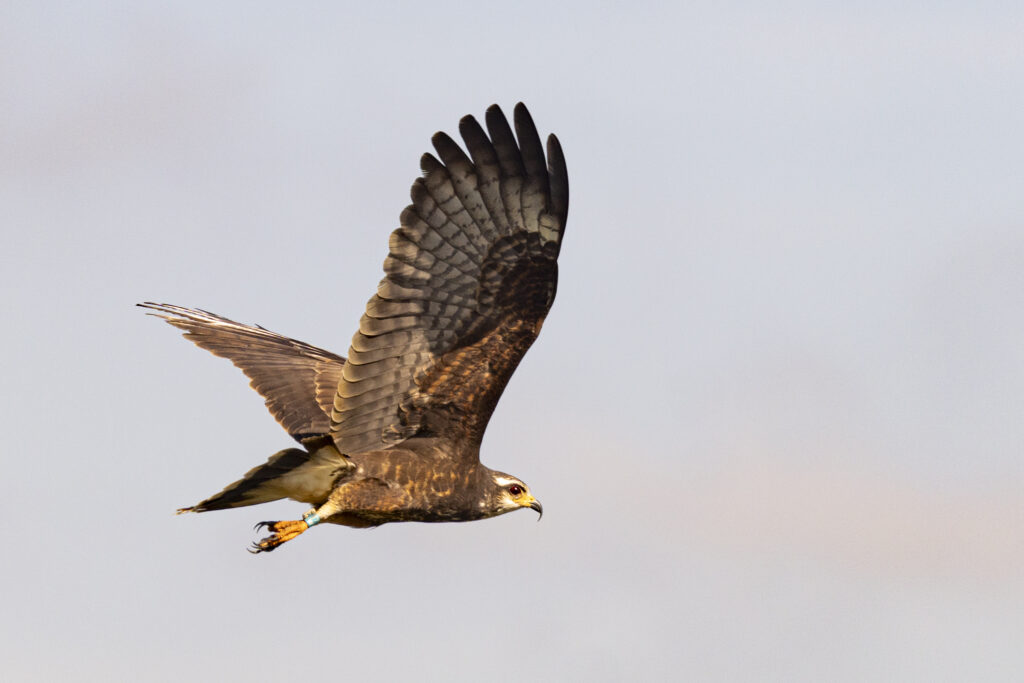
The apple snail does not live north of Florida, and thus, neither does the snail kite. This highly specialized diet restricted range, and human changes to historic water flow in the Everglades combined to land the kite on the federal endangered species list in 1967.
Since the River of Grass was drained and ditched in the mid-20th century, kite populations have been on a roller coaster ride.
In just a decade between 1999 and 2009, their numbers dropped from about 3,000 birds to only 700. Then, something unexpected happened: Non-native, channeled apple snails appeared in Florida waters.
Channeled snails are much larger, longer lived, more prolific and more resilient than our native snails. The snails spread so rapidly and widely that the kites learned to eat them; their population rebounded back to 3,000 birds by 2019.
Many hoped that the population rebound meant kites would be secure due to this new food source. Unfortunately, recent monitoring data paints a more complicated picture. In 2025, Florida experienced an abnormally dry spring and the University of Florida reported only 30 successful snail kite nests in the entire state. No successful nests came from the two largest historic kite nesting regions: the Everglades and Lake Okeechobee.
The previous year also wrought a dry spring and poor nesting success. As a result, the population estimate for 2025 has dropped to about 2,000 kites total. The 2026 population estimate is expected to be even lower.
What is Audubon doing to help snail kites?
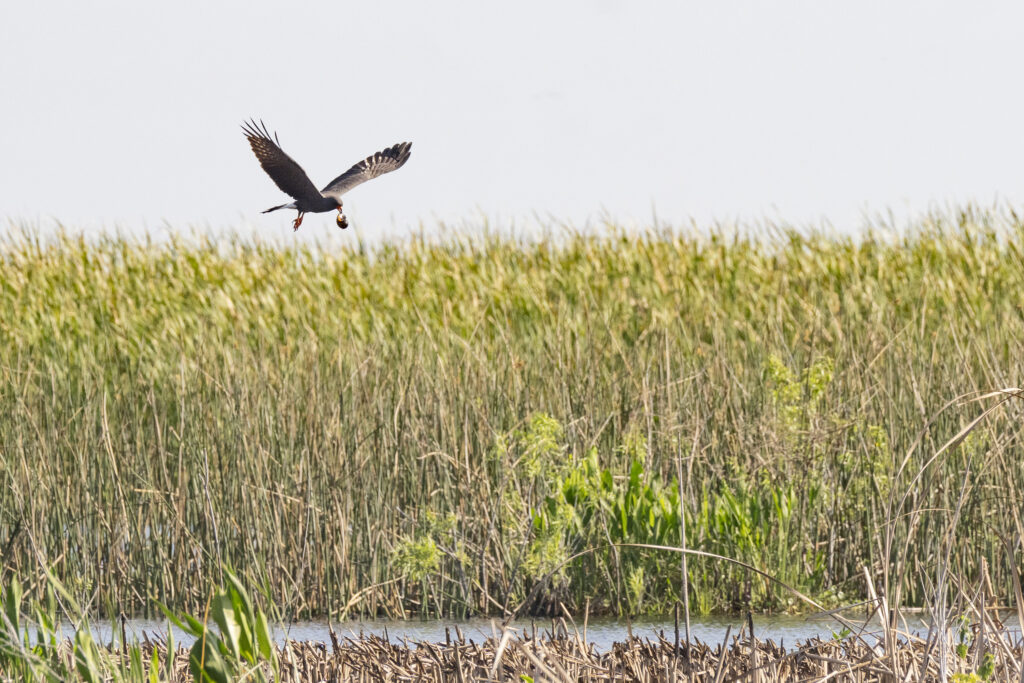
Audubon has led snail kite conservation for more than 90 years. The first wardens patrolled to protect kites from hunters and educate people about their importance.
Roderick Chandler, our third Okeechobee warden, worked with researchers from universities and the U.S. Fish and Wildlife Service, first by guiding them to where kites were, then helping with behavioral and nesting studies. They even learned to put baskets under nests that were in danger of collapsing.
Recently, Audubon worked with conservation partners to form and co-chair the multi-agency, multi-disciplinary Snail Kite Coordinating Committee. The committee meets in the spring and fall; so far we have learned that even though exotic snails can be prolific, their availability shrinks during drought years.
Additionally, the exotics are a boom-and-bust kind of species and during bust years, kites can’t rely on them. As for the native snail populations – their numbers are still down, and we don’t know why. They have not recovered enough in the Everglades or most major lakes to the extent they could support snail kites by themselves.
Into the future
Moving forward, Audubon will continue our vigilance on issues to avoid water levels in the Everglades and Lake Okeechobee that are too deep or shallow or changing too quickly. We support keeping aquatic plant managers and recreational boaters at safe distances from active nests.
Importantly, we will continue to support and advocate for fundamental research on native and exotic snails, as this is essential to help managers understand how to work together for a resilient snail kite future.
Paul Gray, Ph.D., is Everglades science coordinator for Audubon Florida. Read its State of the Everglades report and sign up for its email list to learn snail kite updates. This piece was originally published at https://www.audubon.org/florida/news/snail-kite-population-showing-strain-dry-years.
Sign up for The Invading Sea newsletter by visiting here. To support The Invading Sea, click here to make a donation. If you are interested in submitting an opinion piece to The Invading Sea, email Editor Nathan Crabbe.
