


By Sol Moyano, The Invading Sea
As the Winter Olympics get closer, the excitement of watching the world’s favorite cold-weather sports has turned into concern over how changing climate conditions might impact the games.
The 2026 Winter Olympics are scheduled to kick off Friday in Milan and Cortina d’Ampezzo, Italy. Temperatures have noticeably increased since Italy’s first time hosting the winter games 70 years ago.
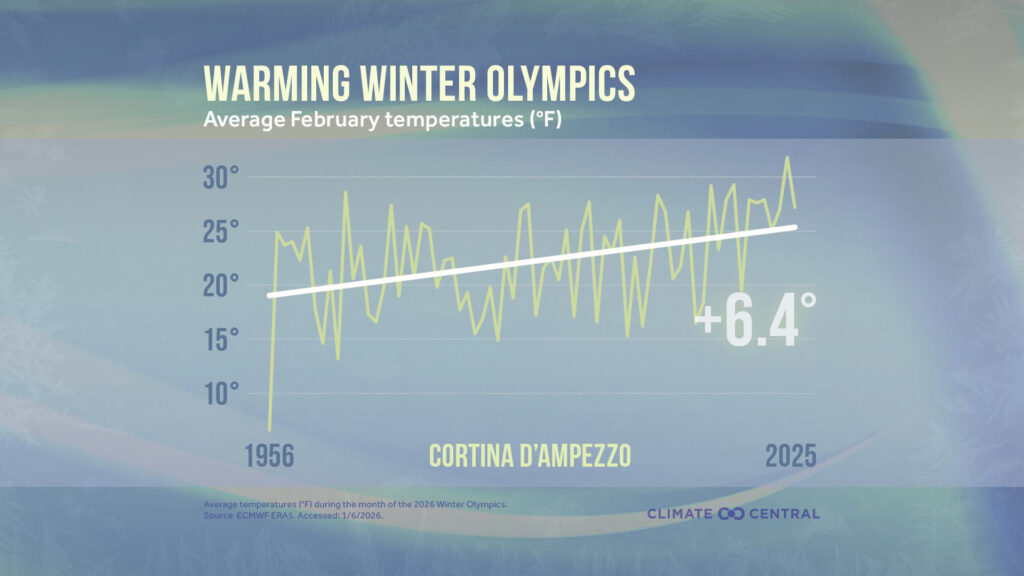
Cortina d’Ampezzo sees 41 fewer freezing days annually than when the games were first held there in 1956, according to a new report from Climate Central, a nonprofit group of communicators and scientists who research climate-related issues.
“The possibility of having Winter Olympics is literally melting away,” said Kaitlyn Trudeau, a senior research associate for climate science at Climate Central.
Many host cities are dealing with this issue. By the 2050s, only 52 out of the 93 potential host cities will have reliable climate conditions for the Winter Olympics, according to Climate Central.
Climate Central and Covering Climate Now, a journalism collaboration that convenes and trains journalists to cover climate issues, co-hosted a press briefing Wednesday to raise awareness about how rising global temperatures are affecting the Winter Olympics.
Forecasts predict that the location of the 2026 games will have a 50-60% chance of above average temperatures in February, and a 60-70% chance in March. The Olympics this year will require more than 3 million cubic yards of artificial snow, despite the high altitude of the Italian Alps.
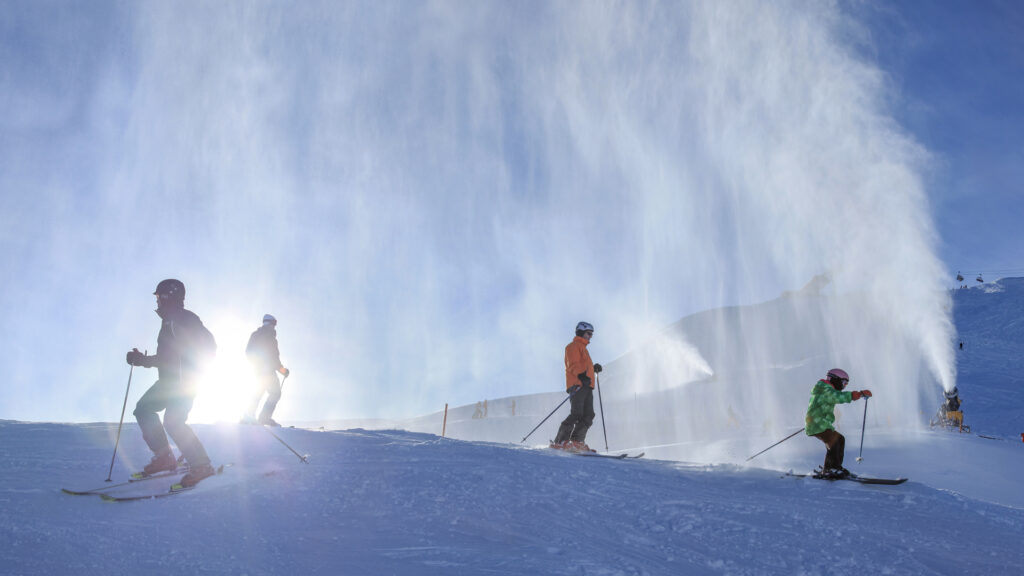
A later start of winter weather has also sent ski resorts in the U.S. scrambling.
“They’ve had $5 billion in losses due to shortened ski seasons in the last couple of decades,” said Ben Tracy, senior climate correspondent for Climate Central. “They’re having to invest in artificial snowmaking, which has its own environmental impacts in terms of the amount of water that it uses.”
The U.S., which hosted the Winter Olympics more times than any other nation, might have to reevaluate its decision to host for a fifth time, planned for Utah in 2034. With the state seeing a decrease in snow and the area getting warmer each year, it’s possible that it will not have the low temperatures needed to host these events.
“I don’t think we’re going to see a Winter Olympic Games in Utah in 2034,” said Rocky Anderson, former mayor of Salt Lake City, in a video produced by Climate Central.
One challenge that athletes will face is the safety of their sports. Because of limited snowfall, many training areas have closed, forcing athletes to look for more reliable places to train. Using artificial snow can also change how athletes perform on the courses, raising concerns about fairness in the games.
Some people have pushed for ways to make the Olympics less dependent on fossil fuels. One current sponsor is ENI, an Italian energy company that is one of the largest fossil fuel companies in the world.
Norwegian skier Nikolai Schirmer started a petition called “Ski Fossil Free,” which he plans to present to the International Olympic Committee on Wednesday, calling on the group to cut ties with fossil fuel sponsors.
“He’s going to be delivering that petition that he has folks signing to the IOC directly, asking them to audit who their sponsors are and to divest from fossil fuels,” said Graham Zimmerman, a professional alpine climber and one of the athletes who have signed the petition.
Zimmerman said divestment campaigns have shown to be successful in the past.
“When we look at strategies for actually decarbonizing and making sure that we are working with the right partners in order to do this work, divestment campaigns are a really big deal,” he said.
Trudeau said climate change affects much more than the Winter Olympics.
“Warming winters have so many more impacts than just on sports … It has a huge impact on our economy, on our environment,” she said.
Sol Moyano is a senior majoring in multimedia journalism at Florida Atlantic University who is reporting for The Invading Sea in the spring 2026 semester. Banner photo: Bode Miller skis at the Winter Olympics (Thomas Grollier, CC BY-SA 1.0, via Wikimedia Commons).
Sign up for The Invading Sea newsletter by visiting here. To support The Invading Sea, click here to make a donation. If you are interested in submitting an opinion piece to The Invading Sea, email Editor Nathan Crabbe.
