


By Mark McNees
Here is a word that does not appear in Florida Statutes with a definition: feasible.
The Florida Legislature just sent Senate Bill 484 to Gov. Ron DeSantis. The bill requires Florida’s Public Service Commission to ensure data centers pay for their own utility infrastructure, not the general body of ratepayers. That is a genuine win. Florida acted while most states are still debating.
But buried in the water provisions is a phrase that could quietly swallow the bill’s consumer protections whole.
The loophole that could swallow the win
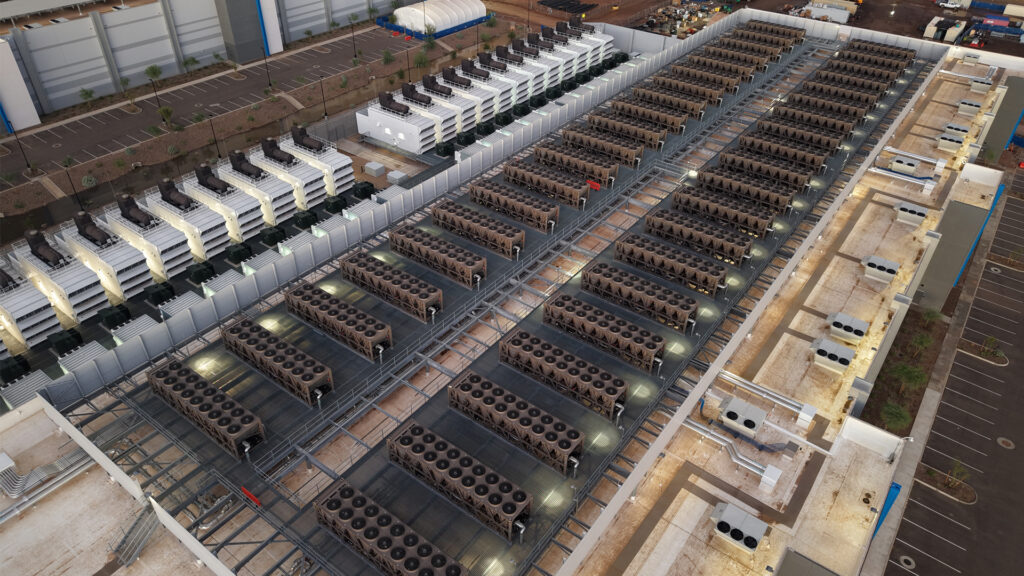
The water provisions require large-scale data centers that consume at least 100,000 gallons per day to use reclaimed water for cooling when it is “environmentally, economically, and technically feasible.” That word does all the heavy lifting. It also does none of the defining.
Who makes the feasibility call? The governing board of the relevant water management district. Under what standards? The bill does not say. Using what methodology? The bill does not say. Against what cost baseline for “economically feasible”? The bill does not say, either.
This is an invitation. A developer arriving before a water management district board can present an internal financial analysis arguing that reclaimed water infrastructure is too costly or inconvenient. The board has no statutory methodology to contradict it. If the developer’s lawyers are good, and they will be, the reclaimed water requirement evaporates. Literally.
Florida has five water management districts. A company can test each shopping location, find the most accommodating interpretation and set a precedent that cascades statewide. We have seen this playbook in Florida utility regulation before. The public ends up absorbing costs that the private sector was supposed to carry.
The stakes are not small. Large data centers consume up to 5 million gallons of water per day, enough to supply a town of 50,000 people. Florida’s aquifers are not an unlimited resource. These are existential concerns, not marginal ones.
The NDA reversal
The second flaw is more troubling because it represents a reversal, not just a gap. The original version of SB 484 prohibited state agencies from signing nondisclosure agreements with data center companies. The final version does the opposite: It allows NDAs, keeping company plans secret from the public for up to a year. Even the bill’s sponsor, Sen. Bryan Avila, expressed reservations about the final text and acknowledged potential constitutional concerns.
Ratepayer protection without public transparency is not ratepayer protection. It is ratepayer protection on the honor system. Florida cannot regulate what it cannot see.

What the next session must do
The fix is not complicated. Next session, the Legislature should add a defined methodology for water feasibility determinations independent of the applicant’s own analysis, a clear definition of “economically feasible” referenced to public cost rather than developer cost and a public hearing requirement before any feasibility exemption is granted.
SB 484 got the principle exactly right: Businesses should not externalize costs while internalizing profits. That is correct policy and correct economics. But a principle without an enforcement standard is not a protection. It is a conversation starter, and companies with armies of lawyers are very good at long conversations.
Florida’s families, aquifers and ratepayers deserve language that is clear enough that there is no room to argue.
Dr. Mark McNees is director of Social and Sustainable Enterprises at Florida State University’s Jim Moran College of Entrepreneurship and managing consultant at The McNees Group. Banner photo: An aerial view of three Amazon data centers and a fourth under construction in Oregon (Tedder, CC BY-SA 4.0, via Wikimedia Commons).
Sign up for The Invading Sea newsletter by visiting here. To support The Invading Sea, click here to make a donation. If you are interested in submitting an opinion piece to The Invading Sea, email Editor Nathan Crabbe.

the onus should be on corporations. They should be reusing the water.