


By Issabella Gutierrez
As a child growing up in rural Florida, Julie Wraithmell once stood at the foot of a tall pine tree and watched a woman climb 50 feet into the air to occupy an abandoned eagle’s nest. The woman, Doris Mager, stayed there for a week to raise money for raptor rehabilitation. For young Julie, the “nest-in” became a blueprint for a life in conservation.
In Florida’s often unpredictable environmental policy landscape, Wraithmell has built a reputation for working across party lines.
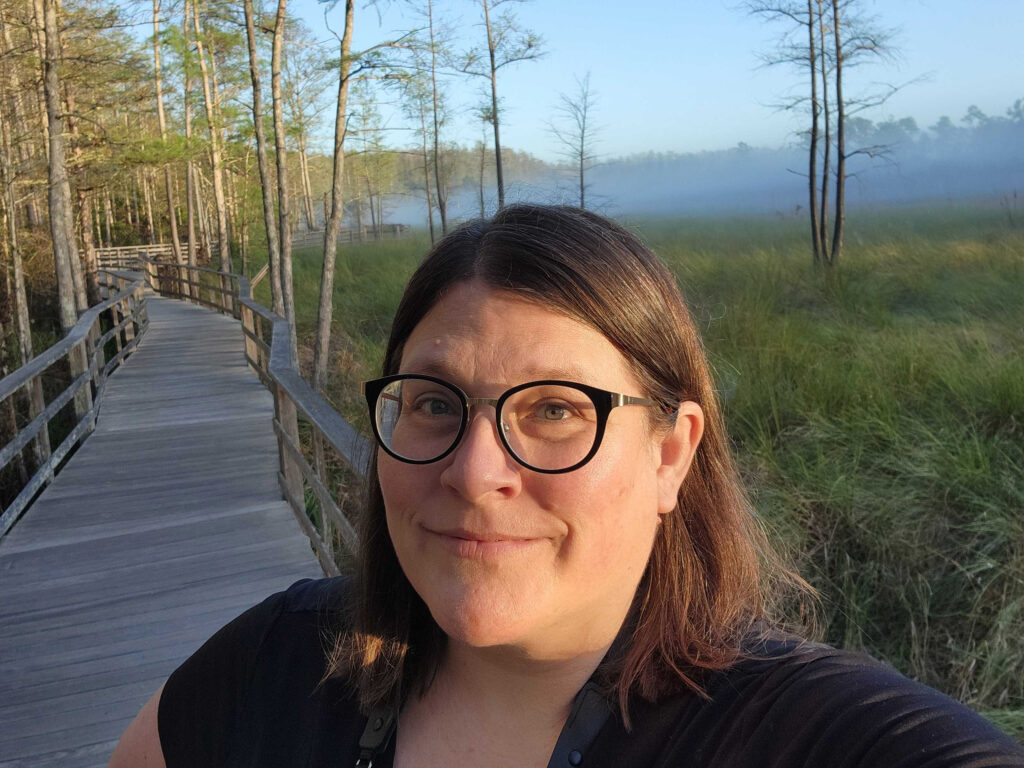
Today, as the vice president and executive director of Audubon Florida, the state office of the National Audubon Society, she leads the organization’s statewide science and advocacy efforts from her office in Tallahassee. She spends the legislative session in committee hearings and meetings with lawmakers, agency officials and conservation leaders.
Over two decades, she has evolved from a field biologist and self-described “bird nerd” into an influential environmental leader in Florida, navigating a political landscape that can be as unpredictable as any treetop.
A native Floridian, Wraithmell earned a bachelor’s degree in biology from Duke University and a master’s degree in science from Florida State University.
She began her career in 1997 as a biologist at the Florida Fish and Wildlife Conservation Commission, where she worked for eight years and helped launch the Great Florida Birding Trail, a 2,000-mile network connecting more than 500 wildlife-viewing sites.
Wraithmell now oversees 80 Audubon Florida staff members and 45 chapters statewide. Beyond lobbying, she directs habitat restoration strategies and coordinates policy teams focused on land conservation and water quality.
Renée Wilson, a senior communications coordinator at Audubon Florida, described Wraithmell as a “getter-donner” who remains “cool as a cucumber” even when tension runs high in the Capitol.
“She’s not a micromanager,” Wilson said. “She gives you the direction you need, and she’s there if you need a course correction, but she really empowers the staff to follow their passions.”
Her leadership was tested in 2024 and 2025, when proposals surfaced to add golf courses to state parks and to swap protected land at the Guana River Wildlife Management Area for development. Audubon Florida helped generate tens of thousands of public comments and coordinated bipartisan opposition that led to the withdrawal of both proposals.
Elizabeth Alvi, senior director of policy for Audubon Florida, said Wraithmell’s leadership in these sensitive moments is defined by a refusal to be pulled off course by short-term pressure. She added that Wraithmell is widely respected by lawmakers across the aisle.
“People know that when she speaks, it is grounded in science and aligned with a clear organizational priority, not opportunistic positioning,” Alvi said. “That discipline earns respect in the Capitol because it’s consistent and thoughtful.”
Wraithmell often quotes a mentor who told her that advocacy requires “weaving back and forth across the political aisle like sloppy drunks.”
“You might find yourself fighting a legislator over a road project one year, but you have to be ready to partner with that same person on a land conservation bill the next,” Wraithmell said. Holding onto professional grudges, she said, is a luxury the environment cannot afford.
That pragmatism shapes her push for stable funding for Florida Forever, the state’s land acquisition program that has preserved more than 1 million acres. While funding has fluctuated in recent years, she said unstable funding could impede critical habitat purchases as development pressures increase.
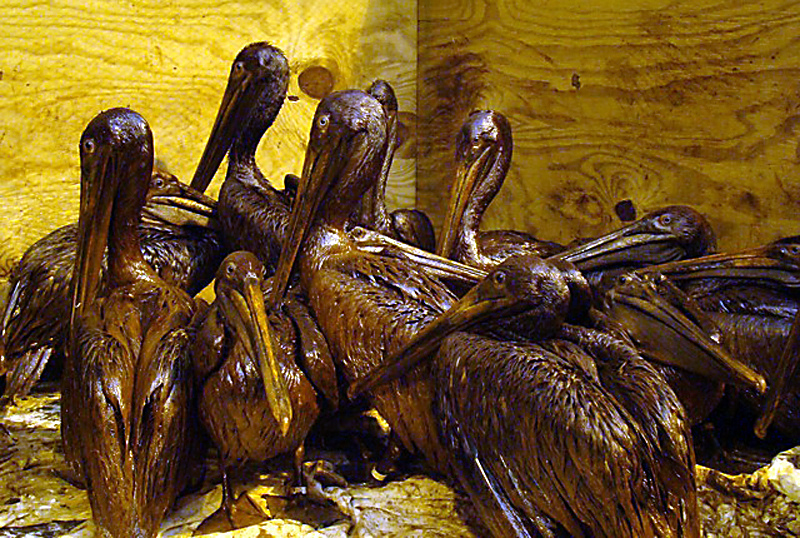
In 2010, Wraithmell led Audubon’s response to the Deepwater Horizon oil spill, advocating for restoration settlement funds to be directed toward coastal bird habitat recovery. Her efforts earned her the Charles H. Callison Award in 2015, the highest honor from the National Audubon Society.
Wraithmell does not shy away from the topic of climate change.
“The ocean is coming for us,” Wraithmell said. “Whether you call it climate change, sea-level rise or flooding, we are seeing the impacts on our shorebirds and our coastal communities right now.”
Under her leadership, Audubon Florida has expanded coastal resilience efforts, including protecting nesting grounds threatened by rising sea levels and promoting nature-based solutions such as wetland restoration and living shorelines. Alvi said many people underestimate how difficult it is to align science, policy timing and organizational reputation simultaneously.
“The most significant win will likely be institutional strength: a conservation movement in Florida that is more strategic, more science-driven and more disciplined in its public engagement,” Alvi said.
When asked to summarize Florida’s environmental story in a single place, Wraithmell pointed to the Everglades. She described it as an ecosystem shaped by historical “screw-ups,” from ditching and draining to the exploitation of birds.
“It’s a site of people coming together and saying, ‘Whoop, we screwed up. Now what are we going to do about it?’” Wraithmell said. “With billions of dollars in investment, we are seeing results.”
Despite the rapid pace of development across Florida, Wraithmell remains optimistic about the future, pointing to volunteers, students, and local advocates who make up the Audubon Florida network.
“Watching kind of the creative magic that they get up to together,” Wraithmell said. “That is what gives me hope for the next decade.”
The little girl watching from the ground is gone. Now, Julie Wraithmell is the one in the treetop, asking young Floridians to climb with her and protect wild Florida.
Issabella M. Gutierrez is a junior majoring in multimedia journalism at Florida Atlantic University. Banner photo: A great egret flies over the Florida Everglades (iStock image).
Sign up for The Invading Sea newsletter by visiting here. To support The Invading Sea, click here to make a donation. If you are interested in submitting an opinion piece to The Invading Sea, email Editor Nathan Crabbe.