


By Brian Lee, ReThink Energy Florida
Every missile fired, every refinery burned and every pipeline ruptured does more than damage and destroy infrastructure and take human life — it releases vast quantities of greenhouse gases into an already overheated atmosphere. In Tehran, military strikes have turned the sky black and the air caustic, a stark reminder that modern war runs on carbon.
Preliminary modeling and calculations by the Climate and Community Institute estimate that the first 14 days of the current Iran conflict produced more than 5 million tonnes of carbon dioxide, an amount equal to a year’s worth of emissions from 1.1 million gas-powered cars.
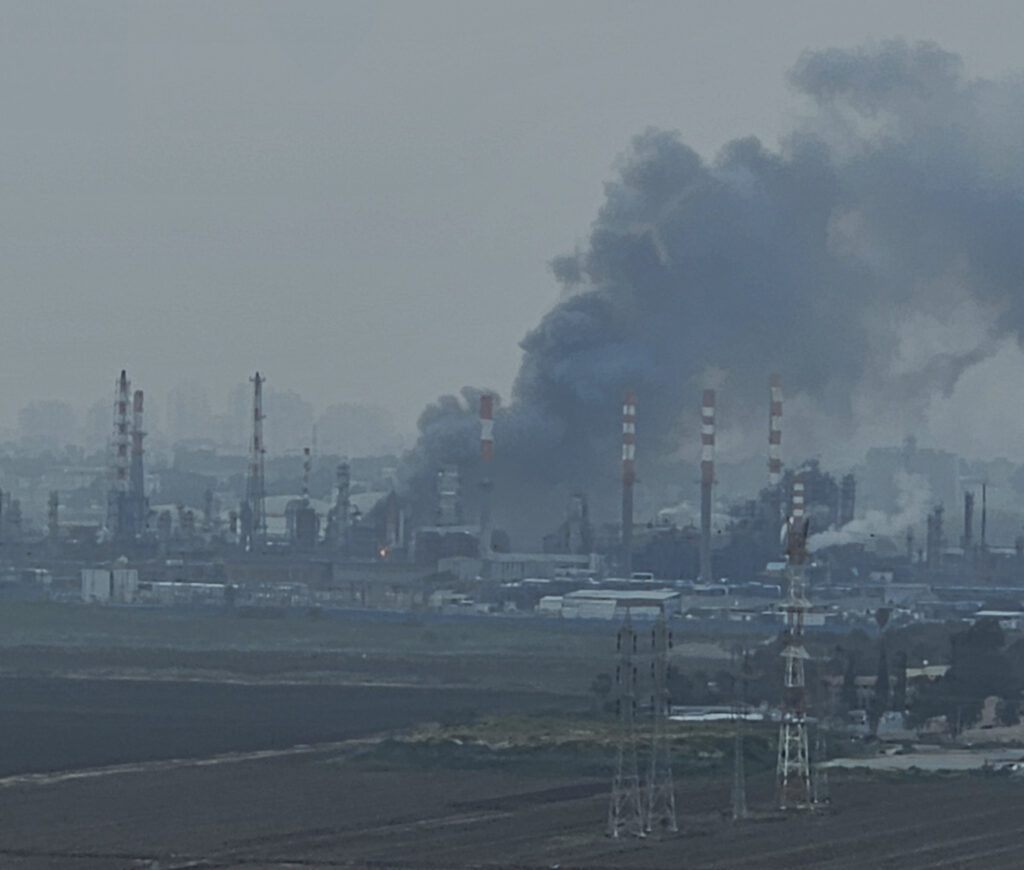
Emissions will continue as the war goes on, but they will increase exponentially when it is over. Clearing rubble and then rebuilding are the biggest source of emissions in any war. One study estimates greenhouse gas emissions for rebuilding Gaza and Lebanon after the war to be at least 24 times more than those from the war itself.
Just as concerning as increased greenhouse gas emissions from war and the repercussions are the prospect of feverish production of fossil fuels and a return to a greater reliance on coal to meet current and future demand. Roughly one-fifth of the world’s oil passed through the Strait of Hormuz before the war shut it down. Fatih Birol, executive director of the International Energy Agency, has called this the greatest energy security threat in modern history.
Oil prices have surged past $100 a barrel. Fluctuations in pricing, market conditions and international relations make future oil prices difficult to predict. Some analysts say they will eventually drop and others are cautioning that prices could escalate throughout the year to as high as $175 per barrel.
U.S. gasoline prices have jumped 30% since February, feeding inflation and public anxiety over the rising cost of living. Around the world, governments are urging citizens to conserve — drive less, use less and brace for higher prices on everything from travel to food, clothing and basic household goods.
For the oil industry, it is a moment of windfall and warning. Companies are reaping billions even as the infrastructure they depend on is targeted for destruction. This is the fossil fuel Faustian bargain: short-term gain, long-term risk and instability.
Markets from Wall Street to Beijing are now confronting a hard truth: Energy systems built on concentrated fossil fuel reserves are inherently fragile. The Iran war has made that fragility impossible to ignore. As U.N. Framework Convention on Climate Change Executive Secretary Simon Stiell put it, this is “an abject lesson” in fossil fuel dependence.
Similarly to fossil fuel supply disruptions of the past, the Iran conflict is already accelerating interest in renewable energy, electric vehicles and energy independence. Historically, such an awakening lapsed into increased reliance on fossil fuels. The alternative course was then revived by growing concern over climate change impacts and a commitment to reduce the greenhouse gas emissions that cause it. That momentum has now been set back on its heels by the current U.S. administration and deflected by a unilateral, unsanctioned war.
The consequences of war coupled with unmitigated climate change are propelling the planet toward an intolerable future.
Temperatures and sea levels are rising faster than expected, driven by rising greenhouse gas emissions, warming oceans and melting ice. Communities are suffering from heat and weather extremes while coastal economies subjected to higher seas and tidal flooding face growing threats to infrastructure, housing and national security. Fossil fuel dependence is amplified by war at the same time as it drives disasters with slow-motion sea-level rise along our shores.

This is the connection we can no longer ignore: Energy security is climate security.
A serious energy policy would treat accelerating renewable energy development not as an environmental gesture, but as a national security imperative. It would set clear limits on the level of sea-level rise our coastal economies can endure as a second metric to the Paris Agreement’s 1.5 degrees C temperature increase limit — and align policy to stay below both.
The war in Iran has exposed the true costs of fossil fuels. But there is another path. Spain, for example, has doubled its wind and solar capacity in recent years, cushioning the blow of global energy shocks. That is what resilience looks like.
As this war drags on, more nations will face a choice: remain captive to volatile fossil fuels, or break free.
Brian Lee is a co-founder of ReThink Energy Florida. He also serves as an advisor to the Upper Limit Project, a group of leading climate scientists, organizers and communicators working toward a shared mission of setting a clear upper limit to the rate of sea-level rise as a second metric to the 1.5 degrees C goal. An upper limit is a powerful, actionable metric, providing a dual approach to combating climate change and driving global urgency and action. Banner photo: A missile is fired from a ship during operations in support of Operation Epic Fury (U.S. Navy photo via Defense Visual Information Distribution Service).
Sign up for The Invading Sea newsletter by visiting here. To support The Invading Sea, click here to make a donation. If you are interested in submitting an opinion piece to The Invading Sea, email Editor Nathan Crabbe.