


By Rajiv Chowdhury, Florida International University
When people consider what causes high blood pressure, they often think of lifestyle factors, such as eating salty foods, lack of exercise or smoking. However, an unexpected source of salt might also be raising blood pressure for millions of people: the water they drink.
As sea levels rise, more and more salt water tends to infiltrate global freshwater sources. I’m a public health researcher, and this raised a question for my team: Could saltwater intrusion be increasing the risk of high blood pressure worldwide?
In our analysis of existing research, we found that people exposed to saltier drinking water tend to have significantly higher blood pressure and a greater risk of hypertension. This link, as expected, appears strongest in coastal areas where seawater is increasingly contaminating freshwater supplies.
Our findings highlight an often overlooked environmental factor in cardiovascular disease that could become more problematic as climate change accelerates.
Environmental health and hypertension
Hypertension – persistent elevated blood pressure – affects over a billion people worldwide and remains a leading cause of heart disease and stroke. However, global prevention efforts mainly focus on lifestyle – environmental factors generally receive much less attention.
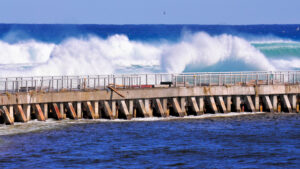
One such factor is drinking water salinity, defined as the concentration of dissolved salts – primarily sodium – in water. In many coastal areas, groundwater is becoming saltier as rising sea levels push sea water into freshwater aquifers.
This is particularly problematic, since over 3 billion people live in coastal or near-coastal regions globally, many in low- and middle-income countries where groundwater is their main source for drinking water. In these coastal communities, people might inadvertently ingest large amounts of sodium just from drinking and cooking with saline water they cannot taste.
Water salinity is as risky as being sedentary
Researchers have long suspected that exposure to high salinity drinking water could affect people’s blood pressure and cardiovascular disease risk. However, previous research on this topic has often been limited by variable study designs, mixed results, inconsistent and imprecise methods to measure salinity, and small sample sizes. It’s also unclear whether this risk, if it exists, varies by population.
To address this uncertainty, my team and I conducted a systematic review and meta-analysis that pooled data from 27 population-based studies involving more than 74,000 participants in the U.S., Australia, Israel, Bangladesh, Vietnam, Kenya and several European countries. Combining data across studies can address some of the core limitations of individual studies by enabling detection of relevant effects. Synthesizing evidence across diverse populations, settings and study designs can also improve generalizability by providing a more comprehensive picture.

The studies we examined focused on the association between sodium levels in drinking water and cardiovascular outcomes, including blood pressure, hypertension and other heart-related conditions. When we compared the health outcomes of people exposed to higher levels of drinking water salinity with those exposed to lower levels, we found a consistent pattern
Those drinking saltier water experienced about 3.22 mmHg higher systolic blood pressure and about 2.82 mmHg higher diastolic blood pressure, on average. Overall, exposure to high salinity water was linked to a 26% increased risk of developing hypertension. These associations were strongest among coastal populations.
While these are modest increases at the individual level, even small shifts in blood pressure among large populations can have significant public health effects. To put it in perspective, the risk that higher water salinity levels poses to hypertension is similar to that of other cardiovascular risk factors, such as low physical activity, which increases hypertension risk by approximately 15% to 25%.
Studying sodium levels
Our findings highlight the importance of considering environmental exposures alongside individual behaviors when addressing risk factors for high blood pressure.
Despite increasing evidence linking drinking water salinity to blood pressure, researchers still know relatively little about its effects on long-term cardiovascular diseases, such as heart attacks or strokes. My team and I identified very few studies examining these outcomes. Future research could explore how drinking saline water influences cardiovascular disease risk and what salinity levels are harmful to health.
Interestingly, current World Health Organization guidelines do not set any health-based standard for sodium levels in drinking water. This further highlights the need for stronger scientific evidence.
For most people, food remains their primary source of sodium. But when water salinity is elevated, drinking sources may add to a person’s total intake. Checking local water quality reports, if available, and focusing on overall dietary sodium could help people manage their blood pressure.
Rajiv Chowdhury is a professor of global health at Florida International University.
This article is republished from The Conversation under a Creative Commons license. Read the original article. Banner photo: A doctor measures the blood pressure of a patient (iStock image).
Sign up for The Invading Sea newsletter by visiting here. To support The Invading Sea, click here to make a donation. If you are interested in submitting an opinion piece to The Invading Sea, email Editor Nathan Crabbe. To learn more about the impacts of sea-level rise on drinking water, watch the short video below.
