


By Joe Murphy
I had occasion recently to listen to recordings of the actual calls and vocalizations of Rice’s whales. It was powerful. Will those calls travel across the Gulf in five years? Or will they be silent?
Many of you may remember that the Rev. Fred Morris, then president of the Florida Council of Churches, once observed that losing a species to extinction was akin to tearing a page from the Scriptures. I take these words to heart.
As a Floridian, a conservationist, a fisherman and a person of faith, I have been deeply troubled lately when I contemplate the meaning of extinction in the context of evolution and natural selection. It is hard not to think of its impact on faith and creation. The moral implications of allowing another species to fall victim to extinction are as profoundly catastrophic as the ecological ones.
I wrestle with the realization that one day we may indeed look for the birds in the air, the mammals of the land, or the turtles and whales of the sea, and they will be gone. Many of the species that we hold dear will have disappeared into the dark night of extinction from which there is no dawn.
I find it hard to differentiate between deep and profound faith and the concept that we have a responsibility to honor, respect, care for and cherish creation. The abundance, complexity and majesty of the natural world are endlessly inspiring.
I find inspiration and sustenance of my faith in it, just as I do in church on Sunday morning. The two threads for me are deeply intertwined.
If you don’t share this view, I respect that completely.
But I do question the profound hypocrisy of those in power who speak of their faith and how it guides them, and then recklessly and callously tear creation asunder through efforts to gut the Endangered Species Act or cast aside protections for endangered species in the Gulf of Mexico.
I urge them to consider the moral and theological consequences of actions that cast the Rice’s whale, the sea turtle, and other threatened and endangered species in the Gulf into oblivion in the name of oil and gas profits.
Can they reconcile their passion for their faith with the wholesale destruction they seek to bring down on creation and the natural world?
Whether you walk the path of dominion or stewardship, there is an inherent responsibility to other species as part of caring for and honoring creation. Extinction at the hands of humanity shows none.
Humanity has assumed the role of being the agents of evolution and extinction. We now decide which species survive or which disappears. That is a greater power than we should have.

But as we have it, we need to be guided by our better angels. We need to adapt to the needs of other species, not selfishly expect them to adapt to ours.
As we ponder the true consequences of extinction and our moral responsibility to those species we have endangered, let us be guided by our higher purpose to seek improvement in the world, and a better planet for our children and for our kindred species.
I choose that as the legacy I hope to leave. I urge you to do so as well.
And to those in Washington, who risk the very survival of the Rice’s whale in the Gulf, who profess adherence to a higher path while driving the natural world to the lower road: You must stop. For other species, for our country and as a matter of conscience.
We can and must act to protect imperiled species in the Gulf and beyond. Or one day we might simply hear the sounds of extinction, a vast silence of nothingness that eludes even memory.
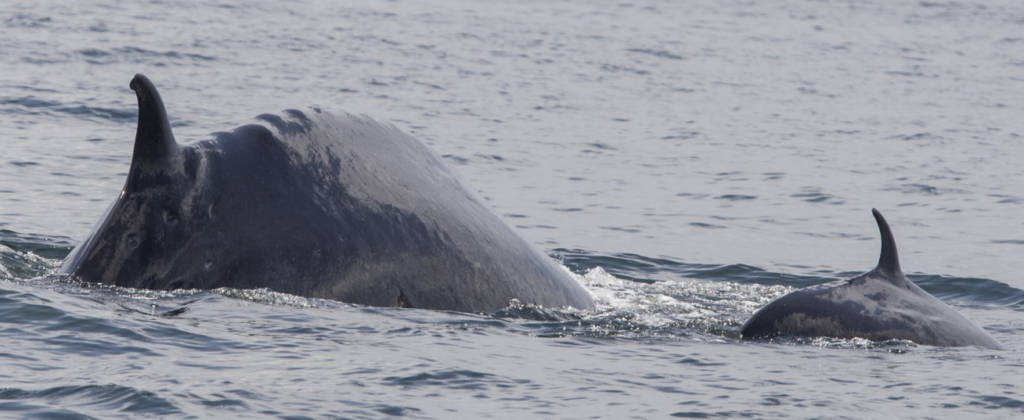
Joe Murphy is a native and lifelong Floridian who lives in Brooksville, along the Nature Coast. You can follow him on Facebook at https://bit.ly/joemurphyfacebook. Banner photo: A Rice’s whale observed in the western Gulf of Mexico during an aerial survey on April 11, 2024 (Credit: NOAA Fisheries/Paul Nagelkirk, Permit #21938).
Sign up for The Invading Sea newsletter by visiting here. If you are interested in submitting an opinion piece to The Invading Sea, email Editor Nathan Crabbe.

Really appreciate the time and effort you put into writing this. It’s clear, well-structured, and genuinely enjoyable to read.
I like how you don’t just share information, but actually give context and feeling behind it — that makes it much more useful and memorable than a typical guide. You can tell it’s written from real experience, not just copied research.
Thanks for sharing this — it’s the kind of content that actually adds value and makes the topic easier to understand 👍
Great article, reminds me of the ‘Plume Wars’ to save Florida birds at the turn of the 20th century, change is possible !?
Unfortunately, the politically connected prioritize their own interests and thats what’s shaped policy for a very long time . The corrupt can be uncovered and even hate can sometimes resolve and heal but apathy towards voting for real change, speaking up , volunteering, protecting the environment seems worse now than ever. Until we have leadership that is committed to protecting our natural resources and standing up for doing the right thing for future generations, change in our natural resources is unlikely.