


By Dr. Esteban Rodofili, Campus Climate Corps
Thirty years of United Nations climate summits have failed to produce a binding treaty to phase out fossil fuels. The last report from the Intergovernmental Panel on Climate Change made clear that decisive action to cut emissions this decade is necessary to keep global warming within 1.5 to 2 degrees Celsius (2.7 to 3.6 degrees Fahrenheit) above preindustrial levels.
Back in 2022, I covered the U.N. COP27 climate summit in Egypt as a University of Florida Ph.D. student, conducting interviews and as part of live nightly broadcasts for Campus Climate Corps. In 2025, I covered COP30 in Brazil.
These COPs didn’t make progress at the speed the IPCC emphasizes. COP30 did not even mention fossil fuels in its final text. This coincided with the blatant influence of the fossil fuel lobby, which had 1,600 participants at COP30, surpassing all national delegations but Brazil’s.
Beyond this, a key problem is that the summit operates on the consensus rule — interpreted as a need for unanimity (no expressed opposition) — so any country looking to obstruct has a considerable advantage.
A more inclusive forum
This year, a new coalition of governments, civil society and researchers was formed to ask what could be achieved outside of U.N. COP summits.
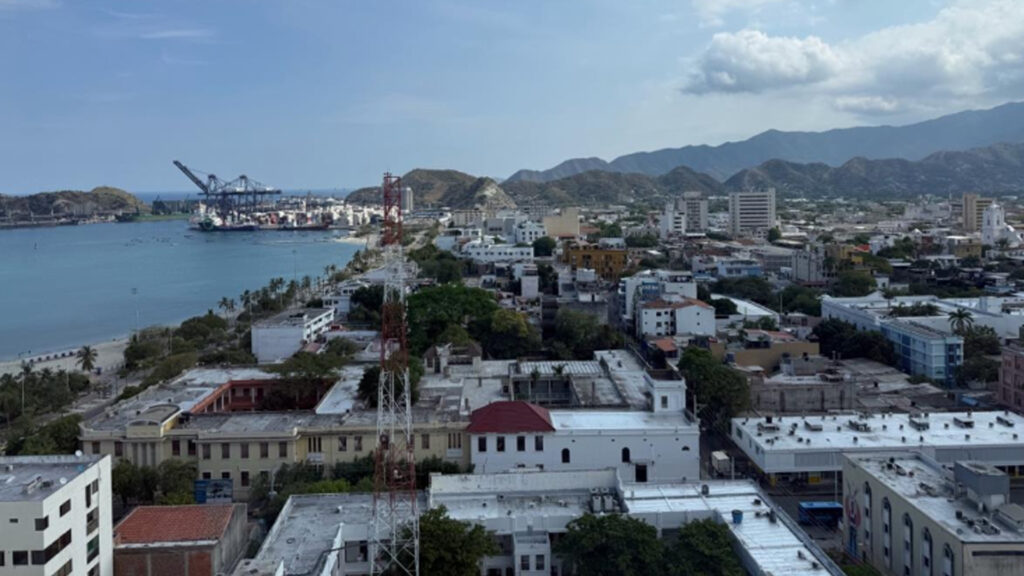
Participants met at Santa Marta, Colombia, for the First Conference on Transitioning Away from Fossil Fuels. Organized by Colombia and the Netherlands, the conference was declared to be a space of action formed by those ready to move forward.
The failures of COP30 made clear the need for a new climate diplomacy venue, with its participants styled as the “coalition of the willing.” These countries represented one-third of the global GDP.
Overall, the conference had a strong emphasis on diversity in its participants and on guaranteeing equity in the transition, including helping some countries overcome their economic dependence on fossil fuels. Different sectors were convened including academics, Indigenous peoples and representatives of non-governmental organizations (NGOs), among others.
I had the honor of being among the representatives from the NGO sector to the People’s Assembly at the conference. After that, each sector sent written contributions, refined at prior stages, and representatives to the high-level final event with governments.
The final press release noted that countries still had fiscal systems, debt and financial architecture reliant on fossil fuels. The need to develop fossil-fuels-free trade systems was also noted, partly matching my suggestion at the People’s Assembly of a common market for low-emission products.
The conference established workstreams on finding opportunities for cooperation in overcoming fossil-fuel dependencies ahead of a second conference, which is to be co-hosted by Tuvalu and Ireland in 2027. The Scientific Panel for the Global Energy Transition (SPGET) was launched for roadmaps aligned with the 1.5 degrees Celsius target, and eliminating legal, financial and political barriers to the transition.
Paradoxically, the conference limited itself before starting by declaring that it wasn’t a space for fossil fuel treaty negotiations and wasn’t replacing the United Nations Framework Convention on Climate Change, which organizes the annual COP summits. However, one has to wonder if, after 30 years without decisive action, is it not necessary to overlap UNFCCC in some way? We explored this question in an interview with the minister of rural development of Colombia, which you can watch here.
Given our scarcity of time, we should start thinking about climate conferences under the lens of opportunity costs as they take resources and we must choose the one likely to drive action.
With the next conference in a year, and no binding treaty, one must wonder how SPGET can sincerely visualize paths to the 1.5 degrees Celsius target. Demanding meetings be programmed and treaties be drafted in less than a year is no longer unreasonable.
The complexity of diplomacy is not lost here, but the IPCC’s warnings must be added to diplomatic considerations. We need climate diplomacy at the pace of ceasefire diplomacy.
What needs to happen now
The coalition of the willing has to sign on to decisive and binding action. The high-level event with governments should be less high level by adding more representatives who interact with governments and allowing less summarized contributions. Organizations produce well-backed proposals to avoid them being labelled as unrealistic and discarded.
The conference needs to start resembling a workspace, with more time to develop and share proposals with governments. Finally, having votes on proposals by simple majority — with countries’ vote tallies made public — would add transparency.
Looking to the conference in Tuvalu and Ireland, it is necessary to formalize what is needed to negotiate a binding treaty there to phase out fossil fuels. The treaty must avoid new forms of extractivism; address issues such as financial aid, technological transfers and cost-of-living affordability; and include anti-greenwashing and labeling laws (with advertisement regulation, as with cigarettes, as suggested in the conference). All of this should be backed by a common market structure with lower customs taxes for low-emissions goods and services.
The Santa Marta conference fostered a dialogue with a diversity of representation. But the surest protection against the wildfires, droughts, floods, hurricanes and heat waves that come with climate change, and can affect some of these groups disproportionately, is rapidly cutting emissions.
An organized coalition of the willing that represents one-third of the global GDP should send a powerful signal in the Tuvalu and Ireland conference to the rest of the world.
Dr. Esteban Rodofili (erodofili@mail.utdt.edu) is a climate journalist and representative for the Florida-based Campus Climate Corps. He is also a former UF graduate student. Banner photo: A sign at the People’s Assembly at the First Conference on Transitioning Away from Fossil Fuels, held at University of Magdalena in Santa Marta in April. (Esteban Rodofili/Campus Climate Corps).
