


By Nathan Crabbe, The Invading Sea
Florida continues to be the top state in the Southeast for solar power, but a new report blames the end of federal tax credits for dimming solar prospects in the future.
Florida’s solar installations increased to more than 15 gigawatts of capacity in 2025 and are projected to reach about 30 gigawatts by 2030, far exceeding other states in the region, according to the report from the nonprofit Southern Alliance for Clean Energy (SACE). While utility solar farms comprise most of these installations, the group also cited high growth in rooftop solar in Florida.
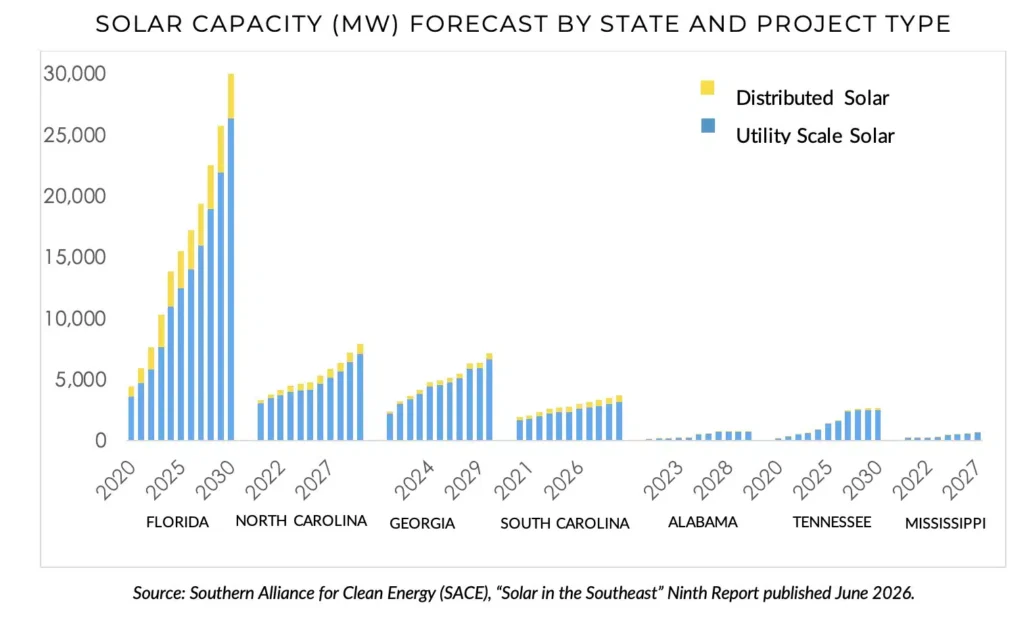
SACE’s ninth annual “Solar in the Southeast” report covers solar capacity in Alabama, Florida, Georgia, North Carolina, South Carolina, Tennessee and part of Mississippi. The region as a whole is on track to nearly double its solar capacity by 2030, the report found.
SACE Energy Analyst Anne Morrison said Florida is the “clear front-runner in the region” in total solar capacity, in part due to its larger size and population than other southeastern states. The Sunshine State is also forecast to continue adding solar at an “impressive rate” over the next few years, Morrison said, while those rates are stalling in other southeastern states.
The report named Florida Power and Light as the region’s top utility for solar but noted that FPL cut solar over the next 10 years by nearly 30% as compared to its 2025 plan.
FPL now plans zero solar additions from 2031 through 2033, which the report connected to the expiration of federal tax credits for solar energy. The so-called Big Beautiful Bill, passed by Congress and signed into law by President Donald Trump last year, accelerated the expiration of those credits.
The report also named two other investor-owned utilities in Florida, Duke Energy Florida and Tampa Electric, and two municipal utilities, the Orlando Utilities Commission and Jacksonville Electric Authority, among regional leaders for solar. But it found all these utilities have reduced solar plans in Florida with the tax credits expiring.
“This is not helping one of the most vulnerable states in the country for climate change,” the report states.
In addition to the tax credits ending, SACE Clean Energy and Equity Director Stacey Washington said the large energy demands of data centers have led utilities to look at fossil fuels and nuclear energy to produce that power. In FPL’s case, the utility now plans to add another 3,200 megawatts of natural gas, according to the report. FPL’s parent company, NextEra Energy, also abandoned its goal of net-zero carbon emissions by 2045, although the report noted this was not mentioned as a reason for the pullback in planned solar.
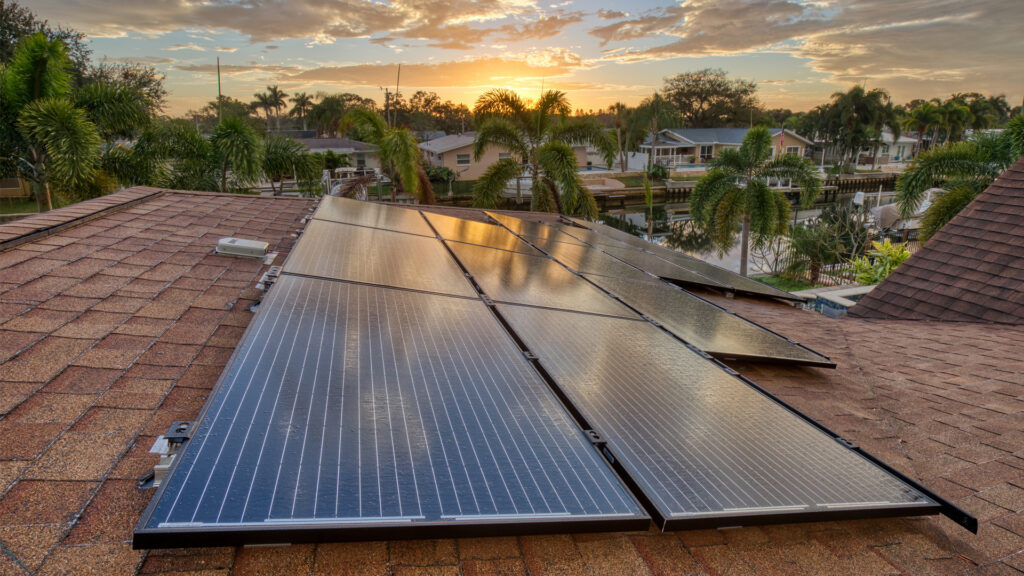
The report also found that Florida has seen consistently high growth in rooftop solar, due in part to a 2018 decision to allow residential leases for such installations. Such leases allow homeowners to contract with companies that install, own and maintain rooftop solar panels on their residences, while the homeowners pay a fee to use solar power that often costs less than their previous electricity bills
SACE Research Director Maggie Shober said the leasing decision, affordability issues and Florida being the Sunshine State continue to drive growth in rooftop panels. Despite roadblocks from some utilities, Shober said, Florida “remains a strong market for rooftop solar.”
The report also looked at emerging technologies such as plug-in solar, also known as balcony solar. These systems can be mounted on a balcony and plugged into a standard electrical outlet, allowing homeowners to generate solar energy without the higher costs and professional installation required for rooftop panels.
Plug-in solar is gaining popularity in countries such as Germany, but growth in the U.S. has been limited due to states requiring the same agreements with utilities as needed for rooftop systems. A new white paper from SACE found that plug-in solar systems are often regulated more heavily by states than portable gas and diesel generators, despite those generators being linked to documented deaths of utility line workers.
But the paper found that lawmakers in 35 states and Washington, D.C., have introduced bills easing regulations for plug-in solar and nine states have passed such legislation. Florida is not among those states.
Nathan Crabbe is editor of The Invading Sea. Banner photo: Florida Power & Light Company’s DeSoto Next Generation Solar Energy Center. (ASCOM Prefeitura de Votuporanga, CC BY 2.0, via Wikimedia Commons).
