


By Dana Zartner, University of San Francisco
While the dangerous effects of climate change continue to worsen, legal efforts to address a range of environmental issues are also on the rise.
Headlines across the globe tout many of these legal actions: South Korea’s Climate Law Violates Rights of Future Generations; Ukraine is Ground Zero in Battle for Ecocide Law; Paris Wants to Grant the River Seine Legal Personhood; and Montana Court Rules Children Have the Right to a Healthy Environment, to name a few recent examples.
As an environmental lawyer, I see that most of these suits use one of five legal strategies that have been developed over the past couple of decades. These approaches vary in terms of who is filing the lawsuit, against whom, and whether the underlying legal perspective is based on protecting human rights or the rights of the environment itself. But they all share an innovative approach to protect all life on this planet.
1. Right to a healthy environment
In 2022, the United Nations declared that humans have “the right to a clean, healthy and sustainable environment … essential to protecting human life, well-being and dignity.” More than 150 countries have similar declarations in their constitutions or laws, often alongside protections for other human rights, such as those to education and medical care.

These rights are held by humans, so people can sue for alleged violations. Typically they sue one or more government agencies, whose responsibility it is to protect human rights.
One recent case using this approach was Held v. Montana, in which a group of young people in 2024 won a lawsuit against the state of Montana for violating the state constitution’s right to a “clean and healthful environment.” The state Supreme Court agreed with the plaintiffs and struck down a law barring the consideration of climate effects when evaluating proposals for fossil fuel extraction. Similar cases have been heard in the U.S. and other countries around the world.
The International Court of Justice, the primary judicial body of the United Nations, ruled on July 23 that a “clean, healthy and sustainable environment” is a human right and said in a nonbinding decision that governments that do not protect people and the planet from climate change could be legally liable for the resulting harms.
2. The rights of future generations
A legal concept called “intergenerational equity” is the idea that present generations must “responsibly use and conserve natural resources for the benefit of future generations.” First codified in international law in the 1972 Stockholm Declaration, the principle has been gaining popularity in recent decades. International organizations and national governments have enshrined this principle in law.
Focused on humans’ rights, these laws allow people and groups to bring claims, usually against governments, for allowing activities that are altering the environment in ways that will harm future generations. One well-known case that relied on this legal principle is Future Generations v. Ministry of the Environment and Others, in which a Colombian court in 2018 agreed with young people who had sued, finding that the Colombian government’s allowance of “rampant deforestation in the Amazon” violated the pact of intergenerational equity.
3. Government responsibility
Another human-centered approach is the public trust doctrine, which establishes “that certain natural and cultural resources are preserved for public use” and that governments have a responsibility to protect them for everyone’s benefit.
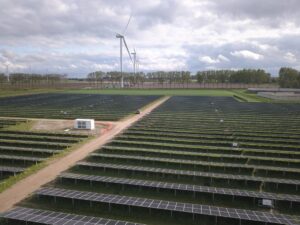
While the concept of “public trust” has long existed in the law, recently it has been used to bring suit against governments for their failure to address climate change and other environmental degradation. In Urgenda Foundation v. the State of the Netherlands, a Dutch court held in 2019 that the government has a responsibility to mitigate the effects of climate change due to the “severity of the consequences of climate change and the great risk of climate change occurring.” Since the decision, the Dutch government has sought to reduce emissions by phasing out the use of coal, increasing reliance on renewable energy and aiming to achieve carbon neutrality by 2050.
Government responsibility for the public trust was also a basis of the Juliana v. U.S. case, where a group of young people sued the U.S. government for breaching the public trust by not doing enough to curb greenhouse gas emissions. The U.S. Supreme Court ultimately declined to hear an appeal of a lower court’s ruling, but the lack of a specific ruling by the nation’s highest court has given continued hope to new cases, which continue to be filed based on the same principle.
4. Rights of nature
The rights of nature is one of the fastest-growing environmental legal strategies of the past decade. Since Ecuador recognized the rights of Pachamama, the Quechua name for Mother Earth, in its Constitution in 2008, more than 500 laws on the rights of nature have been enacted around the world.
The principle recognizes the legal rights of natural entities, such as rivers, mountains, ecosystems or even something as specific as wild rice. The laws that grant these rights don’t focus on humans but rather nature itself, often including language that the natural entity has the right to “exist and persist.”
The laws then provide a mechanism for the natural entity – whether through a specific group assigned legal guardianship or other community efforts – to protect itself by filing lawsuits in court. In the 2018 Colombian case, the court found that the Amazon ecosystem has rights, which must be respected and protected.
Similarly, in Bangladesh in 2019 the courts recognized the rights of all the country’s rivers, requiring, among other things, a halt on damaging development along the rivers that block their natural flow. The court also created a commission to serve as legal guardians of the country’s rivers.
5. Defining a new crime: Ecocide
In 2024, the governments of Vanuatu, Fiji and Samoa formally proposed that the international community recognize a new crime under international law. Called “ecocide,” the principle takes a nature-focused approach and includes any unlawful act committed with “the knowledge that there is a substantial likelihood of severe and either widespread or long-term damage to the environment.”
Put another way, what genocide is to humans, ecocide is to nature. It is being proposed as an addition to the 2002 Rome Statute, which created the International Criminal Court to prosecute war crimes, genocide and crimes against humanity.
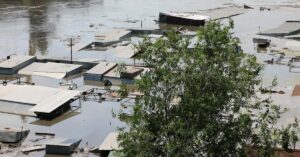
While the idea is relatively new, in addition to the international efforts, several countries have incorporated ecocide into their laws – including Vietnam, France, Chile and Ukraine. A Ukrainian prosecutor is currently investigating the June 2023 destruction of a dam in a Russian-occupied area of the country as a potential crime of ecocide, because of the widespread flooding and habitat destruction that resulted.
The European Union has also incorporated ecocide into its Environmental Crime Directive, which applies to all EU member countries, providing them with a mechanism to hear ecocide claims in their national courts.
Using these ideas
Each of these legal concepts has the potential to increase protection for the environment – and the people who live in it. But determining which strategy has the greatest chance of success depends on the details of the existing law and legal system in each community.
All of these legal strategies have a role in the fight to protect and preserve the environment as an integral, interdependent living thing that is vitally important to us as humans but also in its own right.
Dana Zartner is a professor of international studies at the University of San Francisco.
This article is republished from The Conversation under a Creative Commons license. Read the original article. Banner photo: A 2017 New Zealand law recognizes inherent rights of the Whanganui River (Jason Pratt, CC BY-SA).
Sign up for The Invading Sea newsletter by visiting here. To support The Invading Sea, click here to make a donation. If you are interested in submitting an opinion piece to The Invading Sea, email Editor Nathan Crabbe at ncrabbe@fau.edu.
