


By Sarah Diaz and Linda Lane, Coastal Carolina University
The United States’ national parks have an inherent contradiction. The federal law that created the National Park Service says the agency – and the parks – must “conserve the scenery and the natural and historic objects and the wildlife … unimpaired for the enjoyment of future generations.”
That means both protecting fragile wild places and making sure people can visit them. Much of the public focus on the parks is about recreation and enjoyment, but the parks are extremely important places for research and conservation efforts.
These places contain a wide range of sensitive and striking environments: volcanoes, glaciers, sand dunes, marshlands, ocean ecosystems, forests and deserts. And these areas face a broad variety of conservation challenges, including the effects of climate change, the perils of popularity driving crowds to some places, and the Trump administration’s reductions to park service staff and funding.
As scholars of recreation who study the national parks and teach a course on them, we have seen the park service make parks far more than just recreational opportunities. They are living laboratories where researchers – park service personnel and others – study nature across wide-ranging ecosystems and apply what they learn to inform public and private conservation efforts around the country.
Returning wolves to Yellowstone
One of the best known outcomes of conservation research in park service history is still playing out in the nation’s first national park, Yellowstone.
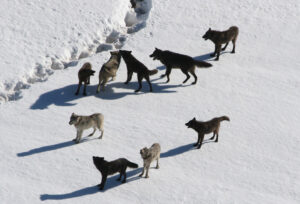
Gray wolves once roamed the forests and mountains, but government-sanctioned eradication efforts to protect livestock in the late 1800s and early 1900s hunted them to near extinction in the lower 48 states by the mid-20th century. In 1974, the federal government declared that gray wolves needed the protections of the Endangered Species Act.
Research in the park found that the ecosystem required wolves as apex predators to maintain a healthy balance in nature.
In the mid-1990s, an effort began to reintroduce gray wolves to Yellowstone National Park. The project brought 41 wolves from Canada to the park. The wolves reproduced and became the basis of a Yellowstone-based population that has numbered as many as 120 and in December 2024 was estimated at 108.
The return of wolves has not only drawn visitors hoping to see these beautiful and powerful predators, but their return has also triggered what scholars call a “trophic cascade,” in which the wolves decrease elk numbers, which in turn has allowed willow and aspen trees to survive to maturity and restore dense groves of vegetation across the park.
Increased vegetation in turn led to beaver population increases as well as ecosystem changes brought by their water management and engineering skills. Songbirds also came back, now that they could find shade and shelter in trees near water and food sources.
Black bear protection in the Great Smoky Mountains
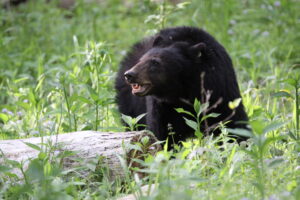
Great Smoky Mountains National Park is the most biologically diverse park in the country, with over 19,000 species documented and another 80,000 to 100,000 species believed to be present. However, the forests of the Appalachian Mountains were nearly completely clear-cut in the late 1800s and early 20th century, during the early era of the logging industry in the region.
Because their habitat was destroyed, and because they were hunted, black bears were nearly eradicated. By 1934, when Great Smoky Mountains National Park was designated, there were only an estimated 100 bears left in the region. Under the park’s protection, the population rebounded to an estimated 1,900 bears in and around the park in 2025.
Much like the gray wolves in Yellowstone, bears are essential to the health of this ecosystem by preying on other animals, scavenging carcasses and dispersing seeds.
Water preservation in the Everglades

The Everglades are a vast subtropical ecosystem located in southern Florida. They provide drinking water and irrigation to millions of people across the state, help control storm flooding and are home to dozens of federally threatened and endangered species such as the Florida panther and American alligator.
When Everglades National Park was created in 1947, it was the first time a U.S. national park had been established to protect a natural resource for more than just its scenic value.
As agriculture and surrounding urban development continue to pollute this natural resource, park professionals and partner organizations have focused on improving habitat restoration, both for the wildlife and for humans’ water quality.
Inspiring future generations
To us, perhaps the most important work in the national parks involves young people. Research shows that visiting, exploring and understanding the parks and their ecosystems can foster deep connections with natural spaces and encourage younger generations to take up the mantle of stewardship of the parks and the environment as a whole.
With their help, the parks – and the landscapes, resources and beauty they protect – can be preserved for the benefit of nature and humans, in the parks and far beyond their boundaries.
Sarah Diaz is an associate professor of recreation and sport management and Linda Lane is principal lecturer of recreation and sport management, both at Coastal Carolina University.
This article is republished from The Conversation under a Creative Commons license. Read the original article. Banner photo: Park rangers lead students through different Everglades habitats (Everglades NPS, Public domain, via Wikimedia Commons).
Sign up for The Invading Sea newsletter by visiting here. To support The Invading Sea, click here to make a donation. If you are interested in submitting an opinion piece to The Invading Sea, email Editor Nathan Crabbe at ncrabbe@fau.edu.
