


By the Orlando Sentinel Editorial Board
Something went terribly wrong in the spring 2025 legislative session, with the passage of a bill known as SB 180. The bill looked technical, but its impacts were major: In the name of storm recovery, Florida legislators made it far more difficult for communities to recover from storms — and, more importantly, to plan for sustainable, healthy growth.
If this was a mistake, it should be fixed. If it was deliberate — which is where the evidence is pointing — Floridians also need to take a good look at who they’re electing to the state Legislature. They should question any disconnect between campaign promises and actual votes, and make it clear that they are paying attention to who lawmakers are really serving.
Several nonprofit organizations are speaking up about this. One of the loudest: 1000 Friends of Florida, a respected smart-growth advocate that has earned respect from business leaders and environmentalists alike. This month, the group released a thorough legal analysis suggesting that SB 180 might be even worse than originally feared — and a clarion call to fix this very bad legislation.
A Trojan law
On its face, this legislation purports to speed the way to recovery for communities hit by major storms, by making it easier to get permits and development approval in the aftermath of a hurricane or other natural disaster.
That’s noble enough — but largely unneeded. Many communities already agree to waive permit-application costs, reduce paperwork and even eliminate impact fees for construction related to storm recovery.
The real problem with this legislation, however, is that it blocks communities that have been impacted by storms from adopting any regulations that are “more restrictive or burdensome” than existing laws for two years after a storm. That would be bad enough, but the bill also uses a definition of storm-impacted communities that’s written so loosely that it could apply to almost any county in Florida, pretty much in perpetuity.
And it’s retroactive to August 2024 — a date apparently chosen to invalidate Orange County residents’ votes last year to establish a protective rural boundary that keeps aggressive development from spilling into rural and agricultural areas.
That’s not all. Orange County updated its entire growth-management plan in early 2025 — and since it changes land-use designations in some rural areas, it could be construed as “more burdensome” on developers. That plan, known as Vision 2050, was deemed invalid last month by the state. That’s bad enough — but things could get even more complicated if state officials decide the county discarded its old plan when it adopted the new one. If that’s the case, it could leave Orange County with no comprehensive growth plan at all.
What does that mean for local residents? The county could be forced to approve development in areas where roads, schools and other public services are already overstressed — leading to snarled traffic, portable classrooms and more.
Communities also might be forced to sign off on buildings in areas that are known to be flood-prone — homes, apartments and businesses that will then be bought by people who don’t understand how vulnerable their investments are. Down the road, that could require billions of taxpayer dollars in flood control projects to protect buildings that never should have been allowed in the first place. And that’s just to reduce the harm that would hit innocent human beings. It says nothing about the environmental havoc that could be unleashed if developers are free to pave any forest and pollute any stream.
Speak out or suffer
If Floridians don’t demand change now, it may soon be too late. Over recent years, legislators have slowly choked the ability of Floridians to speak directly through the ballot box on issues that are important to them. The bar has been set so high that it’s nearly impossible for a citizen-backed initiative to make it to the statewide ballot.
Legislators are also growing increasingly dictatorial about sweeping aside local ballot initiatives and growth management plans that let communities decide their own futures. That’s where the provisions of SB 180 hit their most alarming peak: If the bill’s language really is as bad as critics say it is, cities and counties could be stripped of the ability to say no to development at all. The interpretation of that language will most likely reside in the hands of judges across the state, presiding over lawsuits brought by developers who insist that SB 180 gives them leeway to sprawl across rural and forested acreage. The legislation stacks the deck in their favor — so much so that the only hope may be to prove that the bill is flat-out unconstitutional.
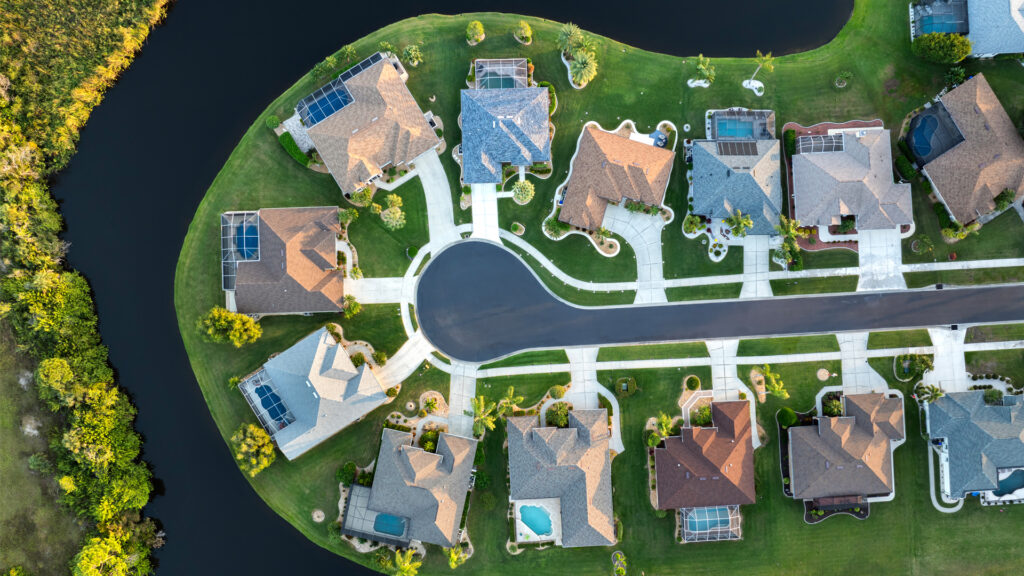
For decades, Floridians have said they’re worried about the impacts of runaway growth. They have watched as wild spaces were conquered and waterways were polluted by the toxic byproducts of urban development. They’ve mourned as trees were toppled to make way for housing developments and strip malls.
The concerns have only grown as Floridians see the effects of overdevelopment materialize. Black bears that once roamed forests now ramble through neighborhoods in search of trashcans. Springs once flowing with pure water are now contaminated with bacteria associated with human waste. Traffic on local roads has become so heavy that some areas grind to a standstill nearly every day. Manatees are starving from the scarcity of seagrass beds — killed off by sewage, fertilizer and road runoff generated by human occupancy.
At one point, predictions of that destruction seemed speculative. Now, it’s real. There can be no doubt that Florida’s legislators understand the high cost — in billions of taxpayer dollars, in ecological devastation, in residents’ quality of life — that comes from unchecked, unwise growth.
That didn’t stop some lawmakers from claiming that they didn’t understand the reach of SB 180 — which cleared the Senate with just one “no” vote before sailing unanimously through the House. (Two local House members, Republican Paula Stark of St. Cloud and Democrat LaVon Bracy Davis of Orlando, did not vote.)
If that’s the case, those legislators should lead the call to set things right. That means repealing SB 180 at the soonest possible opportunity — or, at the least, undoing those parts that would gut the ability of cities and counties to prepare for future growth.
Florida’s leaders know how perilous this state’s future could be, as storms grow more violent and frequent, and floodwaters rise higher. But they’re unlikely to take action if residents don’t hammer them with the message that they know how dangerous this legislation is. The forces behind SB 180 have gambled that Floridians don’t care about the inner workings of government. This is the chance to prove them wrong — possibly one of the last chances Floridians will have. It can’t be wasted.
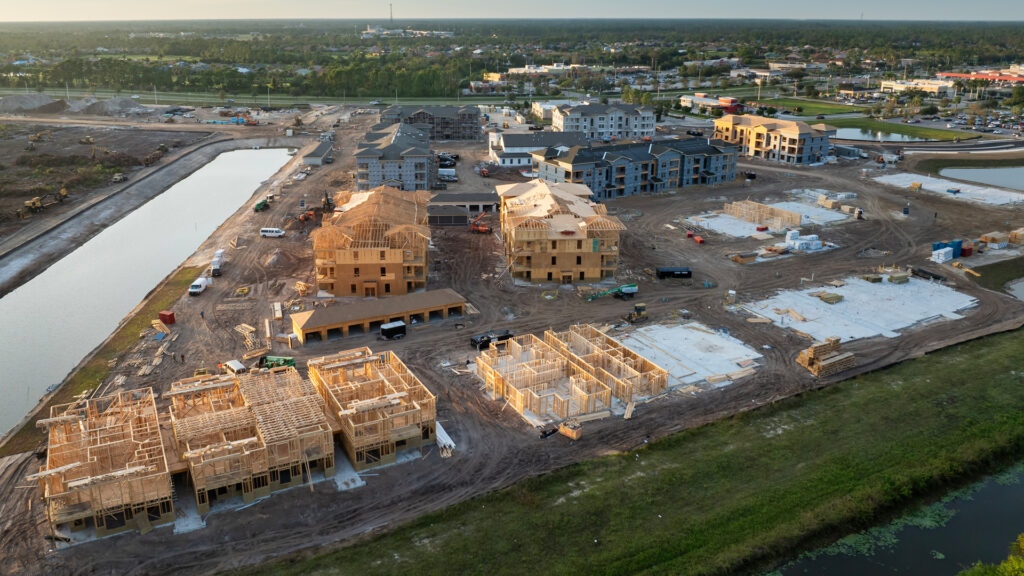
This opinion piece was originally published by the Orlando Sentinel, which is a media partner of The Invading Sea. The Orlando Sentinel Editorial Board consists of Opinion Editor Krys Fluker, Executive Editor Roger Simmons and Viewpoints Editor Jay Reddick. Banner photo: Apartment buildings under construction in the Florida suburbs (iStock image).
Sign up for The Invading Sea newsletter by visiting here. To support The Invading Sea, click here to make a donation. If you are interested in submitting an opinion piece to The Invading Sea, email Editor Nathan Crabbe at ncrabbe@fau.edu.
