


By Gisele Galoustian, FAU News Desk
Arslan Munir, Ph.D., an associate professor in the Department of Electrical Engineering and Computer Science within the College of Engineering and Computer Science at Florida Atlantic University, has received an $827,533 grant from the United States Department of Agriculture’s National Institute of Food and Agriculture.
This award will support Munir’s leadership of a groundbreaking, multi-institutional research project with FAU, Kansas State University and Purdue University, aimed at revolutionizing the future of precision agriculture through the development of an advanced edge/fog computing-based framework – called “FogAg” – to enable real-time, multi-layer sensing and analysis of how water and nitrogen levels together affect crop growth and yield.
Agriculture faces mounting pressure to feed a growing population while protecting natural resources. Managing water and nitrogen – two vital yet often limiting crop inputs – is one of the greatest challenges. When mismanaged, they can reduce yields and harm the environment through runoff and waste. Existing smart agriculture tools often fall short in capturing and responding to these complex interactions in real time with the precision farmers need.
Munir’s FogAg framework is designed to fill this technological and scientific gap. By integrating cutting-edge developments in edge/fog computing, cyber-physical systems, and multi-modal sensing, the project offers a scalable solution that can provide actionable insights into plant-soil dynamics. The research will explore new innovations across multiple domains – including architecture, sensing, machine learning and predictive modeling – to deliver a next-generation agricultural system that can interpret and respond to field data in near real-time.
“Receiving this USDA grant is an important milestone in our pursuit of transformative agricultural technologies,” said Munir. “Our goal with FogAg is to create an intelligent, adaptable and energy-efficient framework that empowers farmers with the data they need to make timely, site-specific decisions. By capturing and analyzing the nuanced interactions between water and nitrogen stressors, we aim to not only increase crop yield and quality but also reduce the environmental impact of modern agriculture. This project represents our deep commitment to leveraging advanced computing systems in service of sustainable food production.”
At the heart of FogAg is a novel, three-tiered cyber-physical architecture that spans IoT devices, fog computing nodes and cloud servers, enabling distributed processing and near real-time analytics. Supporting this architecture is Neuro-Sense, a reconfigurable system that facilitates energy-efficient signal and image processing for dynamically changing workloads in the field.
The team will develop and deploy a multi-modal sensing platform that includes an economical and flexible LED-based multispectral imaging system, an innovative near-infrared point measurement sensor, and a novel frequency response-based dielectric soil sensor.
“These tools will enable sensing above, below and within the plant canopy, capturing a comprehensive picture of crop and soil health,” said Munir.
On the data processing front, the project will leverage advanced machine learning techniques, including a highly efficient convolutional neural network accelerator capable of analyzing complex image and sensor data streams. These insights will feed into tree-based predictive models that integrate real-time and historical data to generate site-specific, variable-rate prescriptions for fertilizer and irrigation – maximizing productivity while minimizing input waste.
Beyond its scientific and technical contributions, the FogAg project is poised to make significant societal and environmental impacts. The integration of real-time water and nitrogen management strategies will not only enhance resource-use efficiency and reduce production costs but also help lower agriculture’s nitrogen footprint and associated environmental pollution. With both spatial and temporal scalability, the framework has potential applications ranging from large-scale industrial farms to urban and peri-urban agricultural systems.
“This research epitomizes the kind of forward-thinking, impact-driven innovation at Florida Atlantic University,” said Stella Batalama, Ph.D., dean of the College of Engineering and Computer Science. “Professor Munir’s work is a great example of how engineering can lead transformative change in critical sectors like agriculture. The integration of smart technologies into farming practices not only addresses urgent global challenges around food security and sustainability but also reinforces our role as a leader in cross-disciplinary research with real-world impact.”
In addition to its research agenda, the project will incorporate its findings into both undergraduate and graduate curricula, training the next generation of engineers and scientists in the practical application of smart agriculture technologies. This educational component ensures that the knowledge generated through the FogAg project will have lasting influence, seeding innovation well beyond the duration of the grant.
Munir will be working closely with co-investigators Michell L. Neilsen, Ph.D.; Naiqian Zhang, Ph.D.; Paul Armstrong, Ph.D.; and Rachel L.V. Cott, Ph.D.; representing the departments of computer science, biological and agricultural engineering and agronomy at Kansas State University; as well as Ignacio Ciampitti, Ph.D., Department of Agronomy from Purdue University. This collaboration ensures that the FogAg framework will be designed with both technological sophistication and agronomic practicality.
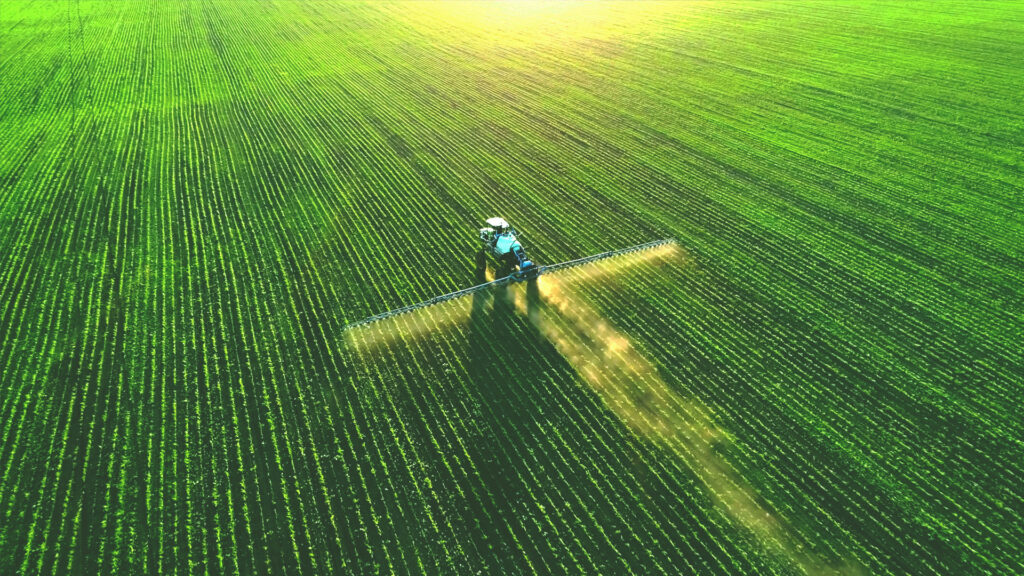
This piece was originally published at https://www.fau.edu/newsdesk/articles/fog-ag-usda-grant.php. Banner photo: Crops are watered on a Florida farm (iStock image).
Sign up for The Invading Sea newsletter by visiting here. To support The Invading Sea, click here to make a donation. If you are interested in submitting an opinion piece to The Invading Sea, email Editor Nathan Crabbe at ncrabbe@fau.edu.
