


By Dave Doebler, VolunteerCleanup.org, and Cat Uden, Oceana
This year, on International Coastal Cleanup Day — taking place Sept. 20 — volunteers around the world participate in the annual event by collecting and recording trash, cleaning up local beaches and producing valuable data that scientists and advocates can use to find long-term solutions to the plastic pollution crisis. Cleanups are a great way for people to see the problem of plastic pollution firsthand, but we also need advocacy and policy change as the ultimate solution to curbing the problem.
The world is facing a plastic pollution crisis that is increasingly threatening the future of our planet. An estimated 33 billion pounds of plastic enter the ocean every year — that’s roughly equivalent to dumping two garbage trucks full of plastic into the oceans every minute.
One of the most abundant types of plastic pollution found in U.S. rivers, lakes and marine environments is plastic foam, formally called expanded polystyrene. Plastic foam affects a wide variety of ocean animals, including sea turtles, seals and shorebirds, and poses significant health threats for people.
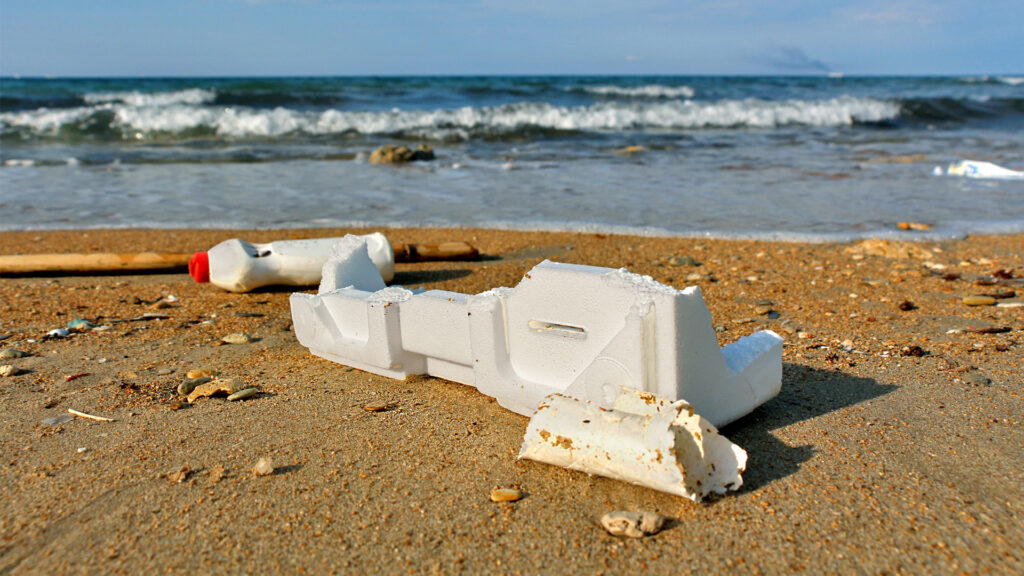
Plastic foam fragments, cups and plates are among the top 10 most littered items found across the U.S. Overall, International Coastal Cleanup volunteers have collected 8,709,519 plastic foam cups, plates and takeout containers globally. In 2024, plastic foam containers ranked as the 10th most common item found around the world, with a total of 404,636 collected.
The production of plastic foam poses environmental and health problems. Its creation depends on the extraction of fossil fuels. Production plants send hazardous emissions of chemicals, including styrene, benzene and ethylbenzene, into the air, threatening the health of communities that live on the fenceline of production facilities.
Plastic foam production also contributes to climate change. In 2019, worldwide plastic foam production created an estimated 48 million metric tons of greenhouse gas emissions, the equivalent emissions of almost 13 coal-fired power plants. Styrene, the chemical building block of plastic foam, is considered a probable carcinogen, meaning it likely causes cancer. It has been found to leach out of plastic foam food containers, posing a threat to human health.
Recycling is not the answer to the plastic pollution crisis. A meager 9% of all the plastic waste ever generated has been recycled. In the U.S., only 1% or less of plastic foam waste is recycled each year. Current projections show plastic production will more than triple by mid-century, far outpacing recycling and resulting in more plastic in the ocean.
In February 2025, Oceana released the results of a new national poll found that U.S. voters are concerned about the impacts of plastic pollution on our oceans and health. Seventy-eight percent of U.S. voters support national policies that reduce single-use plastic foam. Eight in 10 registered voters report concern about plastic pollution, with widespread bipartisan support for reducing the amount of plastic produced and requiring companies to reduce single-use plastic packaging and foodware.
In response to this public support, state and local governments across the United States are taking action to tackle plastic foam. Twelve states and more than 250 counties and cities have passed policies to curb single-use plastic foam — and the evidence shows that these policies are working. After Washington, D.C., passed a single-use plastic foam ban in 2014, the Anacostia River that runs through the city saw a 50% reduction in plastic foam pollution following the first year the law was implemented.
After five years, foam pollution fell by 88%. Similarly, Maryland’s Baltimore Inner Harbor saw an 80% reduction in foam pollution collected by a trash interceptor, following a statewide single-use foam foodware ban.

In Florida, the city of Miami Beach passed a citywide polystyrene foam ordinance in 2015. VolunteerCleanup.org reported that in 2015, foam ranked as the fourth-most commonly found item in Miami Beach on International Coastal Cleanup Day. In 2019, they reported that foam litter fell to 29th. Today, actions like Miami Beach’s incredibly effective citywide foam ban are unwisely prohibited and preempted by the state legislature, so federal action is critical.
A material that harms people and wildlife, accelerates climate change, pollutes the air and fills the oceans with trash should be phased out. The “Farewell to Foam Act,” which would phase out the sale and distribution of plastic foam food containers, packing peanuts and single-use foam coolers across the country, was reintroduced in Congress earlier this year.
This International Coastal Cleanup Day, Floridians should call their U.S. representatives and senators to ask them to support the Farewell to Foam Act (H.R. 1918/S. 897), so that we can reduce plastic foam pollution at the source.
Dave Doebler is the founder of VolunteerCleanup.org, which engages volunteers to clean up their neighborhoods, shorelines and waterways to raise awareness about marine debris and encourage people to reduce their reliance on single-use plastics. Cat Uden is the senior field representative in South Florida for Oceana, which works to win policy victories that will restore and maintain ocean abundance and biodiversity. Banner photo: Plastic foam being cleaned up from a beach (iStock image).
Sign up for The Invading Sea newsletter by visiting here. To support The Invading Sea, click here to make a donation. If you are interested in submitting an opinion piece to The Invading Sea, email Editor Nathan Crabbe at ncrabbe@fau.edu.
