


This essay was written as part of a Ph.D. seminar called “Theorizing Infrastructure” for Florida Atlantic University’s graduate program in comparative studies. An overview of the course by professor Stacey Balkan and other essays from students can be found here.
By Priscilla Card Fuller
Following the COVID-19 pandemic, Florida’s population increased by 8.24%, from July 1, 2020, to July 1, 2024. It has also been expanding west and north beyond the heavily populated “Gold Coast,” which encompasses Dade, Broward and Palm Beach counties, to less populated corners of the state. A new generation of retirees is looking toward a reconnection with nature and, suddenly, ‘”sustainability'” has replaced ‘”sizzle'” and ‘”glamour'” as the new buzzword for Florida’s hottest retirement communities.
Recently, I visited On Top of the World in Ocala, where sustainability is touted as a cornerstone of the 55-plus community’s principles. OTOW has reserved habitat for certain species including the endangered gopher tortoise and the Florida burrowing owl. A meditation park, Sholom Park, created by the founding family of OTOW, provides walking paths open to the public.
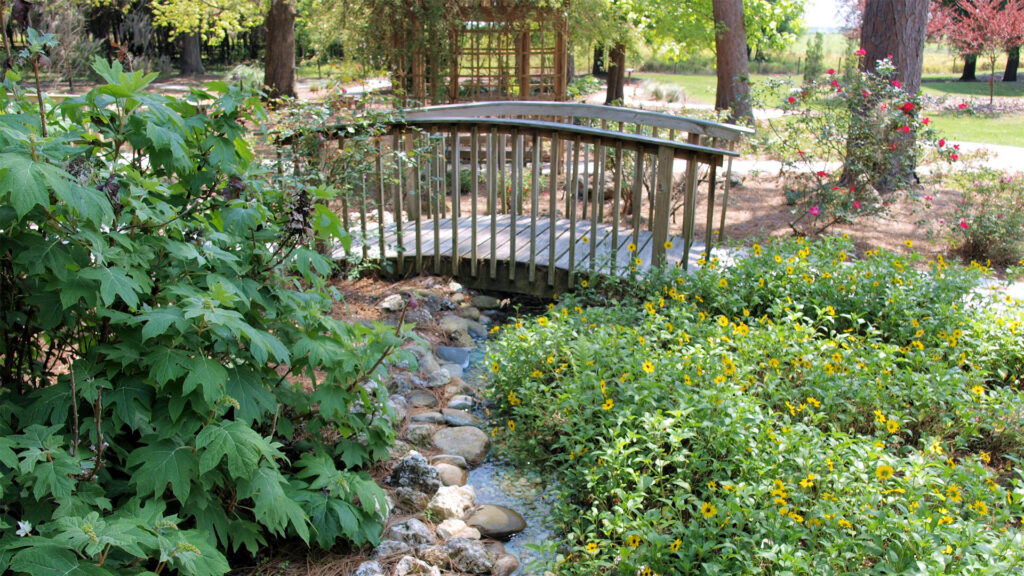
Driving through one of the neighborhoods within the community, I observed solar panels installed on several of the rooftops. Community vegetable gardens exist for residents interested in growing their own produce. These options are unavailable for residents in many of the older communities, especially in South Florida.
Up until recently, residents at Whisper Walk Association in Boca Raton were not allowed to plant flowers or shrubbery around their units. Now, with approval, the planting of decorative shrubbery or flowers is permitted while fruit trees are still forbidden.
What such older communities do offer for residents are more sidewalks and pedestrian-designated paths. Unlike On Top of the World, the Whisper Walk community benefits from the presence of fully mature tree growth which allows for more shade and habitat for birds. Whisper Walk’s manmade lakes provide habitat for wading birds such as roseate spoonbills, great blue herons and wood storks.
Although sustainability may look good for advertising copy, the task of sustainability ultimately rests on the shoulders of the residents within the community. For new arrivals to Florida who come from urban areas, it may not be so easy to contemplate the idea of sharing their environment with a Florida alligator, a coyote or a mosquito. Some residents never cease complaining about the leaves, the geese droppings and the ants. For each complaint, another round of Egyptian geese or iguanas is “relocated,” a euphemism for being eliminated.
The question is, what can you live with? And what can you not afford to lose? Rather than focusing on sustainability, can’t we go one step farther and reach for the creation of a thriving environment where we can live as friends with our neighbors and our environment?
Maintaining a thriving environment for wildlife as well as plant life can also positively affect residents in subtle ways. Watching geese lead their goslings to the water’s edge are moments to enjoy and help residents feel connected to the cycle of life.
Before any real change can occur within the community, the attitude that views nature as being a problem that needs to be resolved by sweeping, spraying, trapping, cutting down or uprooting, needs to be replaced with an attitude of tolerance and respect for a shared environment. How does one change fixed attitudes in an elderly population?
Educators or naturalists can donate their time to help inform residents about their community’s unique varieties of flora and fauna. Guided nature works or birding clubs can be organized. Establishing an interest in the local wildlife will encourage residents to be respectful of nesting birds – and less likely to destroy their habitats.
As the aging population increases, we must search for ways to thrive, while helping our natural environment to also thrive. This can best be achieved by taking an interest in our surroundings and learning as much as possible about our natural environment, as well as taking an active interest in how our communities provide the help that aging citizens need to lead a healthy lifestyle and enjoy meaningful, productive activities.
Banner photo: A senior couple walks on a nature trail (iStock image).
Sign up for The Invading Sea newsletter by visiting here. To support The Invading Sea, click here to make a donation. If you are interested in submitting an opinion piece to The Invading Sea, email Editor Nathan Crabbe at ncrabbe@fau.edu.

Haha, finally an older community where you *can* plant things without facing relocation! On Top of the World clearly gets the memo on sustainability, with solar panels and even a meditation park. But lets be real, sharing our environment with alligators and geese requires a certain level of tolerance most residents might find challenging, especially when their prize garden gnome gets targeted. Though, seeing geese lead their goslings is strangely heartwarming, isnt it? The key seems to be shifting from viewing nature as a problem – which feels like a never-ending battle against ants and leaves – to simply *coexisting*. Maybe we should all just take a deep breath, admire the roseate spoonbills, and maybe invest in some bug zapper donations for the educators!football.bros
Haha, finally a community where the geese get a pass! OTOW seems like a breath of fresh air, though I suspect the tolerance for geese droppings has its limits. On the other hand, some older communities sound like theyve got more sidewalks than wildlife – maybe too many problem-solving attitudes still lurking. Perhaps we should all just try being friends with the ants and the alligators? Its all about that shared environment, isnt it? And maybe the residents just need a nature lecture or two – who wouldnt want to learn about their local flora and fauna before deciding to eliminate it? Thriving communities, here we come!đồng hồ online