


By Stefan Hagens, The Invading Sea
Originally from the Netherlands, Carsten Grupstra grew up surrounded by water. Having spent much of his youth around his father, who was a boat builder, he naturally developed a connection to the ocean.
During his time as an undergraduate student, Grupstra traveled to Thailand to obtain his diving license. After that trip, he knew that he would make a career out of studying and saving coral reefs.
“It can be a really magical experience going snorkeling or diving on a coral reef, and I think that’s something we should try to conserve for future generations,” he said.
Having earned a master’s degree in oceanography and a Ph.D. in ecology and evolutionary biology, Grupstra is continuing his coral research at Florida Atlantic University. He recently started at FAU as an assistant professor of biology, where his research focuses on studying corals that are genetically better prepared to withstand warming ocean temperatures.
“The biggest threat that corals are facing worldwide is coral bleaching, which is caused by marine heat waves, ocean warming that raises the water temperature,” Grupstra said.
He explains that corals are animals, but in a way, also much like plants. Their animal cells also contain algal cells, which photosynthesize, using sunlight to provide the coral with nutrients and color.
“When temperatures rise, that symbiosis gets interrupted and that causes the coral to lose all of its algal cells and turn white. … Over time, they starve to death,” he said.
Additionally, corals depend on microbiomes, bacteria that live within the host organism, to survive. These bacterial partnerships can even allow them to be less prone to diseases and more resistant to heat.
Grupstra’s research focuses on the microbial relationships that sustain coral health. These mutually beneficial relationships that corals have with certain algae and bacteria can allow them to thrive amid rising ocean temperatures.
“When they release their algae during bleaching, they can take up different algae that might actually be less susceptible to higher temperatures,” he said.
Grupstra explained that sea anemones, which are closely related to coral, have been instrumental in studying these microbial reef dynamics in an experimental lab at FAU.
In the lab, he and his team experiment with healthy sea anemones that contain algal cells and bleached anemones that do not harbor these cells. Animals that consume anemones can disperse these algal cells through their waste to the anemones that are bleached, allowing the bleached anemone to restore its health.
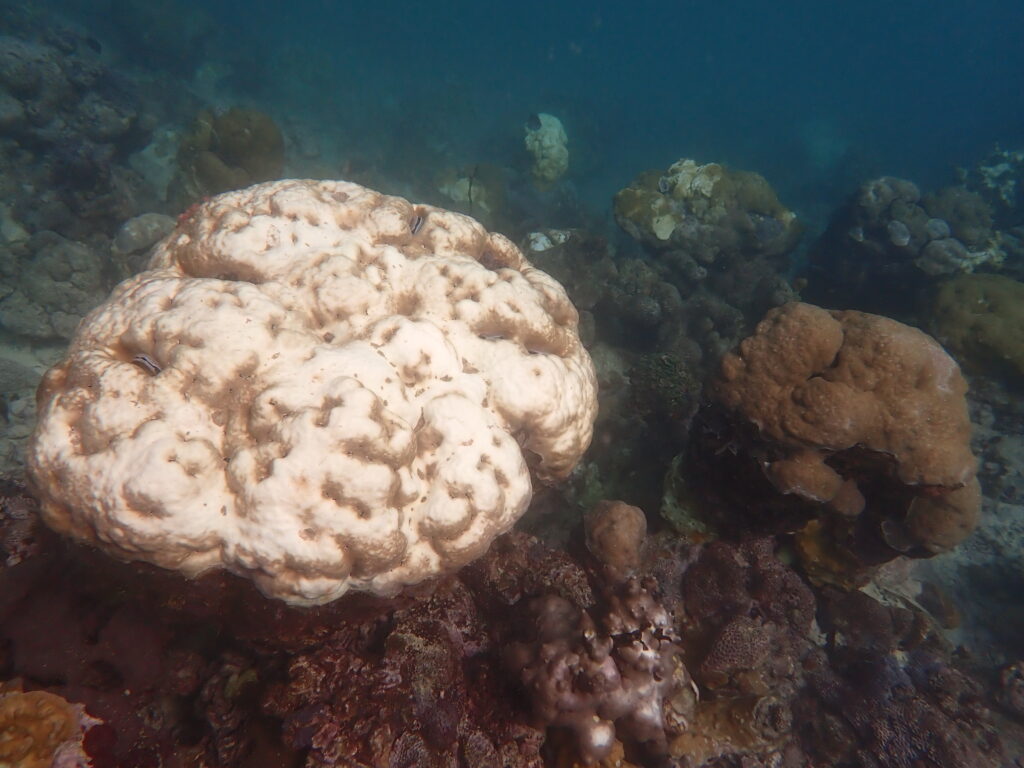
In addition to this research, he also examines lineages of coral that look the same but actually contain different genes. These genetic differences allow some corals to pair with more favorable microbes, bacteria and algal cells, which increase their resistance to higher temperatures.
“The work I plan to do here in Florida is looking at these different ‘cryptic lineages’ of corals, see if they have different algal partners, different microbes, and see how they respond to heat stress and that will inform management or restoration practices in the end,” he said.
With Florida’s coral reefs having diminished by 90% since the late 1970s, Grupstra’s research seeks to address the consequences of this collapse There was a 21% decrease of corals due to thermal stress across surveyed sites in South Florida between the summer of 2023 and early 2024, according to the Fish and Wildlife Research Institute.
Even with such devastating numbers, bleaching is not the only threat to corals in Florida. Stony coral tissue loss disease has been decimating populations and has affected the vast majority of coral reefs in the state. Some species have experienced 100% mortality, according to the Florida Fish and Wildlife Conservation Commission.
Grupstra emphasized the importance of coral reefs to Florida. Not only do they provide shorelines with storm damage resilience and marine habitats, but they also fuel the state’s multi-billion-dollar fishing and eco-tourism industries.
Beyond the economic benefits and protection that reefs provide, he remains certain that the wonder of these unique habitats is enough reason to fight for them.
“There’s a really important cultural and environmental value to coral reefs. … They are these really beautiful ecosystems that we get to enjoy here,” he said.
Stefan Hagens is a junior majoring in environmental engineering at Florida Atlantic University who is reporting for The Invading Sea. Banner photo: Grupstra in the water (Photo courtesy of Carsten Grupstra).
Sign up for The Invading Sea newsletter by visiting here. To support The Invading Sea, click here to make a donation. If you are interested in submitting an opinion piece to The Invading Sea, email Editor Nathan Crabbe at ncrabbe@fau.edu. To learn more about coral bleaching, watch the short video below.
