


By Eve Samples, Friends of the Everglades
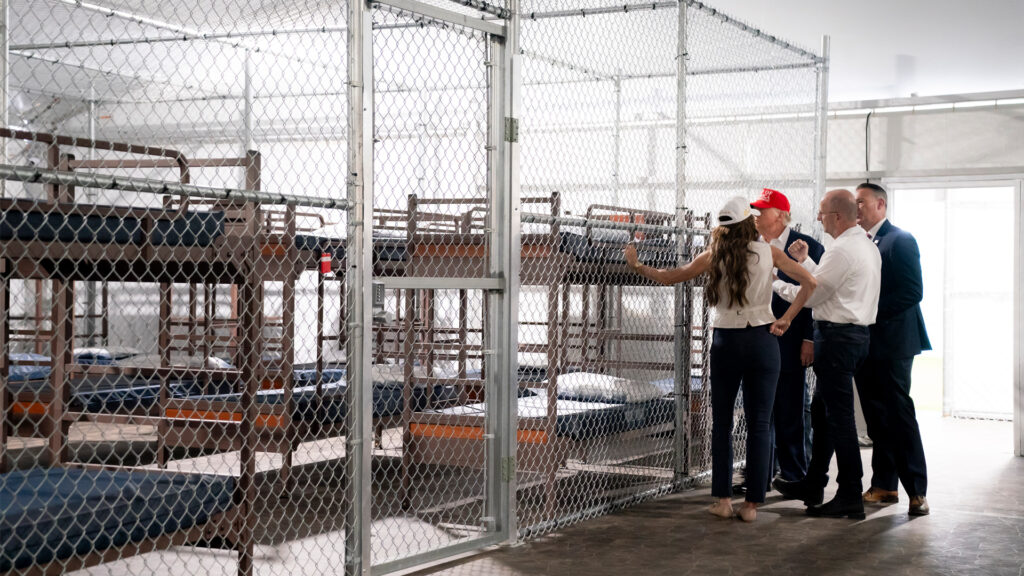
There’s a moniker for the hastily built Florida Everglades detention camp along Tamiami Trail that I will not use today, but you know it. It is an immigration prison where undocumented men are held by the state of Florida at the federal government’s behest.
A historical marker should replace those signs because this is a storied place in conservation history. History is unfolding here again with broad implications for the future of environmental laws.
On Aug. 21, a Miami federal judge granted a preliminary injunction halting activity at the detention camp — the result of a lawsuit brought by Friends of the Everglades, the Center for Biological Diversity and the Miccosukee Tribe. That injunction was paused by an appeals court Sept. 4, but this case is far from over.
The facts are on our side.
During hearings, our legal team presented compelling evidence showing the facility is harming the Everglades and that the government ignored the law that was born here more than 50 years ago to prevent such abuses.
That law, the National Environmental Policy Act (NEPA), grants the American people the right to have a voice in government decisions that affect our natural world. It’s a commonsense “look before you leap” law. It’s a vow of government transparency. It’s a commitment to seek public input.
NEPA was ignored when the Everglades detention camp was built. That’s ironic because the law came into being as the result of a government’s reckless insults to this very land.
In 1967, the Dade County Port Authority decided to build the world’s biggest jetport in Big Cypress — where night skies were thick with stars and the stillness was broken by the yowling of Florida panthers.
The Port Authority cleared a swath of wilderness and built one long runway just six miles from Everglades National Park. More harmful development was proposed, but Indigenous people, hunters, anglers, hikers and scientists objected.
Marjory Stoneman Douglas, author of “The Everglades: River of Grass,” founded Friends of the Everglades in 1969 to fight this debacle. The opposition reached then-President Richard Nixon, whose Interior Secretary ordered a comprehensive report, the first of its kind, to assess the jetport’s environmental effects.
The report predicted the jetport would destroy the Everglades. “A given ecosystem cannot indefinitely be reduced in size and complexity and still survive,” wrote authors Luna Leopold and Arthur R. Marshall.
Nixon saw that the federal funding was cancelled in 1970, and instead backed the creation of the Big Cypress National Preserve — surrounding the jetport’s one runway.
In 1970 Nixon also signed the National Environmental Policy Act, “the Magna Carta of environmental laws,” which requires the federal government to conduct environmental studies giving citizens a voice in critical decisions that shape their communities.
It is this law that the DeSantis and Trump administrations ignored when they ramrodded a prison into the heart of the Everglades this summer.
This fight isn’t just about wetlands or endangered species. It’s about safeguarding the fabric of environmental protections our country stitched together a half-century ago.

Our government seeks to roll back the clock to a time when wild places had no defense against greed and the people had no voice to answer special interests.
Our attention is being misdirected with political stunts masquerading as policy.
Do not acquiesce to the flouting of laws. Support the groups standing up for healthy ecosystems and accountable government.
Tell your representatives to defend hard-won environmental protections including NEPA and the far-seeing laws that followed.
History is keeping score.
Eve Samples is executive director of Friends of the Everglades, which was founded in 1969 by Marjory Stoneman Douglas. This opinion piece was originally published by the Miami Herald, which is a media partner of The Invading Sea. Banner photo: The Everglades (National Park Service/B.Call via Flickr).
Sign up for The Invading Sea newsletter by visiting here. To support The Invading Sea, click here to make a donation. If you are interested in submitting an opinion piece to The Invading Sea, email Editor Nathan Crabbe at ncrabbe@fau.edu.
